
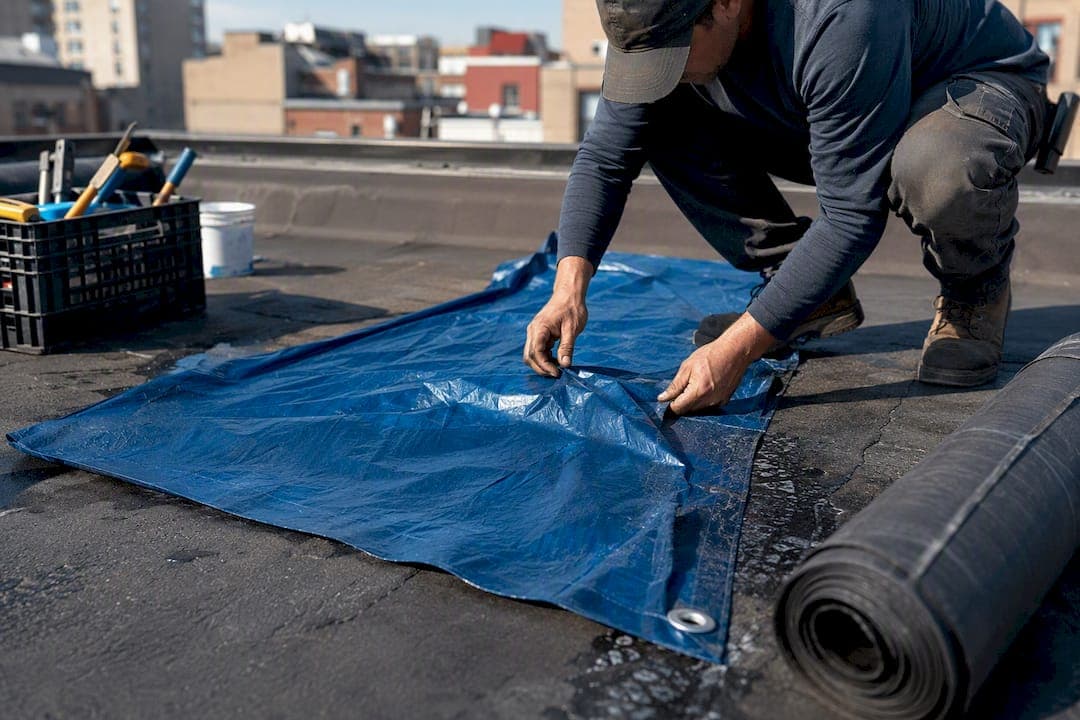
If your commercial building is leaking, contain the water, protect assets, document the damage, and call a qualified commercial roofing contractor. Most leaks trace back to flashings, seams, drains, or rooftop penetrations rather than a single dramatic hole in the membrane.
The permanent fix almost always requires actual diagnostics. A wet ceiling tile tells you water is getting in somewhere upslope. It doesn't tell you where, and guessing costs money.
Here's the priority order for the first hour:
- Contain the water with buckets, tarps, or a temporary catch basin.
- Move inventory, electronics, and documents away from the drip zone.
- Photograph the damage with timestamps before you clean anything up.
- Call a commercial roofer who can schedule a proper inspection, not just a patch job.
- Hold off on authorizing major repairs until someone maps the actual source.
Key Takeaways
Fast containment plus professional moisture diagnostics, not guesswork, is what separates a $600 repair from a $15,000 replacement.
| Point | Details |
|---|---|
| Act fast, but in order | Contain water, protect assets, document damage, then call a commercial roofer. |
| Trace the true source | Water can travel 20 to 50 feet from the breach before showing inside. |
| Demand diagnostics | Infrared surveys and electronic leak detection find hidden moisture without destructive cutting. |
| Know the replacement threshold | Widespread saturated insulation or deck corrosion justifies replacement; a single leak usually doesn't. |
| Work with a proven local team | Jhroof offers 24-hour emergency response and insured commercial roof repairs across Kent. |
Where to Learn More
- ASTM C1153 infrared standard practice
- Jhroof commercial roofing services in Kent
Table of Contents
- What Are the Signs of a Commercial Roof Leak?
- What Causes Most Commercial Roof Leaks?
- How Do Professionals Find the Real Source of a Roof Leak?
- What Should You Do in the First 24 Hours?
- Should You Repair the Roof or Replace It?
- How Often Should You Inspect and Maintain a Commercial Roof?
- Why Trust This Guidance on Commercial Roof Leaks?
- Health and Safety Considerations During Roof Leak Inspection and Repair
- What Are the Environmental Rules Around Roofing Waste Disposal?
- What This Guide Gets Right That Others Miss
- Get a Fast, Documented Fix From a Local Kent Roofer
- Frequently Asked Questions
- Sources
What Are the Signs of a Commercial Roof Leak?
A ceiling stain is the easiest clue, but it's rarely the whole story. Watch for sagging ceiling tiles, a musty or mildew smell, corroded light fixtures, and rust streaks near HVAC penetrations. Any sign of electrical arcing near a wet area is an immediate shutoff and evacuation situation, not a maintenance ticket.
On the roof itself, look for ponding water that sits more than 48 hours after rain, wrinkled or lifted seams, flashing pulling away from walls or curbs, and fasteners backing out of the membrane.
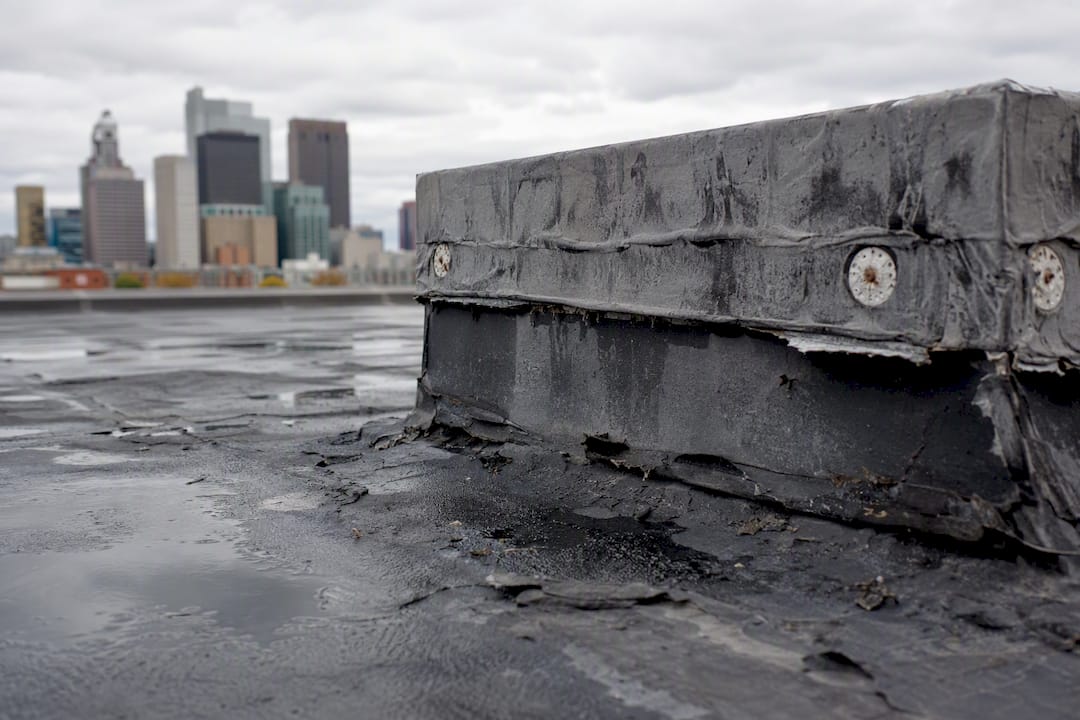
Here's the part most property managers miss: on a flat commercial deck, water can travel 20 to 50 feet from the actual breach before it ever shows up as a stain inside. That gap between the drip and the entry point is why chasing the visible stain with sealant so often fails. The insulation layer and deck flutes act like channels, carrying water sideways long before gravity pulls it through the ceiling.
What Causes Most Commercial Roof Leaks?
Understanding the failure hierarchy helps you evaluate what a contractor tells you, rather than just accepting the first diagnosis.
- Flashing and penetration failures. Roof-to-wall transitions, pipe boots, and curb flashings around vents lead the list of common leak sources, largely because they're where two different materials meet and movement eventually breaks the seal.
- Seam and membrane degradation. TPO, EPDM, and PVC each fail differently. TPO seams can lose their weld over time, EPDM relies on adhesive that dries out, and PVC can become brittle at aged seams exposed to UV.
- Drainage problems. Clogged scuppers, undersized drains, and structural ponding put standing water directly over every weak point on the roof.
- HVAC curbs and rooftop equipment. Every unit bolted to the roof is a penetration, and vibration works fasteners loose over years of service.
- Age-related wear. Membranes and flashing sealants have a design life, and once you're past it, small issues turn into recurring ones.
How Do Professionals Find the Real Source of a Roof Leak?
Good diagnostics start with the interior drip point and work backward, upslope, toward the roof deck. A visual walk of that path catches obvious problems, like a cracked pipe boot or a torn seam, but visible inspection has limits when moisture has traveled under the membrane.
That's where infrared moisture thermography earns its cost. Wet insulation holds heat differently than dry insulation, so an infrared scan shows temperature differentials that map trapped moisture even when the surface looks fine. Accuracy peaks at night or dusk, after the sun has stopped heating the roof unevenly, which is why reputable crews schedule these scans for early evening rather than midday. The industry references ASTM C1153 as the standard practice for this kind of survey.
Electronic leak detection works well on large or obscured roofs where infrared alone doesn't pinpoint the breach. Controlled hose or flood testing confirms a suspected location by directing water at a specific detail and watching for the leak to reappear, though it should be avoided on roofs already showing widespread saturation, since adding more water can make things worse.
| Method | Best used for | Typical cost range |
|---|---|---|
| Visual inspection | Obvious flashing, seam, or penetration damage | Often included in service call |
| Infrared moisture survey | Locating trapped moisture under membrane | $400–$2,000 depending on roof size |
| Electronic leak detection | Large or complex roofs, obscured breaches | Comparable to infrared survey range |
| Hose/flood testing | Confirming a suspected leak location | Often bundled into diagnostic visit |
What Should You Do in the First 24 Hours?
Speed matters here, but so does order. Skipping a step can cost you an insurance claim later.
- Contain water at the drip point with tarps or buckets, and isolate the area if there's any electrical risk nearby.
- Move inventory, equipment, and sensitive materials out of the affected zone immediately.
- Photograph every stain, puddle, and damaged item with a timestamp, and sketch or note the floor plan location of each drip.
- Apply a compatible temporary patch only if it's safe to access the roof, and schedule the permanent repair within 30 days.
- Notify your insurer early and book a professional diagnostic visit before authorizing full repairs.
Pro Tip: Keep a simple leak log with date, location, weather conditions, and photos every time water appears. That log becomes powerful documentation if you ever need to dispute a denied insurance claim or challenge a contractor's replacement recommendation.
Should You Repair the Roof or Replace It?
A proper repair has to match the existing membrane chemistry. Patching a TPO roof with an EPDM-compatible product, or vice versa, is a common shortcut that fails within a season. Repairs on built-up or modified bitumen systems require different techniques again, which is why system-specific knowledge matters more than a generic sealant job.
Replacement becomes the smarter financial choice when insulation is saturated across a wide area, when leaks keep recurring at different details rather than the same spot, when the deck itself shows corrosion, or when the roof is already near the end of its expected service life.
Budget-wise, single-leak repairs typically run $400 to $2,500, with after-hours emergency calls carrying a premium on top of that range. If a contractor proposes full replacement without ever running a moisture survey, treat that as a red flag rather than a straightforward recommendation. A survey costs a fraction of a full re-roof, and it should always come before that conversation, not after.
How Often Should You Inspect and Maintain a Commercial Roof?
A biannual inspection schedule, spring and fall, plus a walk-through after any major storm, catches most problems before they become leaks. Each visit should include a check of drains, flashings, and membrane condition, not just a quick look from the parapet.
- Clear drains and scuppers of debris every visit, since clogged drainage is one of the fastest paths to ponding and subsequent leaks.
- Inspect flashing seals and renew sealant where it's cracked or pulling away.
- Limit foot traffic on the membrane to essential maintenance work only, since repeated foot traffic accelerates wear at seams.
- Keep dated records of every inspection and repair. Maintenance contracts with documented visits help preserve manufacturer warranties and give insurers exactly what they expect to see when a claim comes in.
- Schedule an infrared survey ahead of any restoration project, after major storm events, or whenever leaks keep recurring in the same general area.
Facility teams that treat roof care as reactive maintenance, only calling once something is dripping, tend to face more denied claims and shorter roof lifespans than those working from a documented maintenance contract.
Why Trust This Guidance on Commercial Roof Leaks?
Jhroof has spent over a decade repairing and replacing roofs across Kent, handling everything from flashing failures to full flat roof systems on commercial buildings.
- A recent flat roof replacement case study in Kent walked through the full process: diagnostic assessment, scope of work, and the finished result on a commercial property.
- Jhroof offers 24-hour emergency response, so a leak reported at midnight doesn't wait until Monday for a callback.
- All work is fully insured, and the company holds a 4.7-star Google rating built on completed jobs, not marketing copy.
- Before hiring anyone, ask to see proof of insurance and a written warranty on materials and labor. That's the minimum standard, and any legitimate contractor will hand it over without hesitation.
Health and Safety Considerations During Roof Leak Inspection and Repair
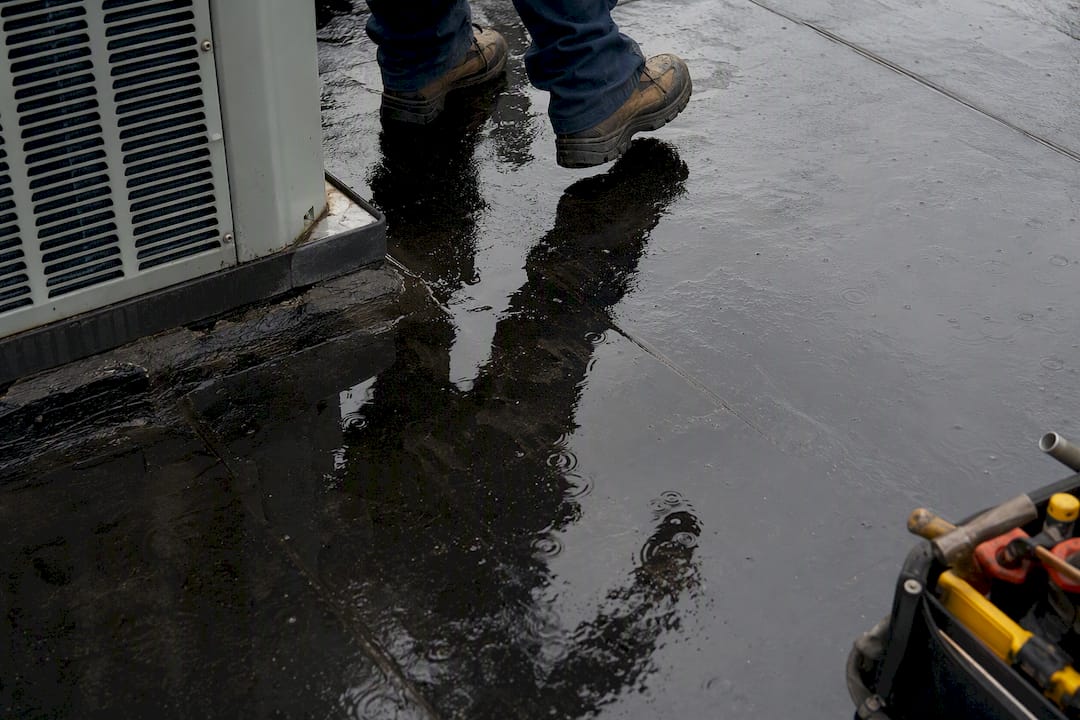
Roof leak inspections put people on wet, slippery surfaces, often near live electrical equipment, and that combination deserves more caution than most facility teams give it. Standing water near HVAC units or electrical conduits creates a real shock hazard, so cutting power to affected circuits before anyone approaches the area is a non-negotiable first step, not an afterthought.
Interior mold growth from a long-standing leak can trigger respiratory irritation, especially for anyone with asthma or allergies. If a leak has been active for more than a few days, treat visible mold or a persistent musty smell as a signal to bring in someone equipped with proper respiratory protection rather than sending an untrained employee to look.
On the roof itself, wet membranes are far more slippery than dry ones, and ponding water can hide soft spots in a deteriorating deck. Anyone walking a commercial roof during or after a leak event should use non-slip footwear, and inspectors should be trained to recognize a spongy or flexing surface underfoot as a sign the deck itself may be compromised, not just the membrane.
Fall protection matters on every commercial roof, but it matters more during leak response, when attention is split between finding the source and managing water. Roof edges, skylights, and unguarded openings around HVAC curbs are the spots where a distracted inspection turns into a serious incident. A second person present during any rooftop leak investigation, rather than a solo walk, catches hazards the primary inspector might miss while focused on tracing water.
What Are the Environmental Rules Around Roofing Waste Disposal?
Roof repairs and replacements generate waste streams that most property owners don't think about until a dumpster is sitting in the parking lot: old membrane material, insulation, flashing metal, and in older buildings, materials that may contain asbestos.
Membrane and insulation waste from a standard repair or tear-off is typically classified as construction and demolition debris, and most regions require it to go to a licensed C&D disposal facility rather than general landfill. Many roofing materials, particularly TPO and certain metal flashings, are recyclable, and a growing number of regions offer collection programs specifically for roofing scrap to keep it out of landfills entirely.
Buildings constructed before the 1980s carry a real risk of asbestos-containing roofing materials, particularly in older built-up roofing systems and some flashing compounds. Any tear-off on a building of that age should include testing before demolition begins, since disturbing asbestos without proper containment creates a hazard for workers and building occupants alike, and improper disposal can carry serious regulatory penalties.
Local and regional rules on construction waste vary, so the specific disposal requirements for your property depend on where the building sits and what materials come off the roof. A contractor who handles commercial work regularly should already know the disposal facilities and hauling requirements for your area and be able to provide waste manifests as part of the project documentation, which also helps satisfy any environmental compliance questions during a sale or refinance.
What This Guide Gets Right That Others Miss
Most roofing content treats every leak the same way: patch it and move on. That's backwards. The single biggest mistake owners make is skipping the diagnostic step and jumping straight to a repair quote, which means paying to fix the wrong spot while the actual breach keeps letting water in.
The conventional advice to "call a roofer when you see a stain" undersells how often that stain sits 20 to 50 feet from the real problem. Infrared surveys and electronic detection exist precisely because visual inspection alone misses buried moisture, and skipping that step is how owners end up authorizing a $15,000 replacement for a $600 flashing fix.
My honest read: owners should treat any replacement recommendation without a moisture survey as incomplete, not final. Ask for the documentation. A contractor confident in their diagnosis will have no problem showing you the infrared scan or the moisture map that led to their recommendation. If they can't produce one, get a second opinion before signing anything.
Get a Fast, Documented Fix From a Local Kent Roofer
Jhroof gives Kent property owners something most national chains can't: a local crew that answers emergency calls around the clock and backs every job with insurance and a track record you can actually check.

If you're dealing with an active leak right now, start with a fast roof repair request rather than waiting for a callback window. For owners who want to see real diagnostic and repair work before committing, the flat roof replacement case study shows exactly what a properly diagnosed and executed project looks like from start to finish. And if you just need a ballpark number before your next budget meeting, the roof quote calculator gives you a free estimate with no obligation attached. Whichever route fits your timeline, the next step is a phone call or a form, not a wait-and-see approach.
Frequently Asked Questions
What is the first thing to do when I discover a commercial roof leak? Contain the water, move any equipment or inventory out of the affected area, photograph the damage with a timestamp, and call a qualified commercial roofer to schedule a diagnostic visit.
How much does commercial roof leak repair typically cost? Single-leak repairs commonly run $400 to $2,500, depending on the cause and roof access, with emergency after-hours calls carrying an added premium.
Can a small commercial roof leak turn into a bigger problem quickly? Yes. Water traveling under the membrane can saturate insulation over a wide area before it ever shows up as a visible stain, which is why a small drip sometimes signals a much larger hidden problem.
Do I really need an infrared survey, or is that overkill for a small leak? For a single obvious flashing failure, a visual inspection may be enough. For recurring leaks or roofs where the source isn't obvious, an infrared moisture survey usually saves money by preventing repeat repair visits.
How often should a commercial roof be inspected to prevent leaks? A biannual schedule, spring and fall, plus a walk-through after any major storm, catches most developing problems before they become active leaks.
Sources
- Commercial Roof Leak Repair: Complete Guide to Detection, Costs & Fixes (2025) | R&E Roofing
- Commercial Roof Leak Repair | Find & Fix Flat Roof Leaks | Roofs Wiki