
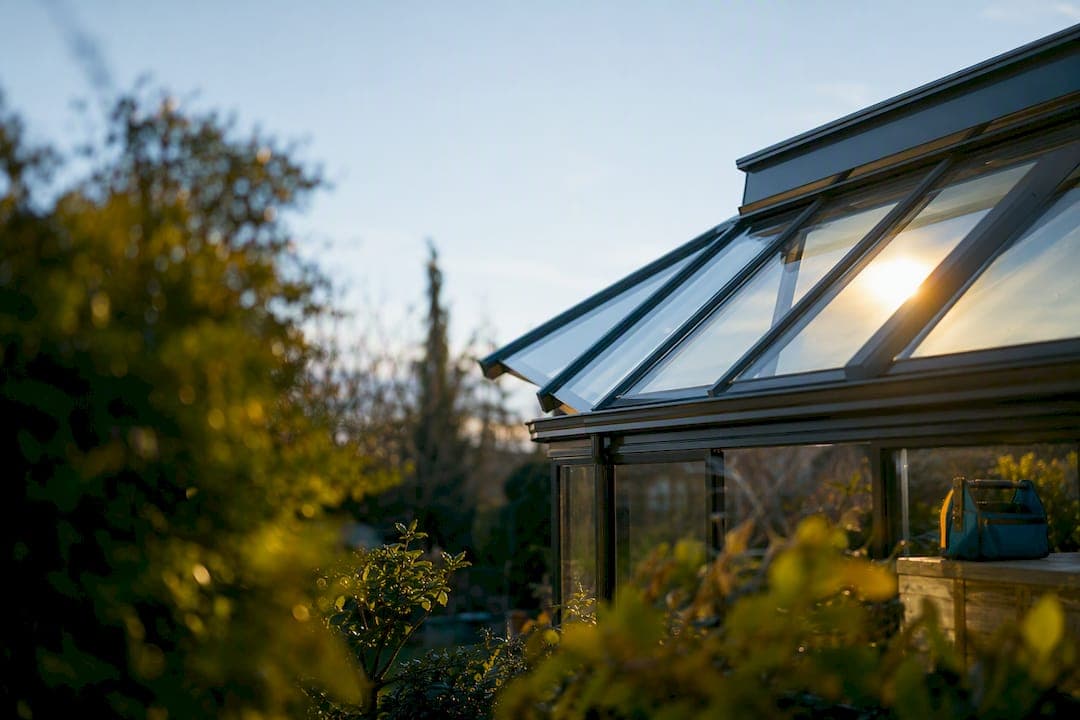
Choose a tiled or insulated solid roof if you want year-round comfort. Choose glass if a bright, garden-room feel matters more than winter warmth. A hybrid design splits the difference, and polycarbonate should only be considered for outbuildings or the tightest budgets. Your final choice still depends on what your existing structure can support and whether the swap triggers building regulations.
TL;DR:
- Polycarbonate roofs are the cheapest upfront but usually need replacement within 10 to 15 years due to yellowing and increased noise.
- Tiled or solid insulated roofs provide the best year-round comfort but cost significantly more and require structural reinforcement prior to installation.
- Hybrid roofs offer a balance, with about 60% tile and 40% glass, and performance depends heavily on the specific mix and ventilation strategy.
- Proper technical assessment, including load calculations and U-value checks, is essential to avoid costly retrofits and ensure compliance with building regulations.
- The choice of roof should be based on how the space is used, with frequent use favoring solid or hybrid options, and less frequent use making glass or polycarbonate viable.
Table of Contents
- Conservatory Roof Options: The Four Main Types Compared
- Glass Conservatory Roofs: Glazing Choices and Thermal Limits
- Tiled and Insulated Solid Roofs: Best for Year-Round Comfort
- Hybrid Roofs: Balancing Daylight and Insulation
- Polycarbonate Roofs: When the Budget Option Makes Sense
- How Do You Choose the Right Conservatory Roof?
- What Do Conservatory Roofs Cost and How Long Do They Last?
- Do You Need Planning Permission for a New Conservatory Roof?
- J.H. Roofing: What We Do and How We Support Conservatory Projects
- Installer Perspective: Common Pitfalls and Long-Term Thinking
- Get a Free Conservatory Roof Survey From J.H. Roofing
- Sources
- FAQ
Conservatory Roof Options: The Four Main Types Compared
Every homeowner weighing conservatory roof options is really choosing between four systems, and each one trades something for something else.
- Tiled or solid insulated roofs deliver the best thermal and acoustic comfort but cost the most and often need structural reinforcement.
- Glass roofs keep the room bright and airy year-round but can overheat in summer without the right glazing and shading.
- Hybrid roofs blend glazed panels with insulated solid sections, balancing daylight against thermal performance.
- Polycarbonate roofs are the cheapest upfront but perform worst on heat, noise, and longevity.
What separates a good result from a disappointing one isn't just the material. It's the whole-roof performance, meaning the U-value of the assembled system, not a single panel spec, along with ventilation and acoustic behavior under rain. Expect installation disruption to scale with roof weight: lightweight glass and polycarbonate swaps are quicker, while tiled conversions usually mean scaffolding, structural checks, and a longer timeline. Cost generally rises roughly in the same order from least to most expensive: polycarbonate, glass, hybrid, tiled.
Glass Conservatory Roofs: Glazing Choices and Thermal Limits
Glass remains the top pick for homeowners who want their conservatory to feel like an extension of the garden rather than a boxed-in room. The glazing you choose determines how well that feeling survives a July afternoon.
Standard double glazing is the entry option, but solar-control coatings, self-cleaning glass, and laminated or toughened units each solve a different problem: heat gain, upkeep, or safety. South-facing roofs are particularly prone to overheating, and glazing specification alone won't fix that without added ventilation or shading. Orientation should shape your glazing order before price does.
Ask installers for:
- The calculated whole-roof U-value, not just the glass unit's rating
- Ventilation strategy, including trickle vents or roof vents
- External shading or blind compatibility
- Expected lifespan and maintenance needs for the coating chosen
Pro Tip: Request a summer heat-gain estimate for your roof's actual orientation, not a generic figure. A north-facing glass roof behaves nothing like a south-facing one.
Tiled and Insulated Solid Roofs: Best for Year-Round Comfort
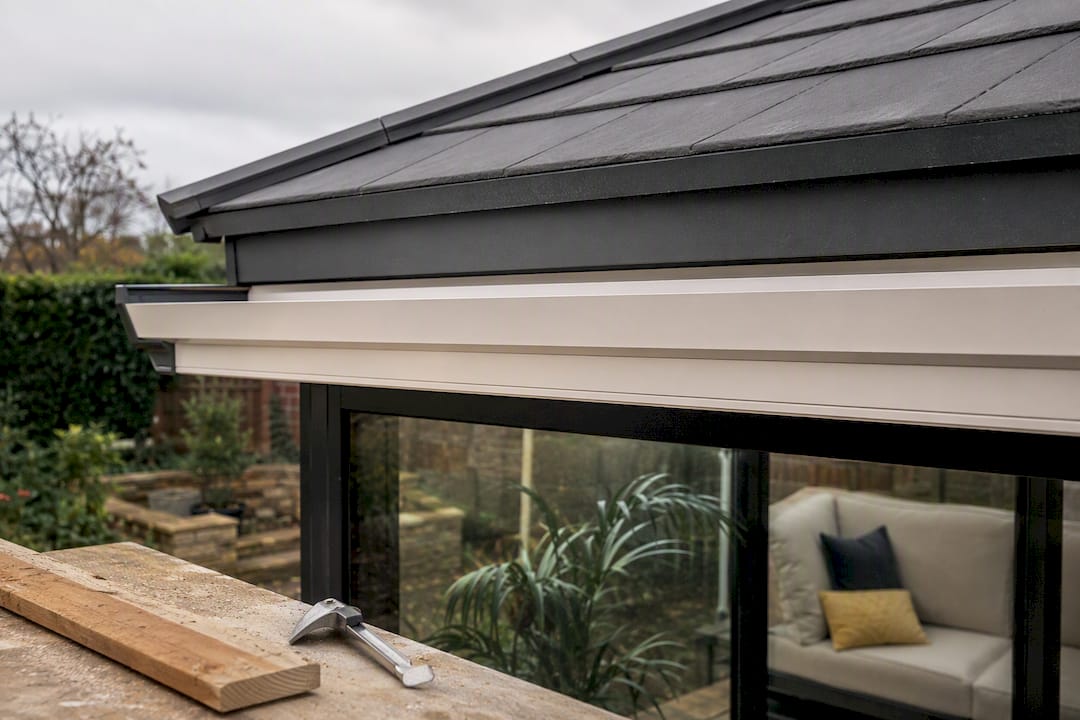
If you use your conservatory daily, in January as much as July, a tiled or insulated solid roof is usually the better long-term investment. Modern systems achieve low U-values that outperform glass and polycarbonate by a wide margin, and the added mass cuts down noise from rain dramatically.
That comfort comes at a cost, both financially and structurally.
- Expect reduced daylight compared to glass, since solid roof sections replace some or all of the glazed area.
- Budget for higher installed costs, since tiled systems typically run several thousand pounds more than glass or polycarbonate for a similarly sized conservatory roof.
- Request a structural assessment first. LABC guidance is clear that existing frames, posts, and foundations must be checked before a heavier roof goes on, since some structures need reinforcement to carry the extra load.
- Factor in resale value. A room that works year-round, rather than six months of the year, tends to add more genuine living space to a property.
Hybrid Roofs: Balancing Daylight and Insulation
A hybrid roof is the compromise option for homeowners who don't want to give up light entirely but need better thermal control than glass alone provides. The proportion of glazed to solid area is what actually determines how the room performs, more than any single material choice.
Common layouts include lantern-style hybrids, rooflight strips set into an otherwise solid roof, or glazed bands running along one edge. A design close to 60% tile and 40% glass is a common starting point for hybrid systems, though the right split depends on orientation and how the room gets used.
- Higher glazed proportion favors bright, seasonal-use rooms.
- Higher solid proportion favors comfort in a home office or year-round living space.
- Always ask for a calculated U-value for your specific mix, since two hybrid roofs with different proportions perform very differently despite looking similar on paper.
Polycarbonate Roofs: When the Budget Option Makes Sense
Polycarbonate wins on upfront price and loses almost everywhere else. It's the cheapest of the conservatory roof replacement options, but that saving usually comes back around within a decade.
- Poor thermal performance means the room runs cold in winter and hot in summer.
- Rain noise is a frequent complaint, since there's little mass to dampen sound.
- Panels tend to yellow and degrade faster than glass or tiled systems, and many installers are moving away from it for that reason.
- It still makes sense for outbuildings, garden rooms used lightly, or budgets that genuinely can't stretch further.
How Do You Choose the Right Conservatory Roof?
Start with how you actually use the space, not the roof you like the look of. A conservatory used daily as living space calls for a different answer than one that's a summer retreat.
- Confirm your priority first. Year-round use points toward tiled or hybrid; seasonal or occasional use makes glass viable.
- Get a structural load assessment before quoting materials, since the wrong roof for your existing frame means costly retrofits later.
- Ask for the whole-roof U-value in writing, not a panel spec pulled from a brochure.
- Confirm ventilation and condensation strategy, especially for solid or hybrid roofs where trapped moisture can become a problem.
- Compare warranty terms and installation timelines across quotes, since a cheaper quote with a thinner warranty often costs more later.
Red flags to walk away from: no mention of a structural check, vague or missing U-value figures, and a quote that isn't itemized by roof system, structural work, and finishes.
Pro Tip: If you use your conservatory daily, ask yourself whether you'd accept the same roof on your main house. If not, it's probably not the right long-term choice for a room you actually live in.
What Do Conservatory Roofs Cost and How Long Do They Last?
Price and lifespan tell two different stories, and the cheaper roof upfront isn't always the cheaper roof over time.
- Polycarbonate costs the least to install but often needs replacing within 10 to 15 years due to yellowing and thermal breakdown.
- Glass sits in the middle on price with a longer lifespan, often 20 years or more with proper maintenance.
- Hybrid roofs cost more than glass alone but spread that cost across better year-round performance.
- Tiled/solid roofs carry the highest installed cost but tend to outlast the others and need the least mid-life intervention.
Factor in total cost of ownership, not just the invoice. A polycarbonate roof replaced twice over 25 years can end up costing more than a tiled roof installed once. Ask every installer for an itemized quote that separates the roof system itself, any structural upgrades, and finishing work, so you're comparing like for like.
Do You Need Planning Permission for a New Conservatory Roof?
Most conservatories are exempt from full building regulations, but that exemption isn't automatic once you change the roof. Swapping a translucent roof for a substantially more solid one can remove that exemption, particularly if the glazing proportion drops significantly or the space becomes heated and habitable.
Before signing off on a roof type, get these items from your installer:
- Structural calculations confirming the existing frame and foundations can carry the new roof
- Evidence of the calculated U-value meeting current thermal standards
- A stated ventilation and condensation control strategy
Check with your local authority's building control department early, before ordering materials. It's a short phone call that can save weeks of rework if your project turns out to need sign-off.
J.H. Roofing: What We Do and How We Support Conservatory Projects
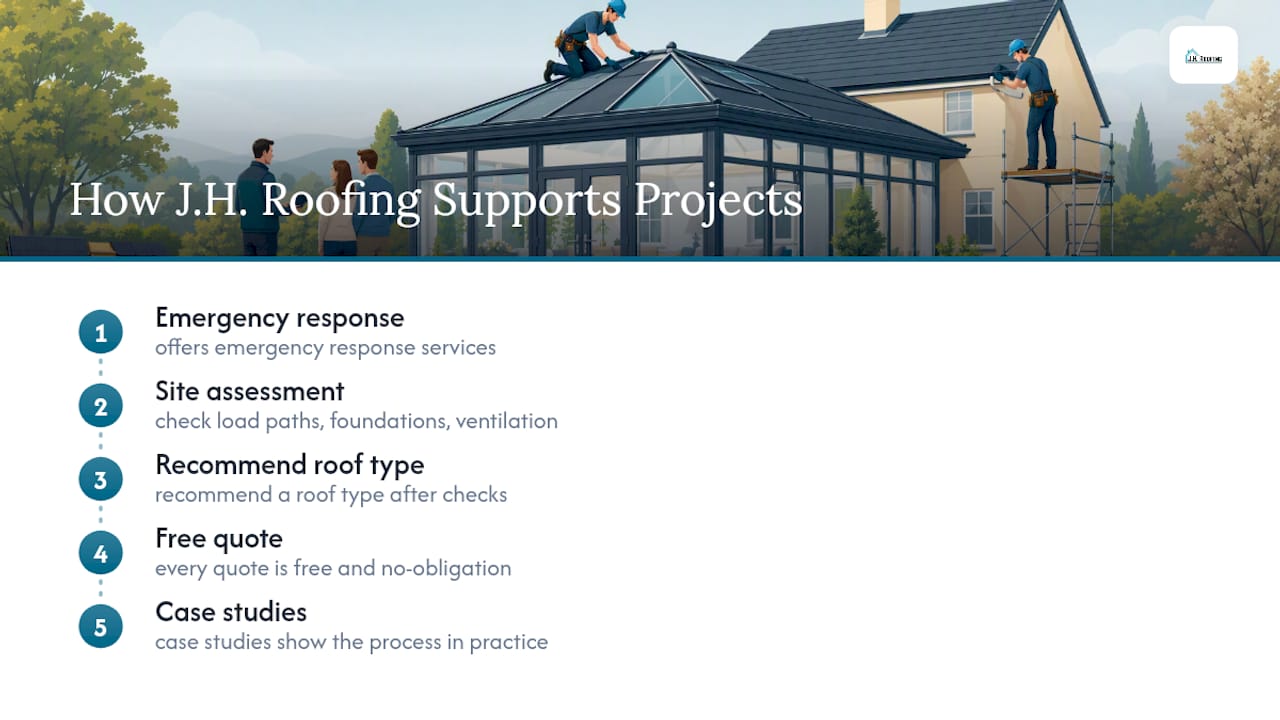
The team has extensive experience and offers emergency response services. On every conservatory job, we check load paths, foundations, and ventilation before recommending a roof type, and every quote is free and no-obligation. Our conservatory conversion case studies show that process in practice.
Installer Perspective: Common Pitfalls and Long-Term Thinking
Homeowners who choose the cheapest roof usually call again within a few years, asking about ventilation fixes or reinforcement work that should have happened the first time. The pattern is consistent: skipping a structural check to save money upfront costs more once problems surface. A roof chosen for how the space gets used, not just the quote total, tends to be the one nobody regrets.
— Gabbi
Get a Free Conservatory Roof Survey From J.H. Roofing
Jhroof is the practical alternative to guessing at roof specs from a brochure. We send someone to check your actual structure, load paths, and foundations before recommending a roof type, then back it with a free, no-obligation quote, not a generic online estimate.
Whether you're leaning toward a tiled conversion for year-round use or want a second opinion on a glass or hybrid design, our conservatory conversions team can walk your specific structure and budget with you. If you're also weighing a full roof replacement alongside the conservatory work, ask for both quotes at once so the itemized costs are easy to compare. Get in touch for a free site visit and a written, itemized quote before you commit to a material.
Sources
Verify the technical detail yourself before signing a contract. The Planning Portal covers building regulations for conservatory roof changes, and LABC's guidance details the structural checks installers should perform. If your project also involves repainting or altering uPVC frames, this planning permission guide for uPVC finishes is worth a read.
- What are the pros and cons of different conservatory roof types? | NewGlaze
- Conservatory design guide | New Forest District Council
- Do I need building regulations approval or planning permission to change the roof on my conservatory? | Planning Portal
- What are the best conservatory roof options? | Checkatrade
FAQ
What Is the Best Type of Roofing for a Conservatory?
There's no single best type. It depends on how you use the room: tiled or insulated solid roofs suit year-round living spaces, while glass roofs suit those prioritizing daylight and seasonal use. Hybrid designs offer a middle ground when you want both.
What Is the Average Cost of a New Conservatory Roof?
Costs vary by roof type, size, and structural work needed, with tiled roofs typically running several thousand pounds more than glass or polycarbonate for a comparable conservatory. Always request an itemized, site-specific quote rather than relying on a general estimate, since access and existing structure change the price significantly.
What Is the New Ten-Year Rule for Conservatories?
There isn't a universal ten-year rule specific to conservatories under current UK building regulations. What matters is whether your roof change alters the thermal separation or glazing proportion enough to remove the conservatory's exemption, which should always be confirmed with local building control before work starts.
What Are the Different Options for Replacing a Conservatory Roof?
The main conservatory roof replacement options are polycarbonate, glass, tiled or solid insulated roofs, and hybrid designs combining glazed and solid sections. J.H. Roofing assesses your existing structure on site to recommend which option fits your budget, orientation, and how you use the space.
Does a New Conservatory Roof Need Building Regulations Approval?
It can, depending on what you're replacing and what you're replacing it with. Swapping a translucent roof for a solid one often changes the conservatory's exempt status, so checking with your local building control department early is worth the short delay.