
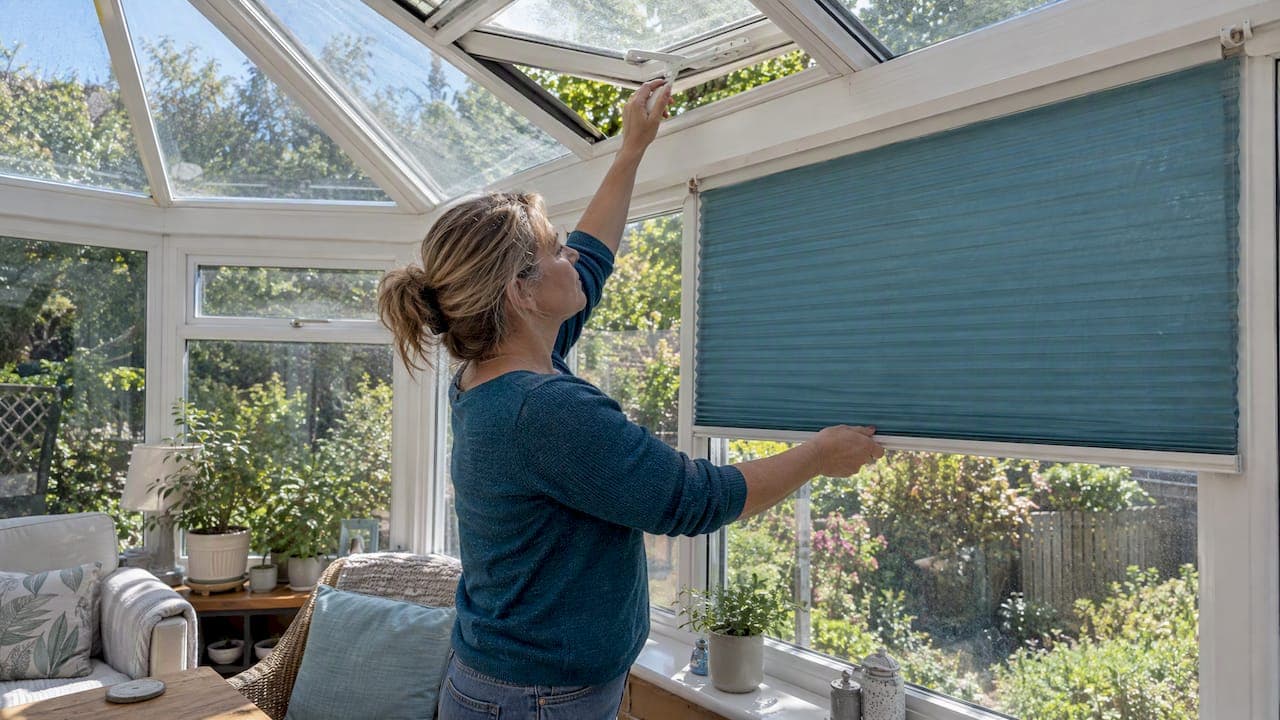
Shade first, then ventilate, then add fans if you still feel sticky. Close reflective or blackout blinds before direct sun hits the glass, open low and high vents to create airflow, and use a fan to move that cooler air around. If the room still overheats through the season, the lasting answer is solar-control glazing or an insulated roof conversion, backed by a proper structural survey before any work begins.
TL;DR:
- External shading methods like awnings and reflective blinds remain more effective at blocking solar gain than internal solutions or fans alone.
- Proper ventilation requires low-level openings for cool air entry and high-level vents or roof windows to allow hot air to escape, with automation improving efficiency.
- Upgrading to solar-control glazing or applying window film reduces heat and glare without darkening the room, but it does not address structural or ventilation issues.
- Solid roof conversions provide the most durable and significant reduction in overheating but require structural surveys and professional installation due to the weight and building regulation considerations.
- Regular maintenance of blinds, film, vents, and landscaping outside is crucial for sustaining cooling performance over time.
Table of Contents
- Quick, low-disruption fixes to try today
- How to get trapped heat moving out of the room
- Glazing and roof upgrades for lasting heat control
- Costs, timescales, and how to prioritize fixes
- DIY vs professional help: when to call in a survey
- Keeping shading and ventilation systems working properly
- How planting and landscaping help cool a conservatory
- Reflective and light-colored roofing materials
- The passive-first rule and the mistakes we see often
- How we can help with a conservatory roof conversion
- FAQ
- Sources
Quick, low-disruption fixes to try today
Before you think about new glass or a new roof, there's a lot you can do with what you already have. These steps cost little, take an afternoon at most, and often make the difference between a room you avoid and one you actually use.
- Close thermal, blackout, or pleated reflective blinds before the sun reaches the glass, not after the room has already heated up.
- Choose external shading such as awnings or external blinds where your budget and frame allow, since blocking heat before it reaches the glass works better than blocking it afterward.
- Fit solar-control window film as a mid-cost option. It cuts glare and solar gain while keeping your view, and the Glass and Glazing Federation notes that professionally fitted film typically carries a 10-year warranty, a sensible route when your existing glazing is otherwise sound.
- Use standing or ceiling fans to move air once you've let cooler air in, since fans alone don't remove heat, they just redistribute it.
- Time your windows and doors carefully: open them early in the morning and again in the evening, and keep them shut during the hottest part of the day so you aren't pulling hot outdoor air into the room.
Pro Tip: Close blinds before you leave for work on a hot morning. A conservatory that heats up at 9 AM stays hot long after the sun moves off the glass.
Getting the sequence right matters more than any single product. A £15 blind closed at the right time often outperforms an expensive fan running in a sealed-up room.
How to get trapped heat moving out of the room
A conservatory traps heat because glass and roof panels absorb solar energy faster than ordinary walls do, and that heat has nowhere to go without a clear path in and out. Opening a single door rarely helps much in a deep or boxed-in conservatory, since the air just sits there with nowhere to flow.
The physics behind effective ventilation is simple: cool air needs to enter low, and hot air needs an exit point higher up. Which? confirms that fans only help once this airflow path exists, since they move air rather than remove heat on their own.
- Open low-level windows or vents first, then open roof vents or high-level windows to let hot air escape.
- Consider timed or automated roof vents if you're often out during the hottest hours.
- Mechanical extract fans can help in rooms with little natural cross-ventilation, though they add noise and need a secure, weatherproof installation.
- Avoid opening everything at once during peak heat. That just invites more hot air in rather than pushing it out.
Building regulations also touch on this. Part F sets ventilation requirements for extensions and conversions, and Quay Point Plastering's guide to Part F explains what homeowners and builders need to check before altering openings or airflow paths.
Glazing and roof upgrades for lasting heat control
When shading, film, and ventilation aren't enough, the next step usually involves either upgrading the glass or rethinking the roof itself. Each option carries a different cost, disruption level, and payoff.
- Solar-control glass reduces the solar energy entering the room while still letting in daylight, so you're not trading heat relief for a dim room.
- Low-emissivity (Low-E) coatings help retain warmth in winter, and the right balance depends on orientation. South- and west-facing conservatories need stronger solar control than north-facing ones, since they catch the most direct sun.
- Window film works well as an interim fix or lower-cost retrofit. The GGF's guidance on keeping a conservatory cool recommends professional fitting and notes that film won't add ventilation or correct a structural roof problem, so it's a glazing fix, not a roof fix.
- Solid or insulated roof conversions deliver the biggest and most permanent improvement in comfort, cutting both summer heat gain and winter heat loss in one move.
A solid roof conversion is also the option that most changes the structure of your conservatory, so it isn't a weekend DIY project. LABC's guidance on solid-roof conservatories stresses a structural survey before any work starts, checking whether existing frames and foundations can carry the added weight, even with lightweight composite roof systems. An installer familiar with local building-control expectations will also need to address junction weatherproofing and how the new roof load transfers down to the foundations.
Costs, timescales, and how to prioritize fixes
Budgets vary by property and supplier, so treat these as general bands rather than quotes. Which? puts portable air conditioning units at roughly £200 and up, with wall-mounted systems reaching around £1,500, giving a useful sense of scale for mechanical cooling.
- Blinds and window film sit at the low end of the cost scale and are usually fitted within a day.
- Fans and portable air conditioning units are low to medium cost, with same-day or next-day setup.
- Wall-mounted air conditioning or professional glazing upgrades fall into the medium range and typically take several days to a couple of weeks.
- Solid roof conversions cost the most and take the longest, often weeks to months once you include the survey, building-control steps, and installation.
Work through these in order: shading and ventilation first, then film or better blinds, then mechanical cooling if the room still isn't comfortable, and finally a structural roof retrofit if overheating keeps returning every summer despite everything else.
DIY vs professional help: when to call in a survey
Most of the fixes above are things you can handle yourself. Some signs, though, point straight to a professional assessment rather than another blind or fan.
- Call a professional if you notice visible frame deformation, cracking, or movement around the conservatory base.
- Get a structural survey before any solid roof conversion, since foundations built for a lightweight structure may not support a heavier roof.
- Bring in a surveyor if planned work changes thermal separation or load paths between the conservatory and the main house.
- Ask whether your roof replacement triggers building-control sign-off or Part L energy considerations, since this depends on the scope of work.
When you do speak with a surveyor or installer, ask for a written survey report, a clear specification of the glazing or roof build-up, a stated ventilation plan, and manufacturer warranties in writing before any work begins.
Pro Tip: Ask any installer whether they are LABC-registered for solid-roof conversions. It's a quick way to confirm they understand local building-control expectations.
Keeping shading and ventilation systems working properly
Shading and ventilation only help if you keep them in working order. Blinds with torn fabric or jammed mechanisms won't close properly on a hot afternoon, which defeats the purpose of having them at all.
Wipe down blind slats and tracks every few months to stop dust buildup from jamming the mechanism, and check cords or motorized controls for wear before summer arrives. Window film needs gentle care too. The GGF's window film guidance recommends cleaning with soapy water and a squeegee, and avoiding abrasive cleaners that can scratch the surface and reduce its effectiveness over time.

Roof vents and louvres need a seasonal check as well. Clear leaves and debris from vent openings so they can still open and close freely, and lubricate any hinges that have started to stick. If you're running mechanical extract fans, check that the housing seals are intact so rain can't get in during an open cycle.
A simple seasonal routine, checking blinds, cleaning film, and clearing vents before the weather turns warm, keeps every passive system performing the way it did when it was first installed. Skipping this maintenance is one of the quiet reasons conservatories that used to stay comfortable start overheating again a few years later.

How planting and landscaping help cool a conservatory
What's growing outside your conservatory affects how hot it gets inside. Deciduous trees or climbing plants positioned to shade south- or west-facing glass block direct sun in summer, then drop their leaves in winter and let light back in when you want the warmth.
Taller shrubs or a well-placed pergola with climbing plants can shade a roof or upper glazing panel that's otherwise hard to cover with blinds. Even a trellis with fast-growing climbers near a particularly exposed wall can take the edge off afternoon heat.
Landscaping choices matter too. Paved or paved-over areas right next to a conservatory tend to radiate stored heat back toward the glass in the evening, while a bed of plants or grass nearby stays cooler and doesn't add to the heat load. None of this replaces shading or ventilation inside the room, but it reduces how much heat reaches the glass in the first place, which makes every other fix work a little better.

Reflective and light-colored roofing materials
The color and finish of your roofing material affects how much solar energy gets absorbed versus reflected. Darker roof coverings absorb more heat and pass more of it through to the room below, while lighter, reflective finishes bounce more sunlight away before it ever becomes heat inside.
If you're already planning a roof conversion, choosing a lighter-colored or reflective roof covering is worth raising with your installer alongside the insulation specification. It won't replace solar-control glazing or proper ventilation, but as part of a full upgrade, it adds one more layer working in your favor rather than against you, particularly on south-facing roofs that take the most direct sun through the day.
The passive-first rule and the mistakes we see often
Limit solar gain first, remove trapped heat with ventilation second, and treat mechanical or structural fixes as the last step, not the first. The most common mistakes we come across are running fans in a sealed room, replacing a roof without a structural survey, and fitting opaque insulation that leaves the room dark. Our flat roof case study shows what a properly sequenced project looks like in practice.
— Gabbi
How we can help with a conservatory roof conversion
When passive fixes have done all they can and your conservatory still overheats every summer, a professional conservatory roof conversion is the next sensible step, and it's a job we undertake as part of our roofing work. We start with a proper survey, follow it with a written proposal, and carry out installation with building-control expectations in mind from the first day.

- A free, no-obligation quote before any work is agreed.
- Workmanship backed by local experience.
- Aftercare and support once the conversion is complete.
If your conservatory has become a room you avoid for half the year, get in touch about our conservatory roof conversions and find out what a solid, properly surveyed roof could do for the space.
FAQ
How to make a conservatory less hot?
Close reflective or blackout blinds before the sun hits the glass, then open low and high vents to create a flow of cooler air through the room. Add a fan once that airflow is in place, and if the problem persists through the season, look at solar-control glazing or a roof upgrade, as recommended by the Glass and Glazing Federation.
What is the 4-year conservatory rule and how does it work?
This isn't an official building regulation term, and there's no standard "4-year rule" recognized in UK building guidance. If you've seen it referenced for a specific product or warranty, check directly with that supplier rather than treating it as a general building-control requirement.
Is it worth putting a radiator in a conservatory?
A radiator can help offset winter heat loss, but it does nothing for summer overheating and may even add unwanted heat if left on during warmer months. Approved Document O focuses on limiting solar gain and removing excess heat rather than adding heating, so treat a radiator as a winter comfort measure, not a cooling fix.
Will a dehumidifier work in a conservatory?
A dehumidifier can reduce condensation and musty air in a conservatory, but it won't lower the room's temperature on a hot day. For actual heat reduction, shading, ventilation, and fans remain the practical first steps, as outlined in Which?'s conservatory cooling guidance.
Sources
- How to keep a conservatory cool in summer — GGF
- Approved Document O: Overheating (UK government)
- How to keep your conservatory cool — Which?
- LABC: Solid-roof conservatories guide