
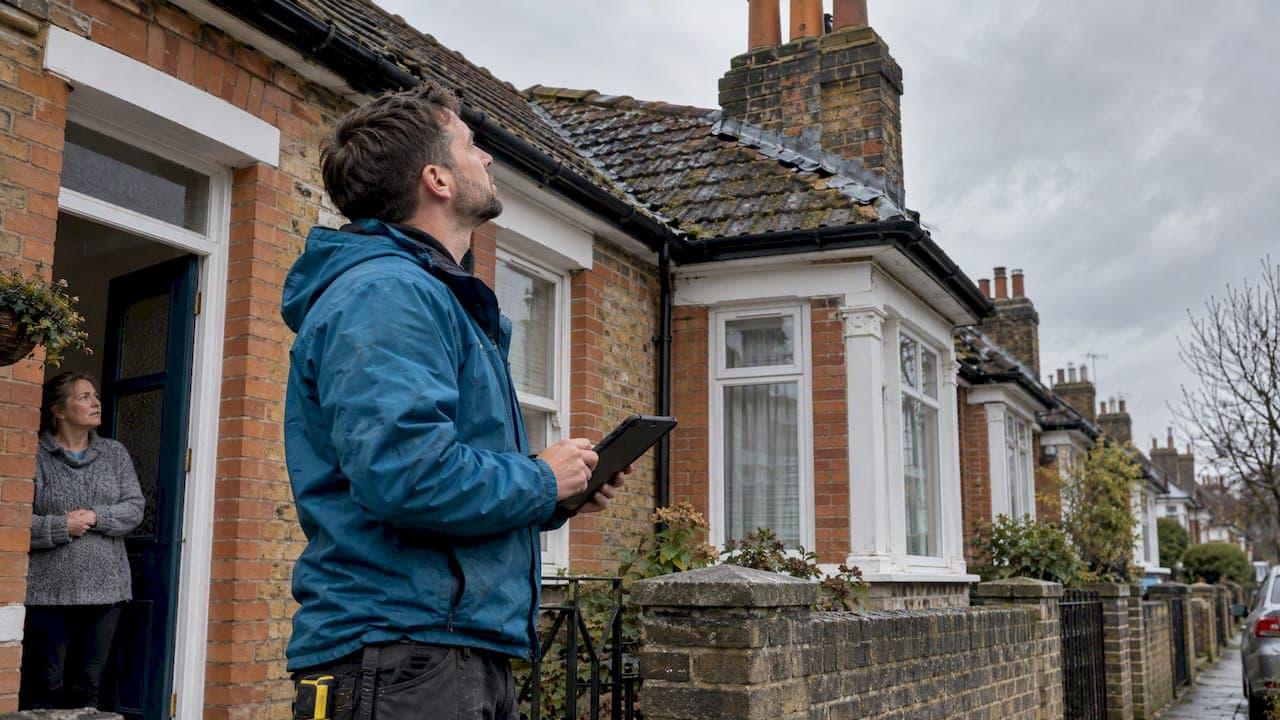
Emergency roof repairs in the UK typically cost between £250 and £1,500 or more, depending on how severe the damage is, and call-outs outside normal hours often add another £100 to £300 to that figure. Before you think about cost at all, stay off the roof and treat the area as unsafe. Contain any water ingress inside the house, then call an insured, reputable roofer who can assess the damage safely and give you a clear price.
TL;DR:
- Emergency roof repair costs in the UK range from £250 to £1,500, with out-of-hours call-outs adding another £100 to £300.
- Minor repairs involve a single tile or small leak fix, typically costing £250 to £400, and can often be completed within an hour.
- Severe storm damage or structural issues usually cost £800 to over £1,500, especially if scaffolding or safety equipment are needed.
- Temporary patches are cheaper but meant only as short-term solutions; permanent repairs include replacing underlay and battens, which can significantly increase costs.
- Safety precautions, including avoiding roof climbing and securing valuables, should be prioritized before professional assessment or repair takes place.
Table of Contents
- Quick price snapshot: price bands and when each applies
- Common emergency repairs and what they typically cost
- What drives the cost of an emergency roof repair
- What to do immediately after roof damage, and why safety comes first
- How emergency roof quotes are usually structured
- Budgeting and insurance: when a claim makes sense
- How J.H. Roofing handles emergency calls across Kent
- What this pricing guide gets right, and where homeowners go wrong
- Get emergency roofing help in Kent today
- FAQ
- Sources
- Authoritative UK sources for roof safety guidance
Quick price snapshot: price bands and when each applies
Not every emergency is the same, and the price you're quoted should reflect the scale of the problem rather than just the fact that it happened at an inconvenient time. Knowing the rough band your situation falls into helps you judge whether a quote is fair before a contractor even arrives.
- Minor emergency (£250 to £400): a single slipped or missing tile, a small area of temporary weatherproofing, or a quick fix to stop an isolated leak.
- Typical emergency fix (£300 to £800): an active leak that needs tracing and sealing, or a flashing repair around a chimney or valley.
- Serious storm or structural damage (£800 to £1,500 or more): multiple tiles or sections lost, propping needed to make an area safe, or damage that has let water into the roof structure itself.
One widely cited UK cost guide puts emergency roof repairs at roughly £250 to £1,500-plus, which matches what most Kent homeowners should expect to budget for depending on severity.
A few scenarios commonly push a job into the next band up. A leak discovered late on a Friday evening, for example, often triggers both an out-of-hours premium and the cost of a temporary tarpaulin before any permanent work can start. Similarly, a single missing tile can look minor until the roofer gets up there and finds two or three more loosened nearby, turning a £250 job into a £400 one. Storm damage almost always lands in the top band once you account for access equipment and the time needed to make the area safe before repairs even begin.
Common emergency repairs and what they typically cost
Seeing itemised examples makes it much easier to judge whether the quote in front of you is reasonable. Here's what you should expect for some of the most frequent emergency call-outs in Kent.
- Single slipped or missing tile: usually £250 to £400 and often finished within an hour once the roofer is on site, though a cluster of loose tiles nearby can push the job toward £500 or more.
- Temporary leak patch vs. permanent repair: a temporary patch to stop water ingress typically sits at the lower end of £250 to £400, while permanent work (replacing underlay, battens, and tiles properly) is usually quoted separately and can run £400 to £900 depending on the extent of the damage.
- Lead flashing repair or replacement: £300 to £700 is typical, with the higher end reserved for chimney flashing that needs full replacement rather than a resealing job, and access difficulty adds to the final figure.
- Flat roof emergency sealing or membrane patching: £300 to £800 for sealing a split or blistered section, though if the felt or membrane has failed more broadly, a partial replacement can move the job closer to £1,000.
- Structural making-safe work: propping a sagging section, erecting scaffolding, or replacing a damaged ridge after storm damage can exceed £1,000 to £1,500, particularly when scaffolding is required for safe access.
The gap between a "temporary" fix and a "permanent" one matters more than most homeowners realize at the time. A temporary patch, usually a tarpaulin, sealant, or a quick tile swap, is designed to stop water getting in while you arrange proper repairs. It is not meant to last through a winter. Permanent repairs usually involve replacing the underlay and battens beneath the damaged tiles, not just the visible covering, which is why the two quotes often look quite different even for the same area of roof.
Access plays a bigger role in flashing and chimney work than people expect. A chimney on a steep pitch or a hard-to-reach valley can mean the difference between a straightforward £300 repair and a £600 one once you factor in the time needed to work safely around it. Flat roof repairs tend to be more predictable in cost because access is usually simpler, but the materials used for membrane patching vary in price and durability, so ask what's being used before you agree to a figure.
What drives the cost of an emergency roof repair
Quotes for what looks like a similar job can vary by hundreds of pounds, and the reasons are rarely mysterious once you know what to look for.
- Access and height: a secure ladder is far cheaper than scaffolding or a mobile elevating work platform (MEWP), and steep or high roofs almost always need the latter for safe working.
- Roof material: slate, clay peg tiles, and specialist leadwork require tradespeople with particular experience, and materials for heritage roofing often cost more than standard concrete tiles.
- Hidden damage: a leak that's been running for a while can soak insulation or rot timber battens and rafters, and that damage is often only visible once the roofer is up there.
- Timing and conditions: bad weather can delay work or add cost for temporary protection, and call-outs on weekends or bank holidays typically carry a premium.
Pro Tip: Ask the roofer to photograph any hidden damage they find before they fix it. It gives you clear evidence for an insurance claim and makes the final invoice easier to understand.
Material shortages have also made certain roofing supplies less predictable to source quickly, particularly after widespread storm events when many roofers in a region are placing orders at once. If your roof uses an unusual tile type, such as traditional Kent peg tiles, expect the permanent repair to take a little longer to schedule even if the temporary fix happens the same day.

What to do immediately after roof damage, and why safety comes first
The instinct to go up and look at the damage yourself is understandable, but it's also the single most dangerous thing you can do after discovering a problem. HSE guidance on roof work is clear that roof work is high risk and that homeowners should not attempt it themselves, and that contractors should plan the job properly rather than improvising on arrival.
Assume a roof is fragile until you have good reason to believe otherwise, and never walk on a roof surface without checking it can support your weight.
That principle comes from HSE's guidance for building owners and managing agents on fragile roofs, and it applies just as much to a homeowner with a ladder as it does to a tradesperson. Here's what to do while you wait for a professional:
- Stay off the roof entirely, even if the damage looks minor from the ground.
- Move furniture, electronics, and valuables away from any area where water is coming through.
- Use buckets or towels to contain water inside, and if it's safe to do so from ground level, secure a tarpaulin over the affected area.
- Take photographs of the damage, both inside and outside, including the position of any leak and visible damage to tiles, flashing, or guttering.
- Note when the damage occurred or was discovered, since insurers often ask for this timeline.
Before you agree to any work, ask the contractor for proof of public liability insurance and, for anything beyond a very small job, a brief method statement explaining how they'll work safely. A reputable roofer should be happy to provide both without being asked twice.
How emergency roof quotes are usually structured
Understanding how a quote is built helps you compare two roofers fairly instead of just picking whoever quotes the lowest number up front.
- Call-out or attendance fee: many roofers charge a fixed amount just to attend outside normal hours, separate from the repair itself.
- Provisional weatherproofing fee: this covers the temporary fix, tarpaulin, sealant, or a quick tile swap, that stops the immediate problem.
- Permanent repair quote: issued separately once the roofer has assessed the full extent of the damage, often after the temporary fix has been in place for a short period.
- VAT: domestic roofing work is generally charged at the standard rate, though always confirm whether a quoted figure is VAT inclusive.
- Deposits and payment terms: a small deposit for materials is common on larger jobs, but a reputable contractor shouldn't ask for full payment before any work has started.
A temporary fix properly documented with photographs and a written note of what was done rarely affects any warranty on the permanent repair that follows, since the two are treated as separate pieces of work. When comparing quotes, ask each roofer what's included in materials, whether access equipment is factored into the price, and how long the guarantee on the finished work lasts.
Budgeting and insurance: when a claim makes sense
Not every emergency repair is worth claiming on your home insurance, and understanding how insurers typically treat these costs can save you time and a higher premium down the line.
- Insurers generally accept an invoice for temporary weatherproofing without much scrutiny, but they'll usually want photographs and a detailed invoice before paying out on permanent repair work.
- If the repair cost is close to or below your policy excess, paying out of pocket is often simpler and avoids the claim appearing on your insurance history.
- Keep a written quote, before and after photographs, and any method statement the contractor provided, since insurers may ask for all three.
- Insurers sometimes ask for the contractor's business details and insurance information, so having this on hand speeds up the claims process.
GOV.UK building work guidance confirms that replacing roof coverings on pitched or flat roofs must either be notified to your local authority or carried out by someone registered on a Competent Person Scheme. Skipping this step can cause problems later, particularly when selling the property, since missing paperwork is a common sticking point in conveyancing. VAT on domestic roofing work is charged at the standard rate in most cases, so factor that into any comparison between quotes that may or may not state it clearly.
How J.H. Roofing handles emergency calls across Kent
This guide draws on published HSE and GOV.UK safety and regulatory guidance alongside market pricing data, put together to give Kent homeowners a realistic, practical starting point before they call anyone out.
J.H. Roofing offers a 24-hour emergency response service across Ashford, Canterbury, Maidstone, Folkestone, and the surrounding areas, with insured workmanship and a 4.7-star Google rating reflecting its track record with local homeowners. No-obligation quotes mean you can get a clear price before committing to anything. When you book an emergency call-out, have your address, a short description of the damage, and photographs ready, that's what helps a contractor assess priority and arrive prepared. Before any work starts, it's worth checking for proof of insurance, a written quote, and a brief outline of how the job will be carried out safely.
What this pricing guide gets right, and where homeowners go wrong
Most advice on emergency roof repair cost treats the price range as the whole story, and that's where it falls short. The number matters less than the sequence you follow to get there: safety first, containment second, a proper assessment third, and only then a conversation about cost. Homeowners who skip straight to comparing quotes often end up focused on the wrong thing, chasing the cheapest call-out fee rather than asking whether the contractor plans the work properly and carries the insurance to back it up.

The conventional advice to "get three quotes" also misses something important for emergencies specifically: speed and safety planning matter more than shopping around when water is actively coming into your home. A slightly higher quote from a roofer who turns up promptly with a proper method statement is usually the better choice over a cheaper one who can't attend for two days.
If you take one thing from this guide, let it be this: treat the temporary fix and the permanent repair as two separate decisions, and don't let urgency push you into skipping the basic checks, insurance, a written quote, a clear scope, that protect you either way.
— Gabbi
Get emergency roofing help in Kent today

If you've got an active leak or storm damage right now, J.H. Roofing's emergency repair team covers Ashford, Canterbury, Maidstone, Folkestone, and the wider Kent area with a 24-hour response service. Jobs typically start with a free, no-obligation quote so you know the cost before anything is agreed, and the work itself is carried out by insured tradespeople.
To help your call-out go smoothly, have the following ready when you get in touch:
- Your address and the best contact number for a callback.
- A short description of the damage and when you first noticed it.
- Photographs of the affected area, both inside and outside if safe to take.
Get a fast, honest estimate with the roof quote calculator, or call for emergency attendance if the damage needs urgent attention now.
FAQ
How much to charge for emergency roof repair?
UK emergency roof repairs typically range from £250 to £1,500 or more, depending on severity, with out-of-hours call-outs commonly adding another £100 to £300. Minor fixes like a single tile sit at the lower end, while storm damage requiring propping or scaffolding lands at the top.
Am I liable if a roofer falls off my roof in the UK?
Liability generally depends on whether the contractor was properly insured and followed safe working practices, which is why HSE guidance stresses hiring competent contractors who plan the work and carry public liability insurance. Always confirm a roofer's insurance before work begins rather than assuming you're covered by default.
How much does it cost to repair a roof in the UK?
General roof repairs in the UK vary widely by scope, but emergency repairs specifically fall in the £250 to £1,500-plus range depending on the extent of the damage and access required. A single slipped tile sits near the bottom of that range, while structural making-safe work after a storm sits near the top.
How urgent is roof repair after storm damage?
Active leaks or storm damage should be addressed immediately with containment measures inside the home, followed by a call to an insured roofer, since HSE guidance treats unassessed roof damage as a safety risk rather than something to leave until convenient. The underlying damage, slipped tiles, flashing failure, is rarely urgent enough to justify going up yourself, but it is urgent enough to call a professional promptly.