
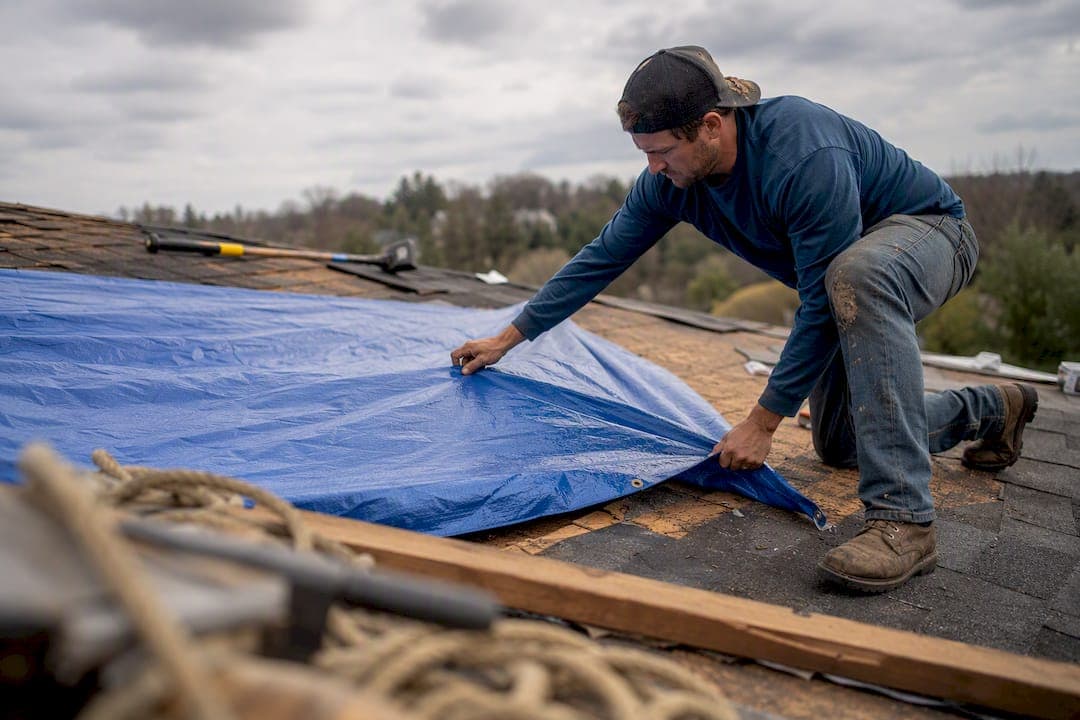
If it's not safe to get on your roof, call a 24/7 emergency roofer now. If conditions are safe (dry, low pitch, no structural sag), you can start protecting your home yourself: document the damage, size a heavy-duty tarp with a 3 to 4 foot overhang, weigh it down temporarily, then arrange proper anchoring. Skip the roof entirely if you see sagging, exposed wiring, or storm conditions still in play.
Cost helps you make the call fast. Here's what to expect:
- Small, localized jobs: roughly $250 to $600
- Typical emergency tarping: about $400 to $1,000
- After-hours or storm-surge call-outs: add 25% to 50% on top
Emergency tarping costs vary nationally, often ranging from a few hundred to over a thousand dollars, with many contractors reporting averages in the mid-hundreds of dollars, according to IKO North America. If your damage is significant or the roof is steep, that price difference between DIY and professional installation is worth paying for.
Key Takeaways
Fast, correctly sized, and properly anchored tarping protects your home's interior and preserves your insurance claim while you arrange permanent repair.
| Point | Details |
|---|---|
| Act on safety first | Skip DIY tarping if the roof is steep, wet, structurally compromised, or near power lines, and call a professional instead. |
| Size and place correctly | Extend the tarp 3 to 4 feet beyond damage and drape it over the ridge to help prevent water pooling under the top edge. |
| Anchor with furring strips | The wood batten sandwich method spreads wind load far better than sandbags alone for anything left up more than a day. |
| Document before you cover | Photograph damage and keep every receipt so your insurer's duty to mitigate requirement works in your favor. |
| Call J.H. Roofing for Kent emergencies | 24 hour response, free quotes, and insurance-ready documentation make it a direct path from tarp to permanent repair. |
Table of Contents
- What an Emergency Roof Covering Actually Protects (and What It Doesn't)
- How Do You Tarp a Roof Safely as a Homeowner?
- Choosing the Right Tarp and Anchoring It So It Stays Put
- What Does Emergency Tarping Cost, and How Does Insurance Factor In?
- When Should You Call a Professional Instead of Doing It Yourself?
- Why Kent Homeowners Choose J.H. Roofing for Emergency Calls
- Where to Find Official Programs and Deeper How-To Guidance
- Why the Standard Advice on Tarping Undersells the Anchoring Step
- Get Your Roof Secured by a Kent Crew That Answers at 2 A.M.
- Frequently Asked Questions
- Sources
What an Emergency Roof Covering Actually Protects (and What It Doesn't)
A tarp buys you time. It does not fix a broken roof.
Think of it as a raincoat, not a repair. An emergency roof covering stops rain, wind-blown debris, and animals from getting into your attic or living space while you arrange permanent work. It does nothing to restore structural integrity, replace missing shingles, or seal flashing.
Lifespan depends heavily on material and installation quality:
- Standard poly tarps: a few weeks before UV exposure and wind start breaking them down
- Heavy-duty or reinforced sheeting: up to 90 days under typical post-storm conditions
- Inspection cadence: check after every major weather event, not just once a season
Leave a tarp up too long and you risk a second problem. Trapped moisture, UV degradation, and wind fatigue at the grommets can cause the tarp itself to fail, sometimes worse than the original leak. Treat any tarp as a placeholder, not a solution, and schedule permanent repairs while it's still doing its job.
How Do You Tarp a Roof Safely as a Homeowner?
Speed matters, but not more than your safety. Here's the order of operations if a professional can't reach you within the hour:
- Stop and assess. Do not go on the roof in rain, high wind, on a steep pitch, or if you notice sagging, cracking, or exposed wiring. Call an emergency roofer instead.
- Document everything first. Take photos and video of the damage before you cover anything. Insurers will ask for this.
- Protect the inside. Place buckets under active leaks, move furniture and electronics, and lay tarps or towels over anything you can't move.
- Call for backup. Even if you plan to tarp yourself, get a professional emergency roofer on the schedule now.
- If it's genuinely safe to access: clear loose debris, unroll the tarp fully, drape it over the roof ridge if the damage is near the peak, and use temporary weights like sandbags to hold it in place while you work out anchoring.
Pro Tip: Never nail a tarp directly into unsupported material. A nail through bare tarp will tear the moment wind puts tension on it, and you'll be back to square one within hours.
Choosing the Right Tarp and Anchoring It So It Stays Put
Not all tarps hold up the same way, and how you secure one matters as much as the material itself.
Materials: Go with heavy-duty polyethylene rated at least 6 mil for anything beyond a day or two. If you're expecting weeks before a permanent fix, reinforced sheeting holds up better against sun and wind.
Sizing: Extend the tarp 3 to 4 feet beyond the damaged area on every side, and drape it over the ridge whenever the damage sits near the peak. One large tarp beats two overlapping smaller ones. Overlaps create seams where water finds a way in.
Anchoring: The furring-strip sandwich method, sandwiching the tarp edge between two wood battens and screwing through into the roof decking, distributes wind load evenly and prevents grommets from tearing out. Sandbags work fine as a short-term hold while you're positioning the tarp, but they shouldn't be your only anchor for anything meant to last more than a day or two.
- Pull the tarp taut, not stretched to the point of strain
- Space furring strips every few feet along each edge
- Reinspect after every storm, not just once
Pro Tip: Sandbag-only anchoring is fine for the first hour while you get the tarp positioned, but upgrade to furring strips before you walk away. Wind doesn't wait for convenient timing.
What Does Emergency Tarping Cost, and How Does Insurance Factor In?
Prices scale with size and access difficulty. A single damaged section might run $250 to $600. Whole-roof coverage after a major storm often lands between $700 and $1,200.
That premium is worth paying if it protects your insurance claim. Insurers generally expect you to take reasonable steps to prevent further damage after a covered event, often called the duty to mitigate. Here's how to protect yourself:
- Photograph every angle of the damage before you tarp
- Keep every receipt, including hardware store runs and contractor invoices
- Avoid permanent repairs until the adjuster has inspected the property
- Ask your contractor for an itemized, insurance-ready invoice
For large-scale disasters, the U.S. Army Corps of Engineers' Operation Blue Roof supplies temporary fiber-reinforced sheeting to eligible homeowners, though it requires a signed Right of Entry and only activates during federally declared events. Most homeowners will move from tarp to permanent repair within a few weeks, weather and material availability permitting.
When Should You Call a Professional Instead of Doing It Yourself?
Some situations aren't DIY territory, full stop:
- Structural sagging or visible deck damage. If the roofline looks bowed or you can see through to the attic, stay off it.
- Steep pitch or multi-story access. Anything beyond a gentle slope raises fall risk dramatically.
- Active weather. Wind, rain, or ice on the roof surface turns a repair job into an accident waiting to happen.
- Power lines nearby. Downed or low-hanging lines near the damage area are a hard stop.
- Active interior leaks with no clear source. If water is coming in but you can't see where, a professional needs to trace it before covering anything.
A professional crew typically runs a safety assessment first, often using fall protection or a harness on steep sections, then clears debris, measures the damage precisely, and installs a heavy-duty tarp with furring-strip anchoring. They document everything as they go, which makes your insurance claim smoother.
Before hiring, ask directly: What's your response time? Are you licensed and insured? Can I get a written estimate? Do you help with insurance paperwork? Is there an after-hours fee?
Why Kent Homeowners Choose J.H. Roofing for Emergency Calls
J.H. Roofing has handled emergency tarping and repairs across Kent for over 10 years, family-owned from the start, with a 4.7-star Google rating built on jobs like this one.
- 24-hour emergency response, so a storm at 2 a.m. doesn't mean waiting until Monday
- Free, no-obligation quotes before any work begins
- Direct booking through our emergency call-out page for immediate scheduling
- Licensed, insured crews who handle both the tarp and the insurance-ready documentation
If your roof needs attention today, that's exactly the kind of call we're set up to answer.
Where to Find Official Programs and Deeper How-To Guidance
- Operation Blue Roof for federally declared disaster sheeting programs
Why the Standard Advice on Tarping Undersells the Anchoring Step
Most guides treat tarping as a sizing problem: get a big enough sheet, cover the hole, done. That misses the part that actually determines whether the tarp survives the next storm. Anchoring is where DIY jobs fail, not sizing.
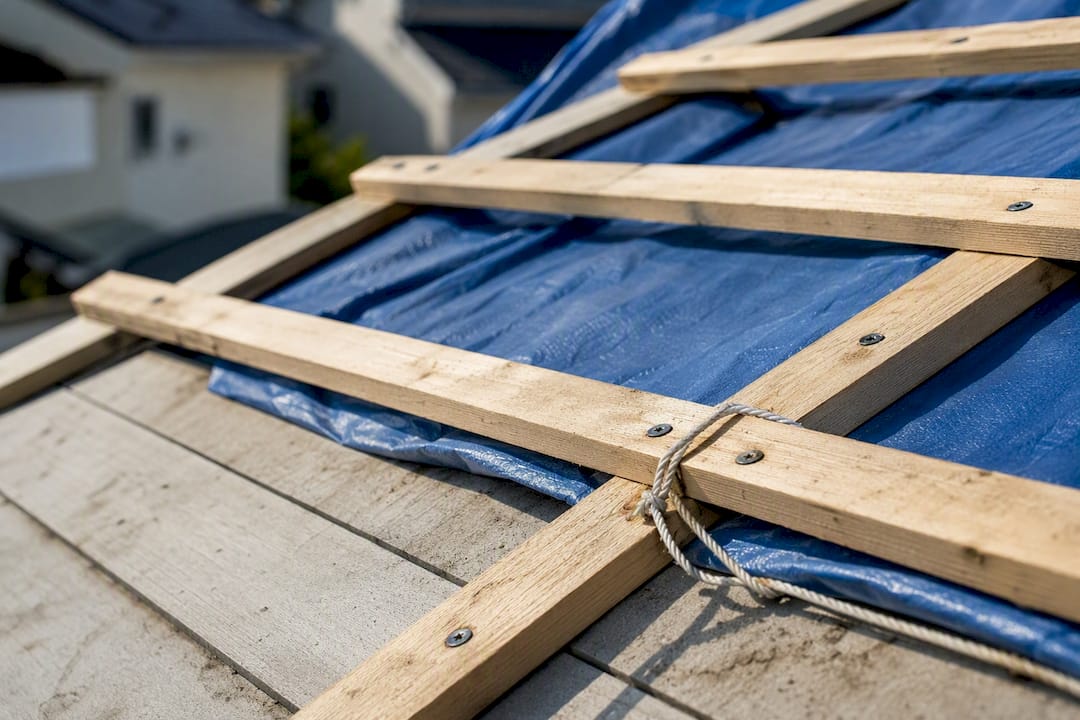
Sandbags feel like the obvious fix because they're fast and require no tools. But they're a stopgap for the first hour, not a solution for the next three weeks. The furring-strip method takes longer to set up and requires screws, wood, and a bit more nerve on the roof, which is exactly why homeowners skip it. That shortcut is where most repeat call-outs come from: a tarp that held for two days, then peeled back the moment wind picked up.
If you take one thing from this guide, prioritize the anchoring method over the tarp brand or thickness. A mid-grade tarp installed with furring strips will outlast a premium tarp held down with sandbags. Get the fastening right, and the material choice matters far less than most advice suggests.
Get Your Roof Secured by a Kent Crew That Answers at 2 A.M.
A tarp from the hardware store buys you a few days if the weather cooperates. J.H. Roofing gets a trained crew to your property with the right materials already anchored correctly, often within hours, not days.

That matters most when the damage is bad enough that a DIY tarp job feels risky or the pitch is too steep to attempt safely. Our 24-hour emergency response means you're not waiting until Monday morning to stop water from spreading through your ceiling, and every quote is free with no obligation attached. We also handle the documentation your insurer will want to see, so the receipts and photos are already in order when the adjuster calls.
If your roof needs attention now, start with our emergency repair page for Kent properties, or check our full range of roofing services to schedule the permanent fix once the storm has passed.
Frequently Asked Questions
How long can an emergency roof tarp stay up before it needs replacing? A heavy-duty tarp properly anchored can protect a roof for up to 90 days, but inspect it after every major weather event and replace it sooner if you notice tears or UV wear.
What size tarp do I need for a roof leak? Measure the damaged area, then add 3 to 4 feet on every side. One larger tarp draped over the ridge beats two smaller ones taped together at a seam.
Will my insurance cover emergency tarping? Most policies expect you to take reasonable steps to prevent further damage, so tarping costs are often reimbursable if you photograph the damage and keep receipts before the adjuster inspects.
Can I use sandbags instead of screwing into my roof? Sandbags work as a short-term hold while positioning a tarp, but they're not a substitute for furring-strip anchoring if the tarp needs to survive more than a day or two of wind.
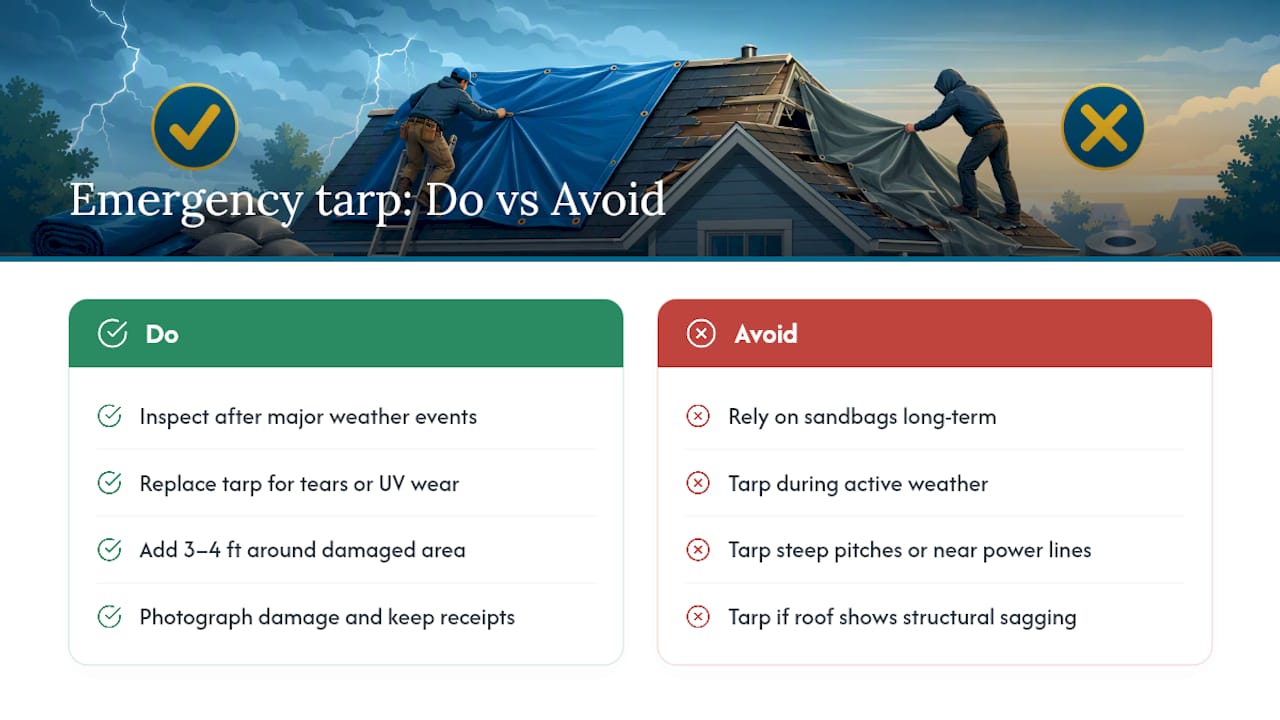
Is it ever too dangerous to tarp a roof myself? Yes. Skip DIY entirely on steep pitches, during active weather, near power lines, or if you notice any structural sagging, and call an emergency roofer instead.
Sources
- Operation Blue Roof | U.S. Army Corps of Engineers
- The ins and outs of emergency roof tarping | Paul Davis Restoration
- How to tarp a roof | The Home Depot