
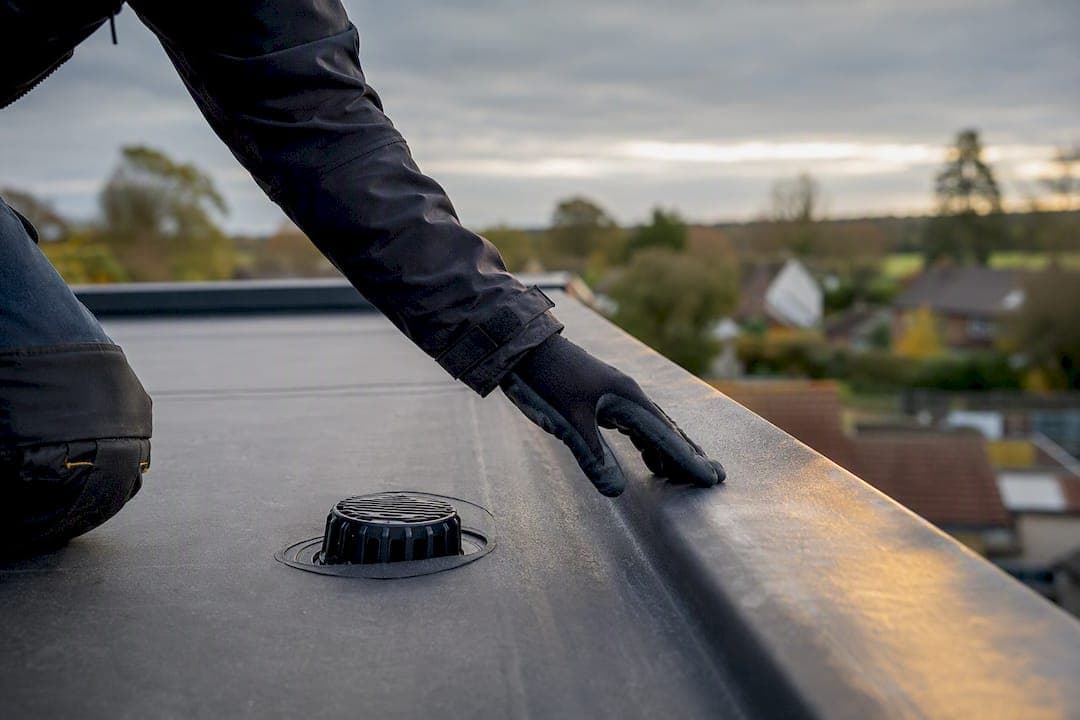
Two habits determine whether your EPDM roof lasts 15 years or 50: catching seam and flashing problems early, and never letting water sit on the membrane. Inspect regularly throughout the year, check drainage after every heavy storm, and never clean or coat the surface with petroleum-based products. When seams start separating or a patch fails, that's your signal to bring in a roofer rather than reach for the wrong sealant.
TL;DR:
- Regularly inspect seams, flashings, drains, and membrane surface at least twice a year to detect early signs of deterioration or blockages.
- Use gentle cleaning methods with EPDM-specific products on dry days, avoiding petroleum-based and harsh chemicals that can damage the membrane.
- Address minor issues like small punctures or seam failures promptly with proper patch repairs to prevent escalation into costly damages.
- Identify and fix ponding water within two days to avoid accelerated membrane aging and seam separation caused by standing water.
- Consult a professional roofer for large punctures, continuous ponding, or saturated insulation to ensure a long-lasting repair and proper diagnosis.
Table of Contents
- How Often Should You Inspect an EPDM Roof?
- How Do You Clean an EPDM Roof Without Damaging It?
- What Are the Most Common EPDM Roof Problems?
- Why Does Ponding Water Damage EPDM Roofs?
- When Should You Call a Roofing Professional?
- What Should Your Seasonal EPDM Maintenance Checklist Include?
- What a Professional EPDM Repair Actually Looks Like
- The Maintenance Advice Nobody Follows, and Why That's Backwards
- Get an EPDM Roof Inspection or Repair Quote
- Sources
How Often Should You Inspect an EPDM Roof?
Most EPDM failures don't start as leaks. They start as a lifted seam edge, a cracked flashing collar, or a drain clogged with leaf litter that nobody noticed for three months. Catching those early is the entire game.
A workable inspection rhythm has three tiers:
- Monthly quick checks. Walk the roof, glance at drains and gutters, and look for obvious debris, standing water, or displaced flashing.
- Biannual detailed inspections. Spend 20 to 30 minutes examining every seam, penetration, and edge closely, ideally in spring and autumn.
- Professional inspections every few years, or immediately after a major storm. Industry guidance from the EPDM Roofing Association recommends this cadence specifically because seam fatigue and flashing failure often build slowly and are easy to miss from ground level.
During a detailed check, work through this list methodically:
- Seams and lap adhesives — look for lifting edges, bubbling, or gaps where two membrane sheets meet.
- Flashings around penetrations — check pipes, vents, and rooflights for cracked or shrunken collars.
- Roof edges and parapets — these take the worst weather exposure and loosen first.
- Drains and outlets — clear of leaves, moss, or grit that blocks flow.
- General membrane surface — scan for blistering, punctures, or discoloration.
A simple flow test tells you a lot: pour a bucket of water near a drain and time how fast it clears. Anything beyond a minute or two on a properly pitched roof suggests a partial blockage.
Photograph every issue with a timestamp, note the location, and log it. Documented inspection records matter more than most property owners realize. They turn a one-off glance into a trend line you can show an insurer or a contractor, and they're often what a warranty claim hinges on.
How Do You Clean an EPDM Roof Without Damaging It?
Cleaning day is where good intentions cause the most damage. EPDM rubber is tough against UV and weather, but it's chemically vulnerable to the wrong products, and a lot of readily available cleaners fall into that category.
Pick a dry day with mild temperatures. Wet or frosty surfaces turn a flat roof into a hazard, so wear non-slip footwear, use a stable ladder or scaffold access, and never work alone on anything but the lowest, safest roofs.
Use:
- A soft-bristle brush or broom for debris
- Low-pressure water rinse (never a high-pressure washer, which can force water under seams)
- Mild soap or EPDM-specific cleaning products
Avoid entirely:
- Petroleum-based solvents or degreasers
- Harsh bleach or chlorine-based cleaners
- Any oil-based product, including some common driveway or patio cleaners
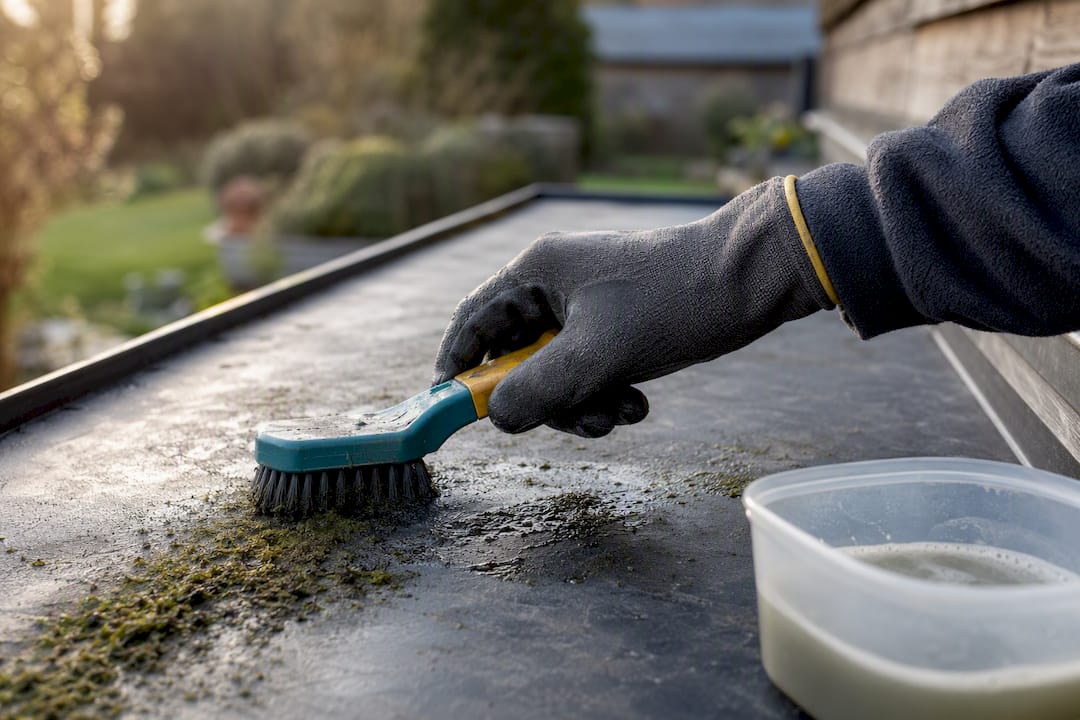
Work in sequence: clear loose debris first, pre-rinse the surface, apply cleaner working toward the seams rather than away from them, agitate gently with the brush, then rinse thoroughly. Reinspect once the surface dries. That last step catches problems the grime was hiding.
Moss and algae usually respond to a soft brush and a diluted, EPDM-safe cleaner, though shaded, north-facing sections may need repeat treatment. If a stain keeps returning after two or three cleaning passes, that's often a sign of a hidden drainage or ponding issue underneath, not a cleaning problem at all.
Pro Tip: Keep one cleaning product on hand year-round and skip the temptation to "try something stronger" on stubborn stains. EPDM's chemical sensitivity means the wrong bottle can do more damage in ten minutes than five years of weather.
What Are the Most Common EPDM Roof Problems?
Most EPDM faults fall into five categories, and each has a different urgency level.
Punctures happen from foot traffic, dropped tools, or debris impact. Seam separation shows up as a lifting edge where two membrane sheets were bonded. Shrinkage pulls the membrane away from edges and penetrations over time, especially on older installations. Blisters form when trapped moisture or air expands under the surface. Edge lift appears where fastening or adhesive at the perimeter has failed.
For small punctures and simple lap failures, a basic patch repair follows a consistent sequence:
- Clean and thoroughly dry the damaged area.
- Apply an EPDM-compatible primer to both the membrane and the patch material.
- Position the patch with generous overlap, at least two inches beyond the damaged edge.
- Roll firmly with a seam roller to remove trapped air and ensure full contact.
- Finish with lap sealant around the patch perimeter, following manufacturer-specific repair guidance.
Anything larger than roughly a foot across, or significant seam failures, should be handled by a professional roofer. Checkatrade's UK cost data puts EPDM material costs at around £80 per square metre, which gives a useful sense of scale when weighing a patch against a section replacement.
The single biggest mistake owners make here is grabbing whatever adhesive or coating is in the shed. Oil-based products and incompatible sealants don't just fail to bond. They actively accelerate membrane breakdown around the repair site.
Why Does Ponding Water Damage EPDM Roofs?
Standing water isn't cosmetic. It adds sustained weight and UV-filtered heat stress exactly where the membrane and seams are already under the most load, and persistent ponding accelerates both membrane aging and seam failure. If a pool of water hasn't drained within a couple of days of dry weather, treat it as a problem, not a quirk of the roof.
Diagnosing it is straightforward:
- Run a flow test at each drain and time how quickly water clears.
- Walk the roof after rain and mark any areas holding water for more than two days.
- Check outlets and gutters for blockages, including leaves, moss, or bird debris that accumulates over a season, which can be addressed effectively with pigeon proofing solutions for solar panels.
Short-term, a temporary channel or siphon tube can redirect water away from a problem spot until you can schedule proper work. The durable fix is usually structural: tapered insulation or an additional outlet that changes how water moves across the roof instead of repeatedly patching the same stressed seam. If ponding keeps reappearing in the same spot despite clear drains, that often points to deck sagging or structural settlement, which calls for a professional assessment rather than another round of patching.
When Should You Call a Roofing Professional?
Some jobs are genuinely DIY. Others aren't, and the line matters more than most owners assume. Call a roofer when you're facing:
- Seam failures longer than a couple of feet
- Saturated insulation beneath the membrane (often revealed by a soft, spongy feel underfoot)
- Tears or punctures larger than roughly 12 inches
- Ponding that returns repeatedly in the same location
- Suspected trapped moisture that needs infrared or electronic detection to confirm
On cost, UK ballpark figures put EPDM material pricing around £80 per square metre, with full replacement costing considerably more than a targeted repair once labor and access are factored in. Treat these as a starting point, not a quote. Get two or three local assessments before committing to major work.
A proper professional inspection report should include dated photos, a moisture scan where relevant, and a clear timeline for any recommended fixes. That documentation is exactly what supports a warranty dispute or insurance claim later.
Pro Tip: Before hiring anyone, ask for proof of insurance and a written breakdown of materials versus labor. A contractor who hesitates on either question is worth avoiding.
What Should Your Seasonal EPDM Maintenance Checklist Include?
Timing your checks to the calendar catches problems the monthly walk-through often misses.
- Spring: Inspect for shrinkage and seam stress caused by winter freeze and thaw cycles, then run a flow test at every drain to confirm that nothing froze or shifted over winter.
- Autumn: Clear leaves and debris from gutters and outlets before they compact into blockages, and secure any flashing that's loosened over the summer.
- After severe weather: Do an immediate visual sweep for punctures, displaced flashing, or ponding that appeared overnight, particularly after high winds or hail.
Layer that onto the standing cadence: monthly quick looks, biannual detailed inspections, and a professional check every three years or after any major event. Our own end-of-summer maintenance guide covers the transition window in more detail if you're setting up a yearly schedule for the first time.
What a Professional EPDM Repair Actually Looks Like
Jhroof's flat roof replacement case study in Kent shows the pattern that separates a lasting repair from a temporary one: diagnose first, document everything, then work strictly to manufacturer-compatible methods rather than whatever's fastest.
A roof that's been neglected for years rarely fails in one place. By the time you're called out, you're usually looking at a seam that's been letting water in slowly for months, insulation underneath that's already saturated, and a drain that's been half blocked the whole time. The fix isn't just patching what you can see. It's tracing the problem back to where it actually started.
This family-run, insured contractor approaches every job the same way: photograph the damage, schedule repairs in a dry weather window, and use adhesives and primers that match the existing membrane. That consistency is what separates a repair that holds for another decade from one that fails again within a year.
Author: Gabbi
The Maintenance Advice Nobody Follows, and Why That's Backwards
Most guidance on EPDM roofs reads like a checklist nobody expects you to actually complete. Inspect monthly, clean twice a year, watch the drains. Sound advice, rarely followed, because none of it feels urgent until water is dripping into a ceiling.
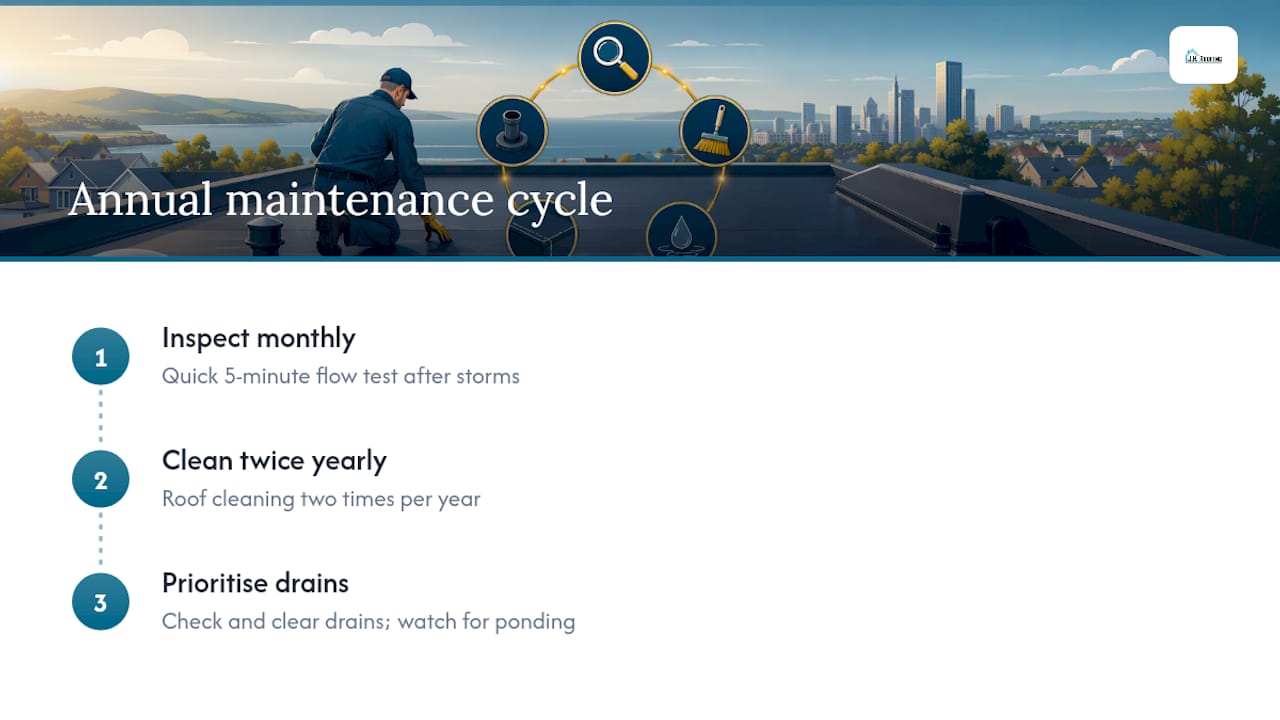
Here's the uncomfortable truth the research actually supports: the maintenance that matters most is the cheapest and least dramatic kind. A five-minute flow test after a storm costs nothing and catches the exact problem, ponding, that does the most long-term damage to seams and membrane. Compare that to the conventional wisdom, which tends to fixate on coatings and cleaning products, treating EPDM maintenance like a cosmetic exercise rather than a drainage exercise.
If you take one thing from this, prioritize drains over everything else. A roof with imperfect seams but excellent drainage will outlast a roof with pristine seams sitting under two inches of standing water. EPDM systems can reach 30 to 50 years of service life, but that number assumes water never gets the chance to sit and work its way into a weak point. That's a maintenance choice, not a manufacturing spec.
— Gabbi
Get an EPDM Roof Inspection or Repair Quote
This service offers property owners a straightforward alternative to guessing your way through EPDM maintenance: a trained eye on your roof, a written assessment, and a free, no-obligation quote before you commit to anything. Whether you need a routine inspection, a targeted seam repair, or a full flat roof replacement, the work is carried out by an experienced, insured, family-run team.

If you've spotted ponding water, a lifting seam, or storm damage during your own walk-through, don't leave it until the next inspection cycle. Jhroof's 24-hour emergency repair service covers urgent cases, and for everything else, you can book an inspection or request a quote directly through our services page. A short call now is almost always cheaper than a saturated deck later.
Sources
- Maximizing Roof Performance: Climate, Maintenance and Reroofing Strategy - EPDM Roofing Association
- Rubber roofing cost guide — Checkatrade
- EPDM Roof Repair Guide: How To Fix Leaks, Tears, Seams and Failed Patches - Rawlins Paints