
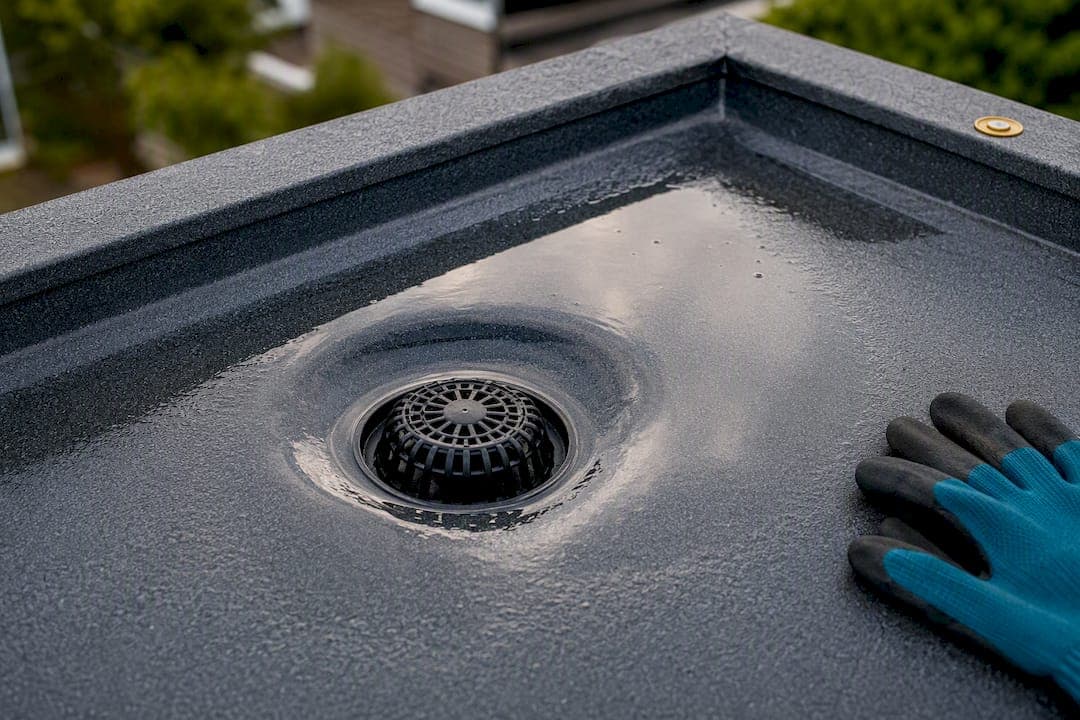
If water sits on your flat roof more than 48 hours after rain, treat it as ponding, not just drainage lag, and act on it. Your first move costs nothing: clear the drains and scuppers, then mark the waterline and check it again after the typical drying period used by manufacturers. If it's still there, you're past the point where a broom and good intentions solve the problem.
TL;DR:
- Water sitting on a flat roof for more than 48 hours indicates a drainage failure and can cause membrane degradation, mold growth, and structural issues.
- Confirm ponding by marking the waterline and retesting after 48 hours, and measure the depth and area to assess potential load and damage.
- Common causes include blocked drains, insufficient slope, structural sagging, and saturated insulation; fixing often requires professional evaluation.
- DIY fixes like drain clearing and leveling compounds work for shallow ponding under one inch but fail if the problem stems from structural or slope issues.
- Regular maintenance such as seasonal drain clearing and professional inspections can prevent ponding buildup and extend roof lifespan.
Table of Contents
- What Is Flat Roof Ponding and Why Does It Matter?
- How Do You Check for Ponding Safely?
- What Causes Ponding Water on a Flat Roof?
- Can You Fix Flat Roof Ponding Yourself?
- How Much Does Professional Ponding Repair Cost?
- What's the Best Way to Prevent Future Ponding?
- A Kent Case Study: Diagnosing Ponding Before It Became a Full Re-Roof
- What Actually Matters When You're Dealing With Ponding
- Get a Professional Ponding Assessment From Jhroof
- Sources
What Is Flat Roof Ponding and Why Does It Matter?
The 48 hour threshold isn't arbitrary. It's the industry standard set by ARMA to separate normal post-rain runoff from a genuine drainage failure. Water pooling on a flat roof for two days or longer means the surface isn't shedding water the way it was designed to, and most manufacturers exclude ponding-related damage from their warranties entirely. Standing water usually indicates a design or maintenance failure.
Left alone, ponding water on a flat roof causes a cascade of problems:
- Membrane degradation: prolonged saturation breaks down EPDM, TPO, and built-up roofing faster than UV exposure alone
- Algae and vegetation growth: standing water invites organic buildup that traps moisture against the membrane
- Slip hazards: anyone accessing the roof for maintenance now has a hidden fall risk
- Structural load: this is the one most owners underestimate
Water weighs about 5.2 pounds per square foot for every inch of depth. A pond of several inches deep covering a reasonably sized area can add significant weight to a structure that wasn't necessarily designed to carry it indefinitely. That weight can accelerate the deflection that caused the pond in the first place, creating a feedback loop worsening over time.
How Do You Check for Ponding Safely?
Confirming ponding on an EPDM roof or any low-slope membrane takes about fifteen minutes and basic tools. Skip the guesswork and run these checks in order:
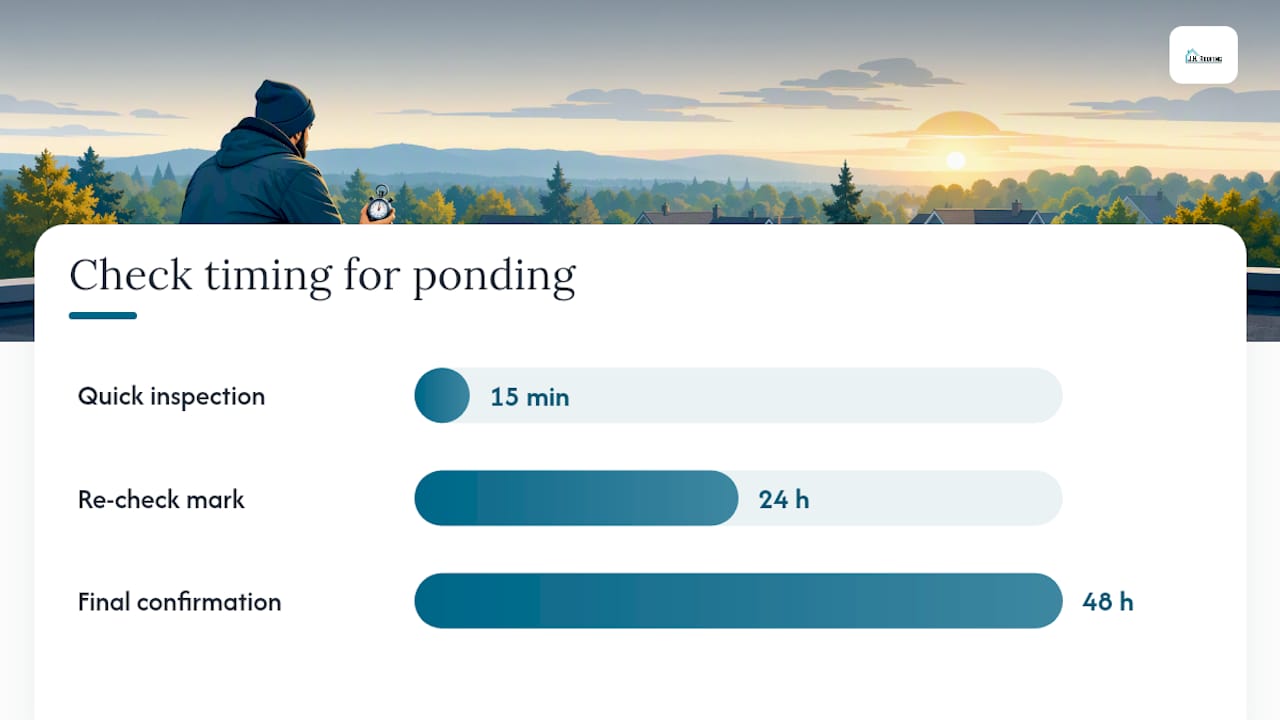
- Run the chalk-line test. After a rain event, snap a chalk line at the waterline of any pooled area. Check it again at 24 and 48 hours; if the water hasn't receded past the line by hour 48, you've confirmed ponding by the industry definition.
- Measure depth and area. Use a tape measure at the deepest point and estimate square footage. Multiply depth in inches by 5.2 lbs, then by the square footage, to get a rough sense of the added load.
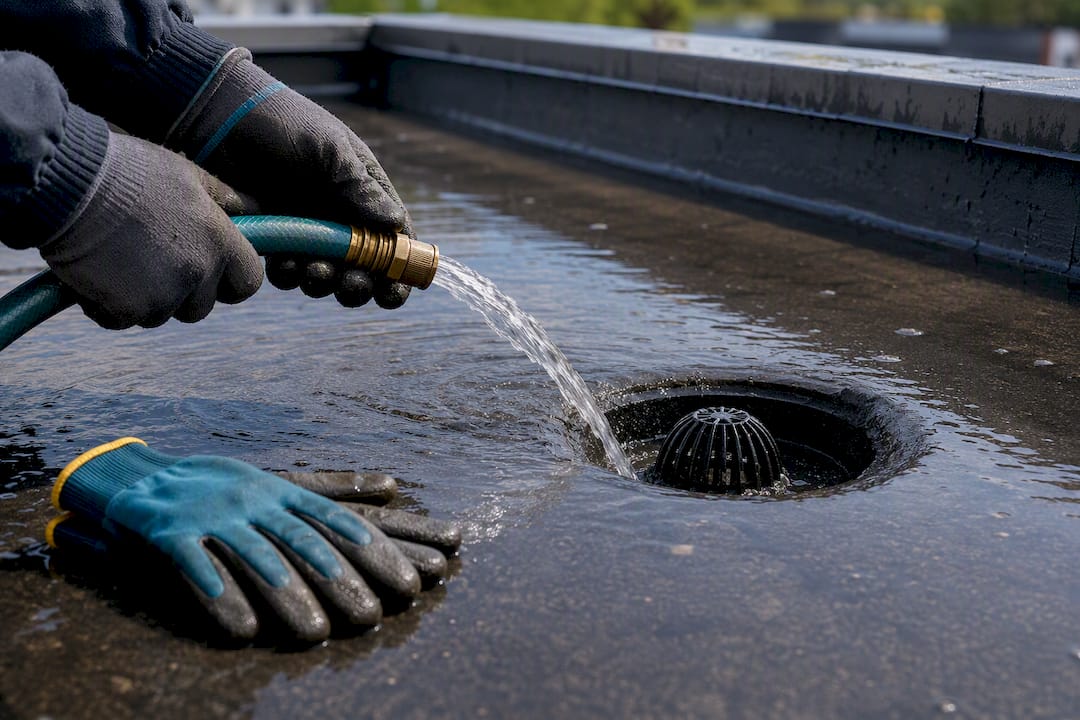
- Run a hose test on the drains. Pour water directly into each drain or scupper and time how fast it clears. Sluggish or backed-up flow points to a blockage rather than a slope problem.
- Check for soft spots. Walk the roof (carefully) and feel for give underfoot near the pond. Sponginess usually means the insulation underneath has already absorbed water.
Pro Tip: Take a photo of the chalk line with a tape measure in frame at both the 0 hour and 48 hour marks. If you ever need to file a warranty or insurance claim, timestamped photos are worth more than your memory of "it looked pretty bad."
If you find soft decking, visible sagging, or a drain that won't clear no matter how much water you push through it, stop testing and call a professional. Those signs point to wet insulation or structural deflection, both beyond a homeowner fix.
What Causes Ponding Water on a Flat Roof?
Ponding traces back to one of three root causes, and figuring out which one you're dealing with determines whether this is a $200 fix or a $20,000 one.
- Blocked or undersized drains. Leaves, granules, and debris build up in scuppers and internal drains, and a roof that drained fine last year can pond badly this year purely from neglect.
- Insufficient finished falls. Some flat roofs were never built with enough slope. British Standards guidance under BS6229 and BS8217 and ARMA's own recommendation both call for a minimum quarter inch of fall per foot, and older roofs built before those standards tightened often fall short.
- Progressive structural deflection. Decking sags over time under repeated loading, sometimes worsened by rooftop equipment added after the original build. Each new pond adds weight, which deepens the sag, which holds more water next time.
- Compressed or saturated insulation. Insulation boards that have absorbed water lose their shape and their slope, flattening areas that used to drain properly.
Most ponding calls Jhroof gets in Kent turn out to be a mix of the first and last: neglected drains combined with insulation that's been quietly soaking up water for a year or two before anyone noticed the pool.
Can You Fix Flat Roof Ponding Yourself?
Some ponding is a genuine DIY job. Most isn't. Here's how to tell which one you're facing before you get on a ladder.
- Clear every drain, scupper, and strainer first. This single step resolves roughly 30 percent of ponding cases outright, because the "problem" was never slope, it was a clogged outlet nobody checked.
- Wait through another rain cycle and retest. If clearing the drains fixed the flow, the pond that formed next time should clear within the 48 hour window.
- For shallow ponding under 1 inch, try a leveling compound. Roof repair compounds designed for flat surfaces can build up a low spot and restore enough fall to move water toward the drain. Follow the manufacturer's cure time exactly, and test with a hose once it's set.
- Know your limits. Depth over 1 inch, ponded area larger than 25 square feet, any soft spot underfoot, or visible membrane damage, all of those mean stop and call a roofer.
Water pooling that persists after drain clearing and a leveling compound almost always means a slope or structural issue, not a surface one, and no amount of compound fixes a deck that's sagging underneath it.
Fall risk is real on a wet, low-slope roof, and standing water hides soft or damaged decking that might not hold your weight. If you're not confident the surface is sound, don't test it with your body weight to find out.
How Much Does Professional Ponding Repair Cost?
When DIY fixes don't hold, the repair options split by scope and permanence. Tapered insulation is the industry's go-to permanent fix because it rebuilds the roof's fall from the deck up rather than patching around the symptom.
| Repair option | Best for | Typical scope |
|---|---|---|
| Additional drains or scuppers | Isolated low spots with poor outlet access | Can be a patch or a permanent fix depending on placement |
| Crickets (local tapered builds) | Small, isolated ponding around rooftop units or parapets | Targeted, lower cost than full re-slope |
| Tapered polyiso insulation | Widespread ponding or roofs nearing end of life | Full or partial re-slope, most durable option |
| Silicone coating | Shallow, recurring ponding on a sound membrane | Interim, ponding-tolerant coating |
Silicone stands out because it's the only coating category manufacturers widely accept as ponding tolerant, which matters if you want any warranty protection at all rather than voiding it the moment water sits for two days.
Prioritize based on four factors: depth of ponding, area affected, whether it recurs after drain clearing, and how many years of service life the roof has left. A 3 year old membrane with one stubborn low spot calls for a cricket. A 15 year old roof with ponding in multiple zones is telling you it's time to talk about a re-roof, not another patch.
What's the Best Way to Prevent Future Ponding?
Prevention is cheaper than every repair option above, and it takes less time than most owners assume.
- Clear drains and scuppers every season, and always after a major storm, since that's when debris loads up fastest.
- Document every check. Date and photograph drain clearing and any chalk-line tests; insurers and warranty providers increasingly want proof, not just your word, that the roof was actively maintained.
- Schedule a professional inspection if the roof is past 10 years old, if you've added rooftop equipment recently, or if you notice any visible sag between drains.
A seasonal maintenance routine built around these three habits catches most drainage problems before they become structural ones.
A Kent Case Study: Diagnosing Ponding Before It Became a Full Re-Roof
A flat roof replacement case study in Kent began as a ponding complaint. The initial inspection included a drain flow test and a moisture check across the membrane, which revealed saturated insulation beneath the pooled areas rather than a simple drainage blockage. Because the insulation had already compressed and lost its original fall, a surface patch wouldn't have held. The team installed tapered insulation across the affected zones as part of a full re-roof, restoring proper drainage rather than masking the symptom. That's the outcome a proper evaluation should give you: a clear answer on whether you're looking at a repair or a replacement, before you spend money on the wrong one.
What Actually Matters When You're Dealing With Ponding
Most advice on this topic buries the one step that solves nearly a third of cases: check the drains before you assume you need a re-roof. Homeowners jump straight to worrying about tapered insulation and coatings when the fix might be a five-minute job with a garden hose and a pair of gloves.
The conventional wisdom also underplays the load math. People treat a puddle on the roof as a cosmetic nuisance, not as several thousand pounds of added weight sitting on framing that wasn't built to hold it indefinitely. That's the part that turns a $300 problem into a $15,000 one if it sits through two or three more seasons.
If there's one thing worth prioritizing, it's the 48 hour test itself. Not because it's dramatic, but because it's measurable. It turns "my roof looks kind of wet" into a documented, timestamped fact you can act on, whether that action is clearing a drain yourself or calling a professional before the next storm makes the decision for you.
— Gabbi
Get a Professional Ponding Assessment From Jhroof
If your roof has failed the 48 hour test, professional roofing services in Kent offer homeowners and property managers a faster, more decisive path than guessing your way through leveling compounds, using diagnostic approaches like drain testing, moisture inspection, and clear recommendations on whether tapered insulation, added drains, or a full re-roof is the right call for your situation.

Every inspection starts with a free, no-obligation quote and access to emergency response services for roofs that can't wait for a scheduled slot. Whether you're dealing with an isolated low spot or ponding across multiple zones, you can browse Jhroof's roofing services in Kent or use the instant roof quote calculator to get a cost estimate started today.
Sources
- How much water can your flat roof tolerate? | Modus | RICS
- Ponding water on flat roofs | Flat Roof Report
- Ponding Water Flat Roof: 2026 Fix Guide | The Roofing Brief