
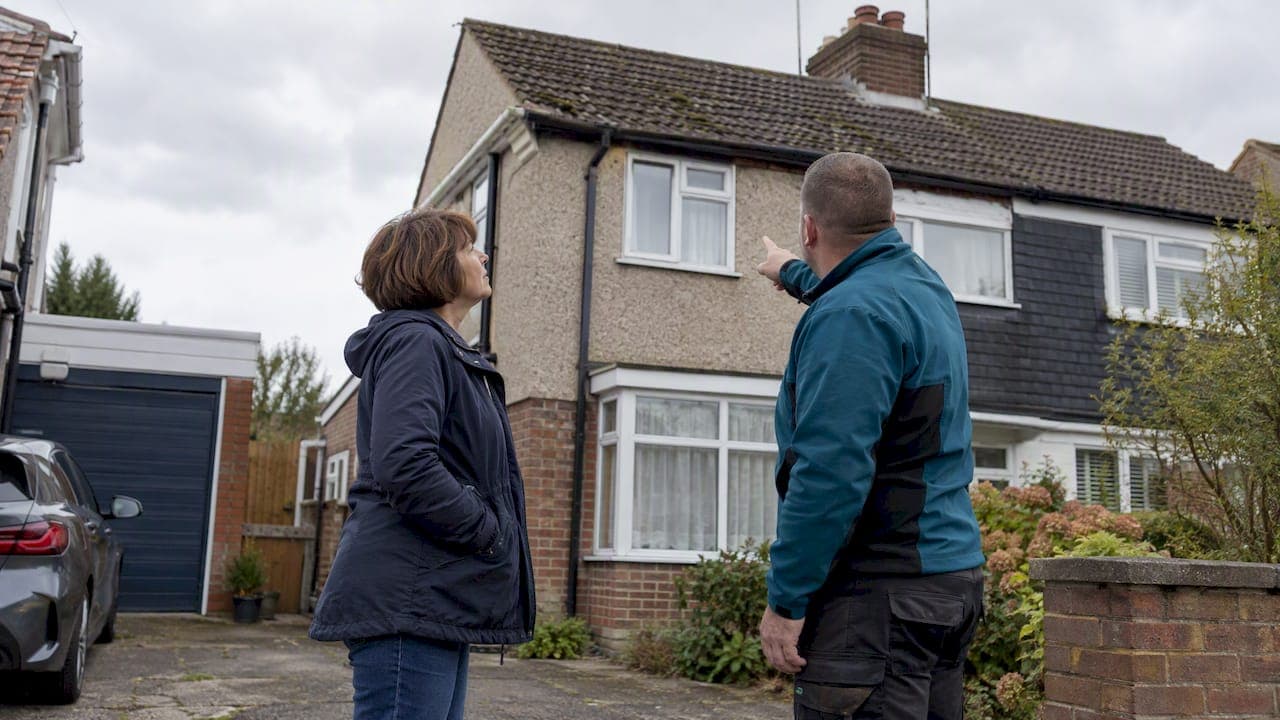
Choosing a roofer in Kent comes down to four checks: verify trade credentials and insurance, collect three written quotes with matching scope, confirm an Insurance-Backed Guarantee is available, and insist on a written contract plus a Building Regulations compliance certificate. Each step protects you from rogue traders and costly disputes. We're a Kent-based, insured roofing team, and we build our process around exactly these safeguards.
TL;DR:
- Always verify a roofer's registration with the Competent Person Scheme and confirm they have current insurance before starting work.
- Obtain at least three detailed written quotes that clearly itemize materials, labor, access, waste disposal, and include a defined timescale.
- Insist on an Insurance-Backed Guarantee for projects above minor repairs and ensure a formal contract with staged payments is in place.
- Be wary of no written contract, pressure to pay cash, or refusal to provide insurance and certification documents during the survey process.
- In Kent, local experience matters; choose contractors with a proven track record in the area and recent local references to ensure familiarity with regional housing and weather conditions.
Table of Contents
- Credentials and safety checks: NFRC, competent person schemes, and insurance
- Getting and comparing quotes: what a good written quote must show
- Guarantees, Insurance-Backed Guarantees, and payment safety
- Survey questions to ask and clear red flags to avoid
- Costs and timeline expectations for Kent homeowners
- Applied local example: how J.H. Roofing meets these checks in Kent
- Warranty and guarantee details offered by the roofer
- Local reputation and experience specifically within Kent
- Payment terms and methods accepted by the roofer
- Quick prioritized checklist for busy Kent homeowners
- How J.H. Roofing can help: request a free quote in Kent
- FAQ
- Sources
Credentials and safety checks: NFRC, competent person schemes, and insurance
Replacing a roof covering counts as controlled work under UK Building Regulations. You need to either notify local building control or hire an installer registered with a Competent Person Scheme who can self-certify the work and issue a compliance certificate. Skipping this step can cause problems later, particularly when you come to sell the property.
Competent Person Scheme operators maintain public registers and require installers to demonstrate real technical competence before they're allowed to self-certify. That register is your fastest way to confirm a roofer is who they claim to be.
Membership in the National Federation of Roofing Contractors (NFRC) means a roofer has passed independent inspections covering technical competence, insurance, and financial standing, repeated every three years, according to NFRC's guidance for homeowners choosing a contractor. That recurring check matters more than a one-time certificate on a wall.
Before any work starts, ask to see:
- Public liability insurance, with the policy number and expiry date visible
- Employers' liability insurance, if the roofer brings a team
- Their Competent Person Scheme registration number, checkable on the official register
- Proof of NFRC or equivalent trade association membership, if claimed
A roofer who hesitates to produce these documents is telling you something important.
Getting and comparing quotes: what a good written quote must show
NFRC's homeowner guidance recommends getting multiple written quotes and judging them on the quality of technical advice rather than price alone. We'd recommend getting multiple quotes, typically three or more.
A quote that's genuinely comparable will include:
- A full materials list naming the type and grade of tile, slate, or flat roofing membrane
- Labour costs broken out separately from materials
- Scaffold or access equipment costs, itemized rather than bundled
- Waste removal and disposal charges
- A written timescale, including likely start date and duration
- Clear exclusions, so you know what isn't covered
When you lay three quotes side by side, vague language is the tell. "Repair as needed" or "materials included" without specifics usually means the roofer is leaving room to add costs later. Ask for clarification before you sign anything, not after.
Pro Tip: Set aside a contingency of extra budget for structural repairs that often only become visible once the old covering comes off.
Which?'s guide to roofer costs makes the same point: cheapest is rarely best, and a quote that looks too good usually hides a gap somewhere in the scope.
Guarantees, Insurance-Backed Guarantees, and payment safety
A contractor's own warranty is only as good as the business behind it. If the company stops trading, that warranty disappears with it. An Insurance-Backed Guarantee (IBG) is different: it's underwritten independently, so the guarantee survives even if your roofer closes down. NFRC recommends an IBG for any major roofing job, and we'd treat it as a baseline expectation rather than an upgrade.
Before work begins, check for these signs of a safe arrangement:
- A written contract that specifies scope, price, and payment schedule
- Staged payments tied to completed work, not one large sum upfront
- An IBG certificate offered for jobs above routine repair size
- No pressure to pay cash-in-hand or skip VAT
NFRC guidance specifically warns against cash-in-hand or VAT-free deals, since these arrangements strip away the consumer protections a formal contract provides.
Survey questions to ask and clear red flags to avoid
A roof survey is your chance to ask direct questions and watch how the roofer answers them. Confident, specific answers are a good sign. Vague or defensive ones aren't.
Ask about:
- The exact materials proposed, including leadwork and flashing details
- Whether scaffolding is needed and who arranges it
- How waste and old materials get removed and disposed of
- Whether the work is done by employed staff or subcontractors
- Contactable references from recent local jobs, with photos if possible
Watch for these red flags:
- No written contract offered, or reluctance to put terms on paper
- Refusal to provide a written quote
- Pressure to pay cash or commit on the spot
- No proof of insurance when asked
Which? also recommends asking neighbours for recommendations, since nearby homes often share the same roof type and weather exposure, a detail that matters across Kent's varied housing stock, from Ashford terraces to Canterbury's older stone-built homes.
Costs and timeline expectations for Kent homeowners
Cost depends heavily on roof type, material choice, access, and how much of the underlying structure needs attention. Slate, tile, and flat roofing systems all carry different material and labour costs, and a steep or hard-to-access roof adds scaffold time and expense regardless of covering.
NFRC's homeowner guide notes that estimates often change once the existing covering is removed and hidden damage becomes visible, which is why a contingency in your budget matters more than chasing the lowest headline price.
Timeline varies by scope. A single repair, like a cracked tile or minor flashing fix, typically wraps up in a day. A full replacement involves scaffold erection, several days of stripping and re-covering, and inspection, so plan for the work to span one to two weeks depending on weather and roof size. Flat roofing projects can move faster once scaffold is up, since there's no tiling to lay course by course.
Applied local example: how J.H. Roofing meets these checks in Kent
We built our business around the same checks this guide recommends. We carry full insurance, offer free, no-obligation quotes, and run a 24-hour emergency response service for leaks and storm damage. You can see the full scope of what we cover on our roofing services page.
When we survey a roof, we provide:
- Written quotes that break out materials, labour, and scaffold costs separately
- Proof of insurance on request
- A clear scope of work before anything starts
- Direct answers about leadwork, access, and timeline
We'd encourage you to ask any roofer for exactly this list, whether that's us or another contractor you're considering.
Warranty and guarantee details offered by the roofer
A roofer's warranty should spell out what's covered, for how long, and under what conditions it's void. Workmanship warranties on roofing work commonly run for several years, though the exact term varies by contractor and job type, so always ask for the specific duration in writing rather than assuming a standard length.
A proper guarantee document names the work covered, the start date, and any maintenance conditions you need to meet to keep it valid, such as periodic gutter clearing or avoiding unauthorized alterations. It should also state clearly whether it transfers to a new owner if you sell the property, which matters for resale value.
Separately, ask whether the guarantee is backed by an IBG. A contractor's own paper warranty is only as strong as the business issuing it. An IBG adds a layer of protection that survives even if the original contractor closes down, which is why NFRC treats it as recommended practice for substantial jobs rather than an optional extra.
Before signing anything, read the guarantee alongside the quote and contract. All three documents should describe the same scope of work in matching terms. Any mismatch between what the quote promises and what the guarantee covers is worth questioning before you commit.

Local reputation and experience specifically within Kent
A roofer's reputation within your own area tells you more than a generic review score. Kent's housing stock varies widely, from Victorian terraces in Folkestone to older stone cottages near Ash and newer builds around Kennington, and each roof type responds differently to weather and age.
Ask how long a contractor has worked specifically in Kent and whether they can point to recent jobs near you. A roofer who knows the local housing patterns, common issues with Kent peg tiling, and the area's weather exposure is better placed to spot problems a generalist might miss.
Local reviews and word of mouth carry real weight here. Which? recommends asking neighbours directly about their own experience, since nearby homes often face the same structural quirks and weather patterns. A roofer with a consistent track record across Ashford, Canterbury, Maidstone, or Hythe is a stronger bet than one with scattered, unverifiable jobs further afield.
We've worked across these areas for over a decade, which shapes how we approach everything from flat roof replacements to traditional peg tiling. You can see examples of that work, including a detailed flat roof replacement case study in Kent, which shows how local conditions shaped the final scope.
Payment terms and methods accepted by the roofer
How a roofer structures payment tells you a lot about how they run their business. A staged payment schedule tied to completed milestones, deposit, start of work, and final payment on completion, is standard practice and protects both sides.

Avoid any arrangement that asks for the full amount upfront before work begins. A reasonable deposit to secure materials and scheduling is normal; a large unexplained lump sum with no itemized breakdown is not. NFRC's guidance specifically flags cash-in-hand or VAT-free deals as a red flag, since these arrangements often signal a contractor trying to avoid accountability.
A reputable roofer accepts standard payment methods, bank transfer, card payment, or cheque, and provides a receipt or invoice for every payment made. If a contractor insists on cash only, treat that as a reason to ask more questions before proceeding.
Payment terms should be written into your contract alongside the scope of work, so there's no ambiguity about what triggers each payment stage. For reference, trades in other sectors, such as Red Eagle Plumbing's published pricing structure, show how transparent rate-sharing builds trust before work even starts. That same transparency is worth expecting from any roofer you hire in Kent.
Quick prioritized checklist for busy Kent homeowners
When time is short, run these checks in order: verify the roofer's Competent Person Scheme registration and insurance documents, get a written quote with full scope, and confirm an IBG is available for anything beyond a minor repair. A higher quote is worth accepting when it includes clearer documentation, better materials, or stronger guarantees than a cheaper competitor. Walk away from anyone who resists a written contract or pushes for cash payment. And don't skip Building Regulations compliance: a self-certification document protects you when you come to sell the property.
- Confirm credentials and insurance before anything else
- Compare three written quotes line by line
- Insist on a contract, an IBG where applicable, and a compliance certificate
How J.H. Roofing can help: request a free quote in Kent
We offer free, no-obligation quotes and a 24-hour emergency response for leaks, storm damage, and urgent repairs across Kent. When you reach out, have a few details ready: recent photos of the problem area, the approximate date you first noticed it, and any known history with the roof, like a past repair or its age.
Whether you need a single tile replaced or a full roof replacement in Kent, we'll walk you through the same documentation this guide recommends asking for: insurance, written scope, and guarantee terms. If your roof is leaking right now, our emergency repair line is available around the clock. Get in touch through Jhroof to start with a free quote.
FAQ
What is the average cost of replacing a roof in the UK?
Cost varies significantly by roof size, material, and access requirements, so there's no single UK-wide figure that applies to every home. Which? advises getting multiple written quotes rather than relying on a general estimate, since local labour rates and roof type both shift the price.
What are five signs that my roof needs to be replaced?
Common warning signs include missing or cracked tiles, sagging roofline, daylight visible through the roof boards, frequent leaks despite repairs, and moss or algae buildup that traps moisture. Any combination of these is worth a professional survey rather than a DIY fix.
How do I find a reputable roofer in the UK?
Check that the roofer is registered with a Competent Person Scheme or holds NFRC membership, then get at least three written quotes before deciding. Local word of mouth, especially from neighbours with similar roofs, is a reliable additional check.
What is the average hourly rate for a roofer in the UK?
Hourly rates vary by region and the complexity of the job, so it's best to request a full written quote rather than rely on an hourly figure alone. A written quote that breaks out labour, materials, and scaffold costs separately gives you a clearer picture than any hourly estimate could.