
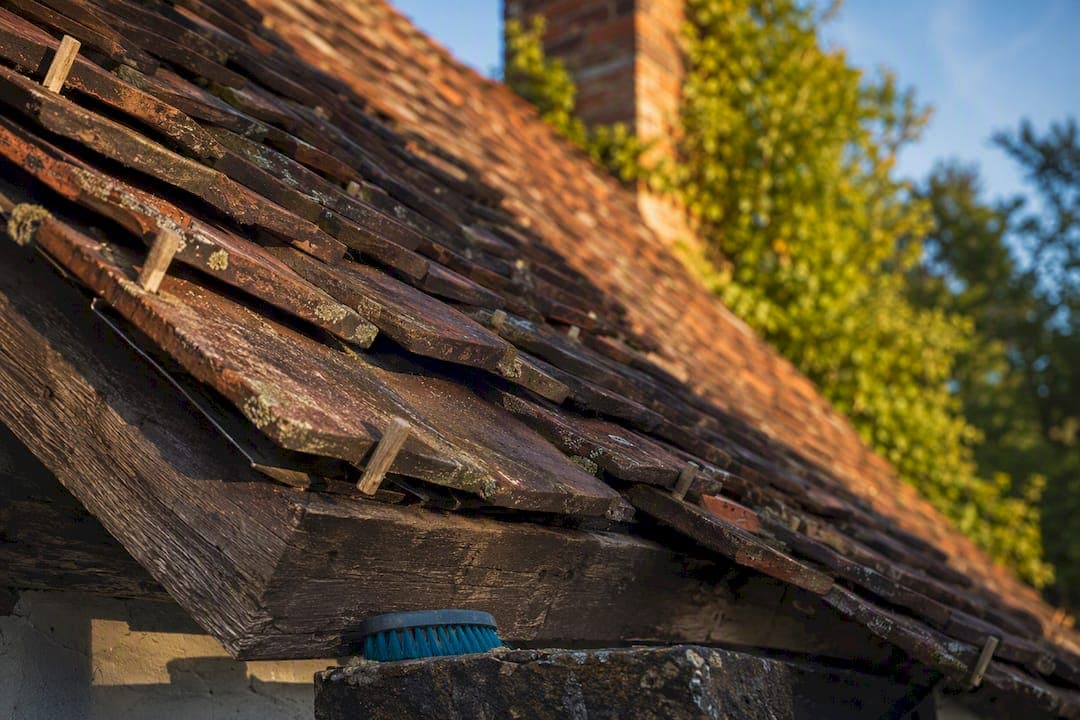
Kent peg tiles are small, handmade clay roof tiles traditionally hung on wooden pegs rather than the clay nibs found on standard tiles, and they remain in production in the UK both as reclaimed stock and as new handmade ranges. If your project touches a listed building or a conservation area, both routes can work. The next step is practical: order sample batches from a reputable supplier and bring in a specialist installer to survey the roof and match the tile blend before you commit to a full order.
TL;DR:
- Reclaimed Kent peg tiles have an authentic weathered appearance but are scarce, variable in size, and may require higher waste allowances during procurement.
- New handmade tiles offer consistent sizing and guarantees, making them suitable for large projects, but lack the aged patina unless specially treated.
- Always order samples and perform dry-lay tests to confirm color, size, and camber match the existing roof before committing to bulk orders.
- Installation requires careful sorting, blending, and matching to accommodate camber variations, with traditional fixing methods preferred for conservation-sensitive roofs.
- Costs range from under £1 to around £1.50 per reclaimed tile plus VAT, with coverage typically at 70 tiles per square meter, depending on the specific product and waste factors.
Table of Contents
- What Are Kent Peg Tiles, and Why Do They Look the Way They Do?
- Reclaimed vs New Handmade Kent Peg Tiles: Which Fits Your Project?
- How Do You Choose the Right Kent Peg Tiles?
- What Do Kent Peg Tiles Cost, and How Do You Order the Right Quantity?
- Installation and Maintenance: What Keeps a Peg Tile Roof Performing
- How Do You Check Tile Quality Before You Buy?
- Jhroof's View on Kent Peg Tile Roofing in Kent
- Ready to Get Your Kent Peg Tile Roof Assessed?
- Where to Find Reliable Kent Peg Tile Information
- Sources
- FAQ
What Are Kent Peg Tiles, and Why Do They Look the Way They Do?
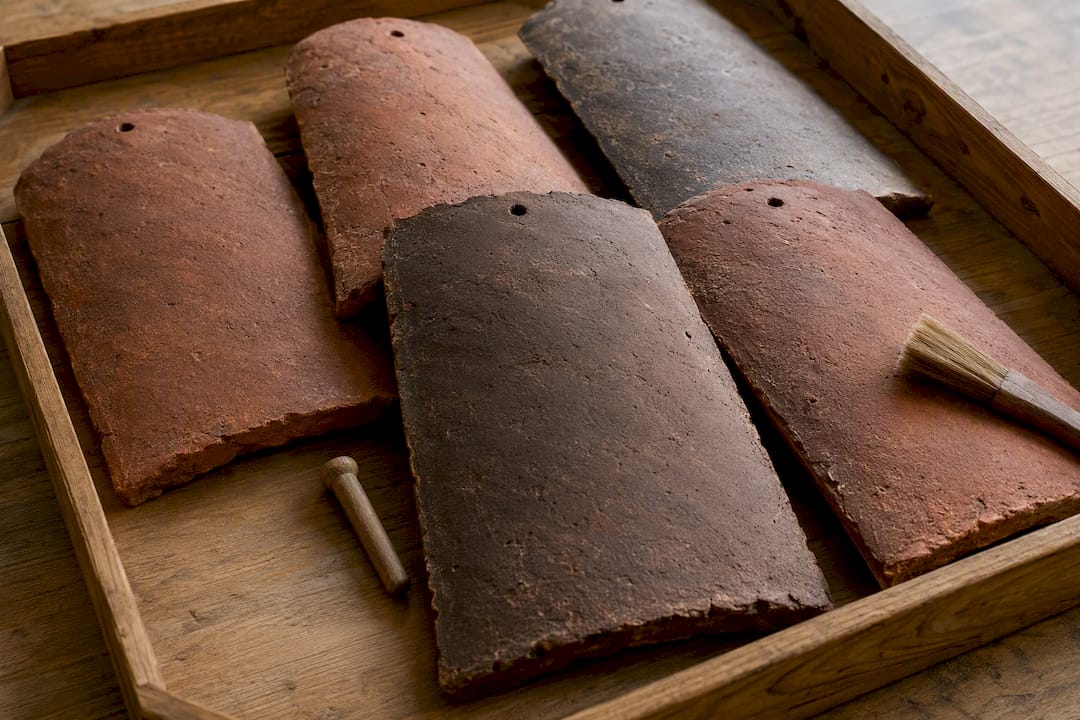
The name comes straight from the fixing method. Instead of a molded nib that hooks over a batten, traditional Kent peg tiles have two holes near the top edge, and wooden pegs (or, on some installations, aluminum) hold them in place against the batten. This method dates back centuries in the South East, and conservation writers still point to it as one of the clearest markers of a genuinely traditional tile, as opposed to a modern reproduction that quietly adds a nib to speed up installation.
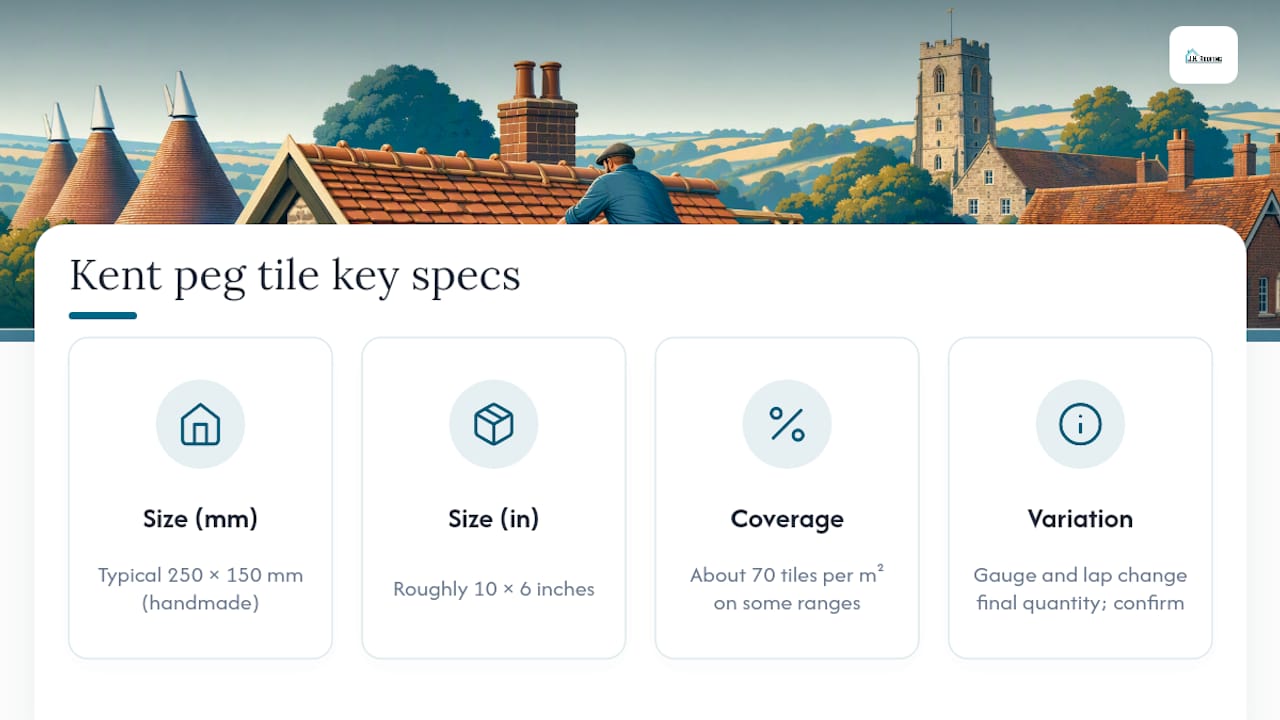
Handmade Kent peg tiles typically measure around 250 x 150 mm, roughly 10 by 6 inches, with coverage of about 70 tiles per square meter on some manufacturers' ranges. That figure moves depending on gauge and lap, so always confirm it against the specific range you're buying.
Because each tile is shaped by hand, you'll see natural camber, slight size variation, and color and texture differences from one batch to the next. That irregularity is exactly what gives a peg tile roof its softness and depth. Machine-pressed tiles simply can't replicate it.
Reclaimed vs New Handmade Kent Peg Tiles: Which Fits Your Project?
Reclaimed tiles carry an immediately weathered look. Lichen, subtle color drift, and a genuinely aged surface texture arrive on day one, which matters enormously on a listed building where a conservation officer wants continuity with the original roof. The tradeoff is availability: good reclaimed stock is finite, sizing and camber vary tile to tile, and you should plan for a higher waste factor than you would with new tiles, since a portion of any reclaimed pallet will be cracked, chipped, or too degraded to use.
New handmade tiles solve the predictability problem. Manufacturers offer consistent sizing and formal guarantees, which makes them far easier to specify for a large re-roof where you need thousands of matching units delivered on a schedule. Several UK makers also offer bespoke colors, letting a new batch echo an existing roof's tone without hunting for reclaimed stock that may not exist in sufficient quantity.
- Reclaimed: authentic patina now, but limited supply and variable camber
- New handmade: predictable sizing and guarantees, but no instant weathering
- Small repairs and listed buildings often favor reclaimed for authenticity
- Full re-roofs and larger extensions often favor new handmade for consistency and lead times
Pro Tip: Ask your conservation officer early which they'd accept. Some will sign off on bespoke handmade tiles that replicate the original blend, while others insist on reclaimed stock only, and finding that out before you order saves weeks.
How Do You Choose the Right Kent Peg Tiles?
Getting the specification right up front avoids expensive mismatches later. Work through these steps before placing a full order:
- Order samples and dry-lay a small test batch on the ground to check color blend, size range, and camber against your existing roof.
- Confirm with your conservation officer whether nib-fitted "peg-style" tiles are acceptable, or whether a true pegged, nib-free tile is required for the project.
- Ask the supplier for proofs of thickness, tile grade, and any manufacturer guarantee covering frost resistance or breakage.
- Confirm lead times in writing, particularly for bespoke colors or large handmade orders, since production runs can take weeks.
- Cross-check the quoted coverage rate against your own roof area calculation rather than relying on a single generic figure.
Skipping the dry-lay step is the most common mistake homeowners make. A tile that looks right in a photograph can read completely differently once a hundred of them sit side by side in daylight.
What Do Kent Peg Tiles Cost, and How Do You Order the Right Quantity?
Reclaimed peg tiles in the UK market are commonly listed under £1 to around £1.50 each plus VAT, depending on grade, condition, and how scarce that particular blend has become. New handmade tiles generally sit at a different price point once you factor in bespoke coloring, guarantees, and consistent grading, though exact pricing varies by manufacturer and order volume.
Coverage is typically around 70 tiles per square meter for many handmade ranges, so a rough calculation looks like this:
- Measure your roof area in square meters, including hips and valleys separately
- Multiply by the manufacturer's stated coverage rate for that specific tile
- Add a waste allowance, higher for reclaimed stock than for new tiles, to cover breakage and grading rejects
- Confirm pallet weights and delivery access with the supplier, since peg tiles are heavy and full pallets need proper site access
Statistic Callout: A typical handmade Kent peg tile range covers roughly 70 tiles per square meter, a figure worth checking against your specific product before ordering, since gauge and lap can shift it noticeably.
Installation and Maintenance: What Keeps a Peg Tile Roof Performing
A peg tile roof rewards an installer who understands the material. Camber and size variation are normal, not a defect, and that means the tiler needs to hand-sort and blend tiles across the roof rather than laying them straight off the pallet in whatever order they arrive. Rushing this step, or treating a peg tile roof like a standard interlocking tile job, tends to cause premature slippage and uneven coursing.
Fixing methods matter too. Traditional installations use wooden pegs through the tile's two holes, while some modern repairs use aluminum pegs for added durability. Tiles that include a molded nib speed up installation but move away from the traditional hanging method, which can be a problem on a conservation-sensitive roof.
- Batten gauge must match the specific tile's nominal size, not a generic assumption
- Underlay and ventilation should follow current Roof Tile Association guidance for the roof pitch involved
- Inspect peg tile roofs at least annually, since a slipped or cracked tile exposes the batten below to weather
Pro Tip: If you're comparing modern fixing hardware against traditional pegs, a technical guide to fastening choices can help you understand compatibility questions before your installer commits to a method.
How Do You Check Tile Quality Before You Buy?
Reclaimed batches need a closer look than new stock, since every tile carries its own history and potential hidden damage.
- Check edges for chips or hairline fractures by tapping each tile lightly and listening for a dull, cracked-sounding response.
- Measure a sample of tiles from across the pallet rather than just the top layer, since thickness and size can vary within a single delivery.
- Ask the supplier how the stock is graded, and request that a portion be dry-laid on-site before you accept the full order.
- Ask about returns policy on rejected tiles, and whether the supplier can trace the batch's origin if a color mismatch turns up mid-project.
New handmade tiles need less forensic checking, but it's still worth confirming the batch number matches your original sample and that no visible color drift crept in between production runs.
Jhroof's View on Kent Peg Tile Roofing in Kent
One roofing company has spent over a decade working on roofs across Ashford, Canterbury, Maidstone, Folkestone, and the wider Kent area, and peg tile work comes up regularly given how many older properties in the county carry this roofing style. Handling new roof installations, flat roofing, and emergency repairs across residential and commercial jobs builds a working familiarity with the quirks of traditional materials, peg tiles included.
Insured work matters on a heritage roof, where mistakes are expensive to correct. Some roofing companies offer free, no-obligation quotes and emergency response services for storm damage or slipped tiles; checking ratings and reviews from past projects can help assess provider reliability.
— Gabbi
Ready to Get Your Kent Peg Tile Roof Assessed?
Sourcing the right tiles is only half the job. Getting them hung correctly, with proper sorting, blending, and camber accommodation, is where a lot of otherwise good peg tile projects go wrong. Specialist roofing services can survey the existing roof, assist in deciding whether reclaimed or new handmade tiles suit the blend and budget, and coordinate the sourcing conversation so you're not guessing which supplier to trust.

For homeowners dealing with slipped or cracked peg tiles right now, Jhroof's fast repair service covers urgent fixes across Kent, and the same team handles full re-roofs where a larger area needs re-tiling with new handmade stock. If your project is a listed building or sits in a conservation area, get in touch through the roofing services page for a free survey and quote before you order a single tile.
Where to Find Reliable Kent Peg Tile Information
For technical specifications, Keymer's peg tile range shows current nominal sizing and coverage rates. For history and the conservation angle, Archetech's overview of the handmade Kent peg tile explains the material's evolution in detail. For reclaimed stock pricing and grading, Authentic Reclamation's listings give a current market snapshot.
Sources
- Peg tiles - Keymer
- THE EVOLUTION OF THE HANDMADE KENT PEG TILE - Archetech
- Reclaimed Peg Tiles - Authentic Reclamation
- Reclaimed tile and terracotta flooring: material benefits and installation considerations
FAQ
How much do Kent peg tiles cost?
Reclaimed Kent peg tiles are commonly listed from under £1 to around £1.50 each plus VAT depending on grade and condition. New handmade tiles vary by manufacturer, so request a current quote directly, or ask Jhroof for guidance during a survey.
What are the best tile brands in the UK?
Several established UK manufacturers produce handmade Kent peg tiles with guaranteed sizing and bespoke color matching. Rather than naming a single "best" brand, compare samples against your own roof, check for manufacturer guarantees, and confirm the supplier can match your project's grade and volume needs.
How old are Kent peg tiles?
Peg tile roofing has been used across the South East of England for centuries, with the pegged hanging method predating clay nib construction. Many original roofs still standing today date back well over a hundred years, which is part of why matching reclaimed stock so carefully to conservation requirements matters.
What is a peg tile?
A peg tile is a small, typically handmade clay roof tile hung using wooden or metal pegs through two holes near the top edge, rather than a molded nib. This traditional fixing method is closely associated with Kent and the wider South East of England.
Can Jhroof help source and install Kent peg tiles?
Yes. Some roofing providers offer surveys of existing peg tile roofs, help determine whether reclaimed or new handmade tiles suit the project, and install using traditional hanging techniques suited to conservation work.