
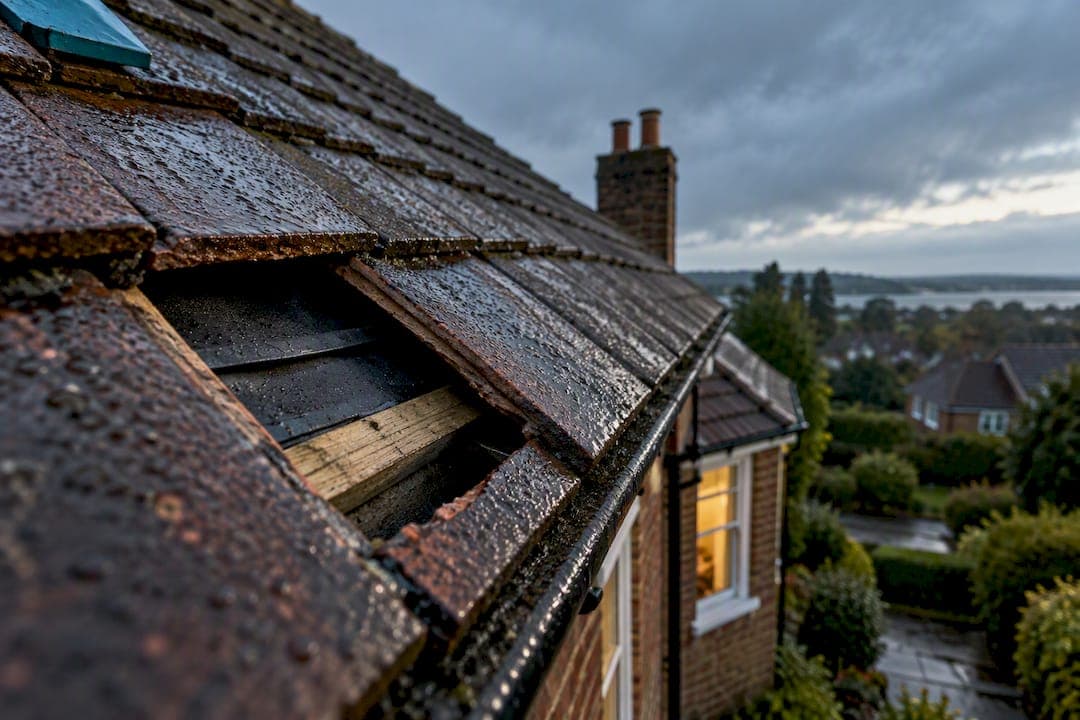
A single missing roof tile is an emergency only if water is actively entering your home, if you can see damage near electrics, or if a storm is closing in. If none of those apply, it's a prompt repair, not a 911 call. Photograph the gap from the ground or a window, note its location on the roof, and book a professional inspection within a few days. Waiting weeks is where a cheap fix turns into an expensive one.
TL;DR:
- A missing roof tile can cause significant damage if water actively enters the home, near electrics, or during an imminent storm, requiring urgent action.
- Tiles at ridge, valley, or verge locations pose a higher risk of leaks due to wind pressure or water flow, especially when underlay is old or damaged.
- Checking for damage can be safely done from the ground using binoculars, photos, and loft inspections, avoiding dangerous roof climbs.
- A professional inspection involves assessing surrounding tiles, battens, underlay, and flashings, with repairs often needed beyond just replacing the missing tile.
- Emergency roofing services typically start from £150, with timely repairs preventing long-term water damage, energy loss, and property value decline.
Table of Contents
- Why a Missing Roof Tile Puts Your Whole Roof at Risk
- Will a Missing Tile Actually Cause a Leak?
- How to Check for Roof Tile Damage Without Climbing Up There
- What to Do (and Not Do) Before the Roofer Arrives
- What a Professional Roof Inspection and Repair Actually Involves
- Building a Maintenance Routine That Prevents Repeat Tile Loss
- What to Look for in a Roofer, and Why Local Response Time Matters
- Does Home Insurance Cover Missing Roof Tiles?
- How Missing Tiles Quietly Erode Energy Efficiency and Home Value
- Why Homeowners Overreact to the Wrong Signals
- Get a Missing Tile Fixed Fast, Without the Guesswork
- Sources
- FAQ
Why a Missing Roof Tile Puts Your Whole Roof at Risk
Roof tiles work as a system, not individual pieces. Each tile overlaps the one below it, shedding rainwater downward and outward before it ever reaches the timber underneath. Pull one tile out of that sequence and you've opened a direct channel for water, wind, and debris to reach the layers that were never designed to be exposed: the underlay (also called the roofing felt), the battens it's nailed to, and eventually the rafters themselves.
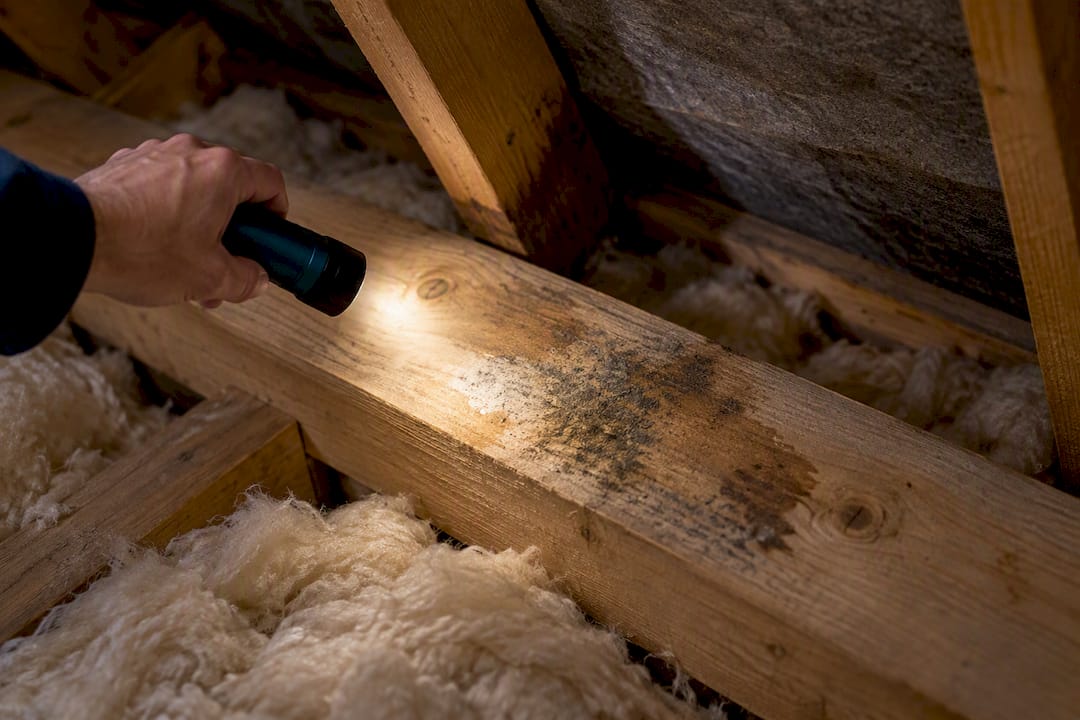
The damage doesn't happen on one timeline. Short term, you're looking at damp insulation, musty smells in the loft, and the first faint stains on a ceiling. Left alone, that dampness becomes something more serious: timber rot in the battens and rafters, mold colonies in loft insulation, and in the worst cases, sagging or structural decay that requires far more than a tile swap to fix.
Where the tile is missing changes the risk level significantly:
- Ridge or hip tiles sit at the roof's highest point and are exposed to the most wind pressure, so a gap here lets in driving rain from multiple directions.
- Valley tiles channel huge volumes of water during heavy rain, and a missing tile in a valley concentrates flow directly into a gap.
- Verge tiles (roof edges) mainly protect against wind-driven rain rather than volume, but they're also the tiles most likely to slip after storms.
- Mid-roof field tiles are usually lower risk on their own, but a cluster of missing tiles in one area still compromises the whole section beneath it.
A missing roof tile exposes the underlay directly, and wind-driven rain can enter the roof structure within a single storm cycle if that underlay is old or already cracked. Acting on it early is almost always the cheaper path.
Will a Missing Tile Actually Cause a Leak?
It depends heavily on weather and what's underneath the gap. In heavy rain with strong wind, water can find its way past a missing tile and into the loft within hours. In calm, dry weather, the same gap might sit exposed for weeks without a visible drip, especially if the underlay beneath it is intact and doing its job.
Several factors decide how fast a leak develops:
- Wind-driven rain pushes water sideways under tiles that would otherwise stay dry in a straight downpour.
- A missing tile near a valley or ridge speeds things up because those areas handle more water volume.
- Torn or brittle underlay offers no backup protection once the tile above it is gone.
- Steep roof pitches shed water fast, which helps in some ways but also means more volume passing directly over any gap.
The tricky part is that water rarely drips straight down in a neat line. It travels along rafters and battens before it shows up as a stain, sometimes appearing on a ceiling several feet from where the tile actually went missing. That's why loft dampness, a musty smell, or dark patches on roof timbers often show up before any ceiling stain does. Checking the loft, not just the ceiling below, catches problems earlier.
How to Check for Roof Tile Damage Without Climbing Up There
You don't need to get on the roof to spot most tile problems, and you shouldn't try. Here's a safe sequence for a tile roof inspection from the ground up:
- Walk the perimeter of the house and look up at the roofline from several angles, since a tile that's invisible from the front door often shows clearly from the side garden.
- Use binoculars to check ridges, valleys, and verges closely without needing a ladder.
- Photograph anything unusual with your phone zoomed in, including the tile's approximate position relative to a chimney, vent, or roof edge.
- Check the loft during daylight, looking for pinpricks of light, damp timber, water stains on the underlay, or a musty odor.
- Check gutters and the ground near the house for fallen tile fragments, which confirm where a tile has gone even if you can't see the gap itself.
- Note the date and weather conditions alongside your photos, since insurers and roofers both find this detail useful later.
Findings that mean immediate danger: active dripping in the loft, water stains actively growing, or daylight visible through the roof deck. Findings that can wait a few days for a scheduled repair: a single dry gap with no interior signs, spotted during calm weather.
Pro Tip: Take your loft photos with a flashlight held at an angle to the timber, not straight on. Angled light shows up damp patches and mold that a direct flash often washes out.
What to Do (and Not Do) Before the Roofer Arrives
Call for emergency help immediately if you have an active leak, see water anywhere near electrical fittings or wiring, or severe weather is forecast within the next day. Those three conditions override everything else on this list.
If none of them apply, you still have useful steps to take while you wait for a scheduled visit:
- Place a bucket or basin under any active drip, and check it periodically so it doesn't overflow.
- Move furniture, electronics, and valuables away from the affected area.
- Only isolate an electrical circuit yourself if you can do so safely at the consumer unit. If water is anywhere near sockets or fittings, treat it as an emergency and don't touch anything electrical.
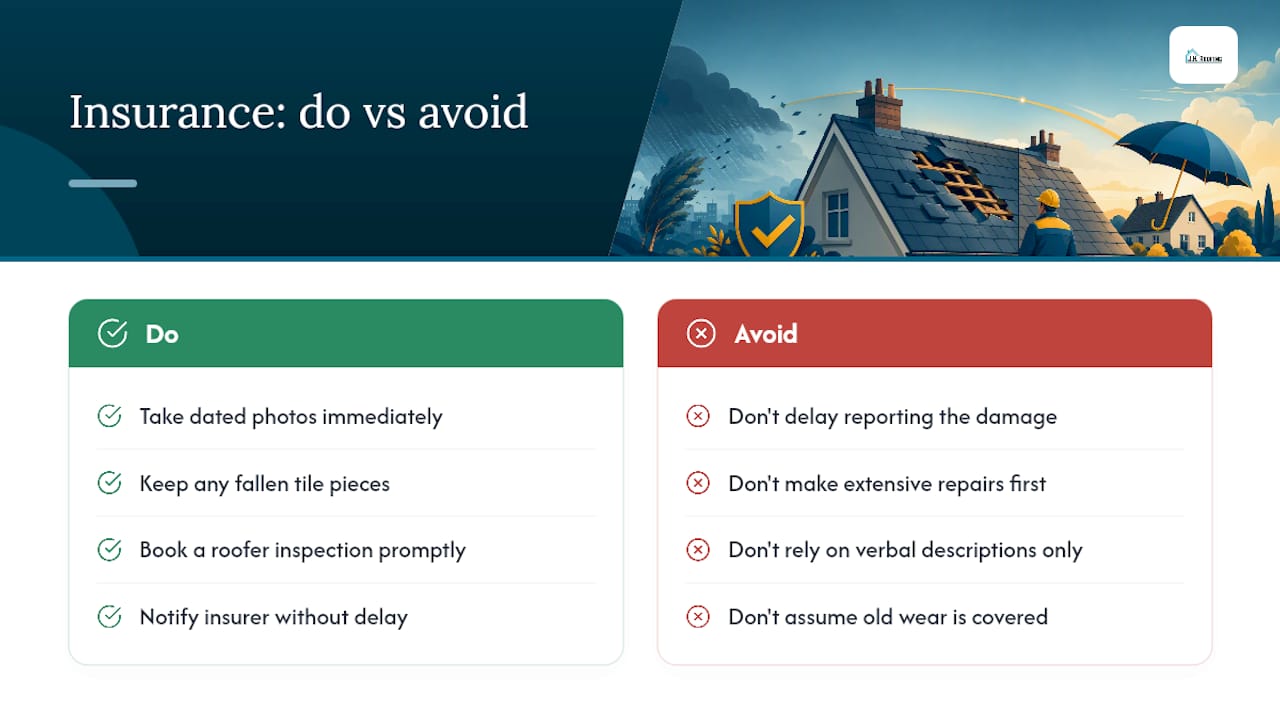
- Keep any fallen tile pieces you find. They help a roofer match materials and support an insurance claim if you make one.
What you shouldn't attempt yourself: climbing onto the roof to place a tarpaulin, nailing down loose tiles, or trying a DIY patch on a wet or sloped surface. Temporary covers use techniques like neoprene-backed battens to hold sheeting in place without further damaging the roof, and that kind of temporary fix requires training most homeowners simply don't have. A fall from roof height is a far worse outcome than a delayed repair. After a storm, the safest move is documenting the damage from ground level and calling in help, rather than assessing the roof up close yourself.
What a Professional Roof Inspection and Repair Actually Involves
A roofer showing up for a missing-tile call won't just replace the one tile you saw. They'll check the tiles around it for cracks or loosening, inspect the battens underneath for rot or nail fatigue, and look at the underlay's condition. They'll also check nearby flashings, the ridge line, valleys, and any penetrations like chimneys or vents, since these are the most common leak routes on any pitched roof.
That wider check matters because a missing tile is frequently a symptom, not the whole story. Failed fixings, damaged battens, or a poorly executed earlier repair often cause the slip in the first place, and replacing just the visible tile without addressing that cause tends to produce a repeat call within a season or two.
Depending on what they find, the repair itself might involve:
- Refitting or resecuring a tile that's slipped but not broken.
- Full tile replacement where the original is cracked or missing entirely.
- Batten or underlay repair in the affected section, needed when water has been sitting there a while.
- Ridge re-bedding, where the mortar holding ridge tiles has failed.
Cost depends on several variables working together. Access is often the biggest one: a single-story roof reachable by ladder costs far less to work on than one needing scaffolding. The number of tiles involved matters too, along with whether the roofer needs to source matching reclaimed tiles for an older roof. Secondary damage to timber or underlay adds cost, and an emergency call-out outside normal hours typically carries a premium over a scheduled visit.
For scale, replacing up to five tiles on a straightforward job in the UK often falls in the low hundreds of pounds, with costs rising from there based on the access and damage factors above. That's a useful benchmark to hold quotes against, though every roof and every job differs.
Building a Maintenance Routine That Prevents Repeat Tile Loss
Owens Corning's roof maintenance guidance recommends a regular checklist approach precisely because small, cheap fixes now prevent expensive repairs later. For a tile roof, that routine is straightforward if you stick to it:
- Inspect twice a year, ideally in spring and autumn, checking for loosened tiles, cracked ridge mortar, and any moss buildup that's started to lift tile edges.
- Clear gutters every season so water doesn't back up under the lowest course of tiles.
- Trim overhanging branches that could scrape tiles loose in wind or drop debris onto the roof surface.
- Remove moss promptly, since it holds moisture against tiles and accelerates frost damage in colder months.
- Check flashings and fixing clips for corrosion or movement, particularly around chimneys and roof windows.
- Repoint or replace failing mortar on ridge and hip tiles before it crumbles entirely.
Biannual inspections catch loosened fixings and early moss growth before they turn into a tile on the lawn. If your roof is older and you're facing repeat slips year after year, that pattern itself is worth flagging to a roofer. At some point, repeated one-off repairs cost more over a few years than addressing the aging battens or underlay directly. Landlords and property managers juggling multiple properties may find it worth building this into a seasonal maintenance schedule rather than reacting to each call as it comes in. For homeowners handling a single property, our own end-of-summer roof maintenance guide walks through the seasonal tasks in more detail.
What to Look for in a Roofer, and Why Local Response Time Matters
J.H. Roofing has operated as a family-owned business across Kent for more than 10 years, with a 24-hour emergency response service built specifically for situations like a tile that's come loose mid-storm. That kind of availability matters more than most homeowners realize until they're standing in a loft watching a wet patch spread on a Sunday night.
Whoever you call, ask these questions at first contact:
- Are you insured, and can you confirm coverage for this specific job?
- What's the guarantee on the repair, and how long does it cover?
- Can you give me a rough scope and timescale before you arrive?
- Do you have photos from similar past jobs you can share?
A written report from a professional inspection also matters beyond the immediate fix. It gives you documentation for an insurance claim if the damage qualifies, and it becomes a reference point for planning larger roof work down the line. J.H. Roofing backs its work with a 4.7-star Google rating and offers free, no-obligation quotes, so getting that initial assessment doesn't cost you anything before you decide how to proceed.
Does Home Insurance Cover Missing Roof Tiles?
Coverage depends heavily on cause and your specific policy terms, so there's no universal answer here. Storm damage, where wind has physically dislodged tiles, is often covered under standard buildings insurance, though insurers usually want evidence that the loss was sudden and weather-related rather than the result of years of gradual wear.
That distinction is where claims get complicated. If an insurer's assessor concludes the tiles slipped because of poor maintenance, old age, or a fixing failure that had been developing for years, they may reduce or deny the payout on the basis that the damage was preventable. This is exactly why documentation matters so much before you touch anything. Dated photos taken immediately after discovery, along with any fallen tile pieces you've kept, give your claim a much stronger footing than a verbal description after the fact.
Most policies also expect you to act reasonably fast once you know about the damage. Sitting on a known gap for weeks while secondary damage spreads can weaken a claim even when the original cause was covered, since insurers distinguish between the storm event and damage that resulted from delayed action afterward.
A professional roofer's written report helps on both fronts. It gives your insurer an independent assessment of cause, and it establishes a timeline that supports your claim rather than leaving your insurer to guess whether the damage was sudden or gradual. If you're planning to file a claim, get that inspection booked before extensive repair work begins, not after, so the assessor can see the damage in its original state.
How Missing Tiles Quietly Erode Energy Efficiency and Home Value
A gap in your roof doesn't just risk water damage. It's a direct path for heat loss, and that shows up on your energy bills long before it shows up as a visible leak. Warm air rises and escapes through any gap in the building envelope, and a missing tile above wet, compressed loft insulation makes that worse twice over: insulation that's soaked through loses much of its ability to trap heat, so you're losing warmth through the physical gap and through the degraded insulation beneath it.
Over a full winter, that compounding effect can meaningfully increase heating costs, particularly in a loft space that was already marginally insulated. It's a slow, invisible drain rather than a dramatic one, which is part of why it goes unaddressed for so long in many homes.
The home value impact is more direct and shows up at the worst possible time: during a sale. A survey that flags roof damage, damp insulation, or timber rot in the roof space gives a buyer's surveyor grounds to request a price reduction or repair credit before completion, and that number is often higher than what the original repair would have cost you months earlier. Buyers and their mortgage lenders both treat roof condition as a proxy for how well a property has been maintained overall, so a compromised roof can color a surveyor's view of the whole house, not just that one section.
Keeping tiles intact and dealing with gaps quickly protects more than the interior of your home. It protects the number on the valuation report when you eventually decide to sell.
Why Homeowners Overreact to the Wrong Signals
Most homeowners either panic over a single dry tile gap or completely ignore an active drip because it's "just a small leak." Both reactions are backwards. The tile sitting dry on your lawn after a calm week is rarely urgent. The faint musty smell in your loft that you've noticed for a month is usually the one that costs you money.
The instinct to climb up and fix it yourself is understandable, but it's the wrong instinct on a sloped, wet, unfamiliar surface. Documentation and a fast call to a professional beat DIY heroics almost every time, and a small, targeted repair now is nearly always cheaper than the timber and insulation work that follows a season of neglect.
— Gabbi
Get a Missing Tile Fixed Fast, Without the Guesswork
J.H. Roofing built its 24-hour emergency response service around exactly the scenario this article covers: a tile comes loose, water starts finding its way in, and you need someone who can actually show up, not just quote a callback window for next week. For less urgent cases, a single tile repair starts from £150, giving you a clear, affordable route to fixing the problem before it spreads.

Before you call, have a few things ready: photos of the missing tile's location, whether water is currently entering the property, and roughly where on the roof the gap sits (ridge, valley, or a flat section). That information lets the team assess urgency accurately and get a free, no-obligation quote back to you faster. If you're dealing with an active leak right now rather than a dry gap you spotted on a walk around the garden, head straight to the emergency repair page instead of waiting on a standard callback. Every job, from a single tile to a full section replacement, comes from a team experienced in handling roofing projects in the region. Request your quote today and get a straight answer on timing before the next storm rolls in.
Sources
For a deeper cost breakdown by tile type and roof access, Checkatrade's tile replacement guide is a solid reference. For seasonal maintenance planning, see our winter damage guide and slate roof maintenance page for tile-specific upkeep advice.
- Roof Maintenance Checklist: 11 Chores to Help Maintain Your Roof | Owens Corning Roofing
- What Are Roof Tile Replacement Costs in 2026? | Checkatrade
- What Should I Do If I Find a Missing Roof Tile? - LS Roofing Beaconsfield
- Slates or Tiles Missing From the Roof After a Storm | HaMuch
FAQ
How serious is a missing roof tile?
A single missing tile can be more serious than it looks, since it exposes the underlay directly to wind and rain. Whether it's urgent depends on whether water is actively entering the home; if not, prompt inspection and a targeted repair usually avoid more extensive work.
How much does it cost to replace roof tiles?
Small jobs replacing up to five tiles typically fall in the low hundreds of pounds in the UK, with costs rising for difficult access, scaffolding, or additional repair work. J.H. Roofing's single tile repair service starts from £150, with a free quote available before any work begins.
Will my roof leak with missing ridge tiles?
Ridge tiles sit at the highest, most wind-exposed part of the roof, so a gap there is more likely to let in driving rain than a similar gap on a mid-roof section. Combined with old or torn underlay, a missing ridge tile can lead to a leak faster than the same problem elsewhere on the roof.
Can you just replace roof tiles?
Often, yes, but a roofer will typically check the surrounding battens, fixings, and underlay first, since a slipped tile is frequently a symptom of an underlying issue rather than an isolated fault. Replacing the tile without checking the cause behind the slip can lead to the same problem recurring within a season.
How do I know if a missing tile is an emergency?
Treat it as an emergency if you see active water entering the home, damage near electrical fittings, or severe weather forecast soon. Otherwise, document it with photos and book a professional inspection within a few days rather than waiting weeks.