
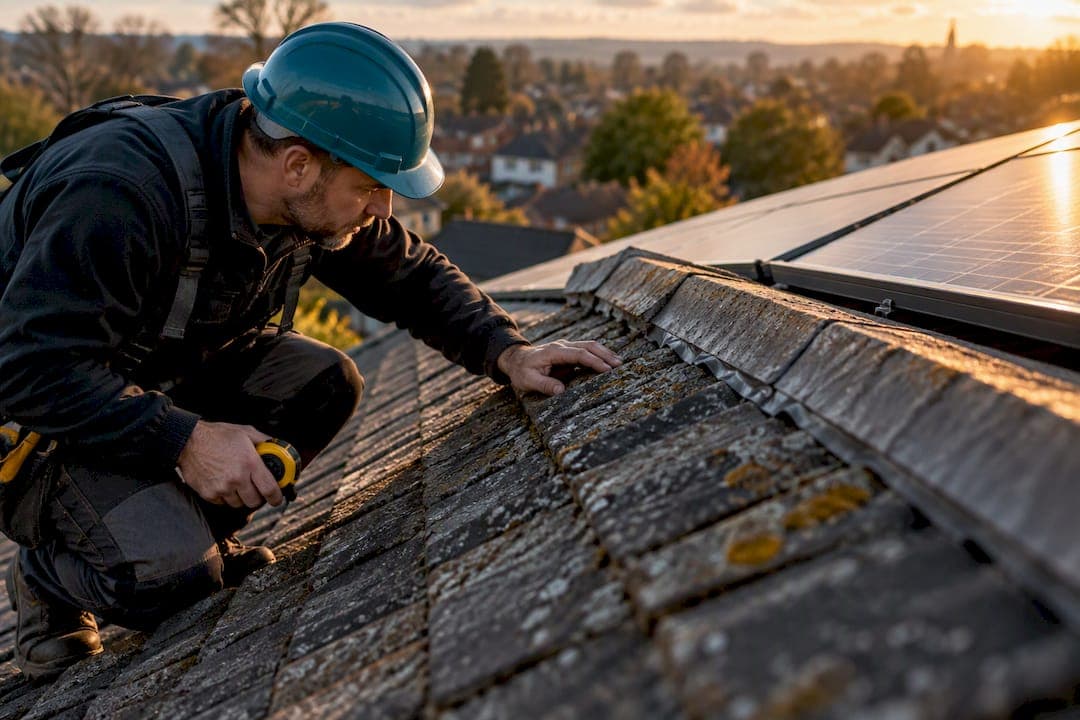
If your roof has significant age, damage, or fewer than 10 to 15 years of life left, get a new roof before solar. It costs less to combine the work now, protects your installation from structural surprises, and avoids paying twice to remove and refit panels later. If your roof covering is sound and you have no renovation plans, you can usually install solar without touching the roof at all.
TL;DR:
- A roof nearing the end of its natural lifespan or showing signs of damage should be replaced before installing solar panels to prevent costly removals later.
- Re-roofing during solar installation allows for better technical options, such as roof-mounted panels or solar tiles, which are difficult on existing roofs.
- Coordinating roof replacement with solar work reduces overall costs by sharing scaffolding and labor, avoiding repeated disassembly and reinstallation.
- Proper assessment by a qualified roofer and structural engineer ensures the roof can support panels and meets UK planning rules, especially in conservation areas.
- A free, on-site roof survey helps determine whether a roof needs repairs or replacement first, ensuring long-term support and warranty coverage for your solar system.
Table of Contents
- Decision Criteria: When You Should Replace the Roof First
- How Roof Replacement Changes Your Solar Options
- How to Coordinate Roofing and Solar Contractors
- Costs and Value: Roof Now vs Roof Later
- UK Rules and Standards You Must Know
- How a Local Roofer Approaches Combined Roof and Solar Projects
- Get a Free Roof Survey Before You Commit to Solar
- Sources
- FAQ
Decision Criteria: When You Should Replace the Roof First
The core question is simple: will your roof reasonably outlast your solar panels? Most PV systems carry warranties of around two decades, so a covering nearing the end of its own life is a poor match for panels going on top of it.
Start by figuring out how many years the existing roof has left. Kent's clay peg tiles and slate can last well over a century when maintained, but felt underlay and cheaper interlocking tiles often need replacing after 20 to 30 years. If your roof is already showing wear, adding solar without addressing it just delays an expensive removal and reinstallation job.
Watch for these signs that point toward reroofing first:
- Leaks, damp patches, or staining on ceilings and in the loft
- Slipped, cracked, or missing tiles across more than a small area
- Persistent moss growth that traps moisture under the covering
- Underlay that has degraded, sagged, or torn
- Timber rot or soft spots in the rafters or roof deck
Structural or edge-zone concerns push the decision further. MIS 3002 requires a competent person to confirm the roof structure can safely carry the added weight of panels and mounting equipment, and any doubt about rafter condition should trigger a structural engineer's assessment before installation proceeds.
Reroofing isn't automatically necessary. If your covering is sound, was replaced within the last decade, and you have no renovation plans, panels can usually go straight on without disturbing the roof.
Pro Tip: Ask your roofer for an honest estimate of remaining roof life in years, not just a pass/fail verdict. A roof with 8 years left might still be worth replacing if your solar system is designed to last 25.

How Roof Replacement Changes Your Solar Options
Reroofing opens up choices that aren't practical on an existing roof, and each comes with different cost and timing trade-offs.
- Roof-mounted panels sit on brackets fixed through the tiles into the rafters below. This is the standard retrofit approach and usually suits a sound, unchanged roof without extra work.
- In-roof systems replace a section of tiles with a flush-fitted frame holding the panels. Because tiles need to come out anyway, this only makes sense during a re-roof or a significant renovation.
- Solar roof tiles replace the roof covering itself with tiles that generate electricity. Energy Saving Trust notes these work best when renovating or building new, since retrofitting them onto an existing roof is typically more expensive than standard panels, though installing them in place of a tile you'd be buying anyway can offset some of that cost.
Re-roofing also changes the technical details underneath: fresh flashing around chimneys and valleys, new waterproof underlay beneath the panels, and correct handling of tile removal and refitting around mounting points, as explained in Builders: Stop Crane Delays on SIP Roofs, Use Precut Panels. Wind uplift rules near roof edges matter here too, since a re-roof gives installers a clean opportunity to reinforce those zones properly rather than working around old, brittle fixings.
How to Coordinate Roofing and Solar Contractors
Getting the sequence right saves money and stops one contractor's work from undoing another's.
- Book a roof condition survey first. A qualified roofer can tell you whether the covering, underlay, and structure will support solar for the long term, or whether you're looking at a Kent slate roof needing specialist maintenance before anything else happens.
- Get quotes from an MCS-certified solar installer and a roofer at the same time. Ask each what the other's work will involve, so the quotes reflect the actual combined job rather than two separate, uncoordinated estimates.
- Bring in a structural engineer if there's any doubt. MIS 3002 treats this as a requirement, not an option, whenever the roofer or installer flags a concern about load capacity.
- Schedule the reroof first, then the solar install, or coordinate both teams to work back to back using the same scaffold.
- Do a final check once panels are fitted, confirming flashing, edge zones, and cabling are sealed and weatherproofed before the scaffold comes down.
Pro Tip: Ask both contractors to share one scaffold booking and one access date. Splitting the scaffold hire between two separate jobs, weeks apart, is one of the most common ways homeowners overpay for combined roof and solar work.
Costs and Value: Roof Now vs Roof Later
Doing both jobs together almost always beats doing them apart. Energy Saving Trust puts a typical domestic solar system cost at around £7,600, and that figure assumes a roof that's ready to receive panels without extra prep work. Add a reroof on top later, and you're paying for scaffolding, access, and labor a second time.
- Removing and reinstalling panels for a later reroof adds labor, scaffolding, and sometimes electrical disconnection costs that a combined project avoids entirely
- Sharing scaffold and access charges across both jobs is one of the most reliable ways to cut the combined bill
- Replacing a roof late in a solar system's working life reduces the overall value you get from the panels, since you lose output during the removal and reinstall period
There's also a warranty angle worth flagging early: some installers will not warranty panels mounted on a roof covering they consider near the end of its life, and your home insurer may ask questions about roof condition when panels are added. Sort the roof out first, and both problems tend to disappear.
UK Rules and Standards You Must Know
Solar installations in England generally fall under permitted development, but the conditions are specific and worth checking before you commit to a design.
- Panels must not protrude more than 0.2 meters from the roof slope
- Additional limits apply to flat roofs and to distance from roof edges
- Prior approval from the local planning authority is required on certain land types, including many conservation areas and land near listed buildings
Under the Town and Country Planning (General Permitted Development) (England) Order 2015, Schedule 2, Part 14 sets out these protrusion limits and confirms that prior approval is required on some article 2(3) land, which covers much of the conservation-area housing found across Kent's older towns.
On the technical side, MIS 3002 requires structural checks by a competent person, use of MCS 012 tested mounting kits where applicable, and a minimum 400mm clearance from any roof edge unless extra fixings or additional roof timbers are added to compensate. If your property sits in a conservation area or has planning restrictions you're unsure about, check with your local council's planning department before booking any work.
How a Local Roofer Approaches Combined Roof and Solar Projects
Homeowners across Ashford, Canterbury, Maidstone, and the wider Kent area tend to ask the same question: will the roof handle solar, or does it need sorting first? Jhroof answers that with an on-site condition survey and a free quote, then coordinates timing with your MCS-certified solar installer so scaffolding and access get shared rather than duplicated.

Kent's mix of peg tiles, slate, and flat roofing each carries its own quirks, and a decade of local experience means fewer surprises once the survey is done. With extensive experience in roofing, insured workmanship, and positive customer feedback, a professional roofer treats the roof-first decision as the foundation the rest of your solar project stands on.
Get a Free Roof Survey Before You Commit to Solar
A local roofer provides homeowners with an honest, independent assessment of whether a roof needs work before panels go up, backed by extensive local roofing experience and positive customer ratings. Instead of guessing at remaining roof life from a sales brochure, you get a real on-site assessment and a free, no-obligation quote.

If your roof is due, roof replacement is the natural starting point, and Jhroof will coordinate timing and scaffolding with your MCS-certified solar installer so the two jobs share one access charge instead of two. Not sure whether you need a full reroof or just targeted repairs first? The full range of roofing services covers everything from flashing and leadwork to complete replacements, so you get one straight answer rather than a sales pitch dressed up as a survey. Request your free quote today and find out exactly where your roof stands before you sign anything with a solar installer.
Sources
FAQ
Do I Need a New Roof Before Solar Panels?
Not always. You need one first if your roof shows significant age, damage, or has limited remaining life compared to your panels' expected lifespan. A sound, recently replaced roof with no renovation plans generally doesn't need reroofing before solar goes on.
How Do I Know if My Roof Can Support Solar Panels?
A roofer or MCS-certified installer checks for leaks, slipped tiles, rot, and degraded underlay, then MIS 3002 requires a competent person to confirm the structure can carry the added load. If there's any doubt about the rafters or roof deck, a structural engineer's assessment is required before installation.
Is It Cheaper to Combine a Reroof With Solar Installation?
Usually, yes. Sharing scaffolding and access charges across both jobs is one of the most effective ways to cut combined costs, and it avoids paying twice for labor if the roof needs replacing again shortly after solar goes up. Doing the roof late in the panels' working life also reduces the overall value you get from the system.
Do I Need Planning Permission for Solar Panels in the UK?
Most domestic solar installations fall under permitted development, but panels can't protrude more than 0.2 meters from the roof slope under the 2015 General Permitted Development Order. Prior approval from your local council is required in conservation areas and on other specified land types.
Can Jhroof Help Coordinate a Reroof With My Solar Installer?
Yes. Jhroof provides a free on-site roof survey and quote, then coordinates timing and scaffolding with your MCS-certified solar installer so both jobs share one access charge. Pricing for roof replacement work is provided after that survey, since costs depend on roof size, material, and condition.