
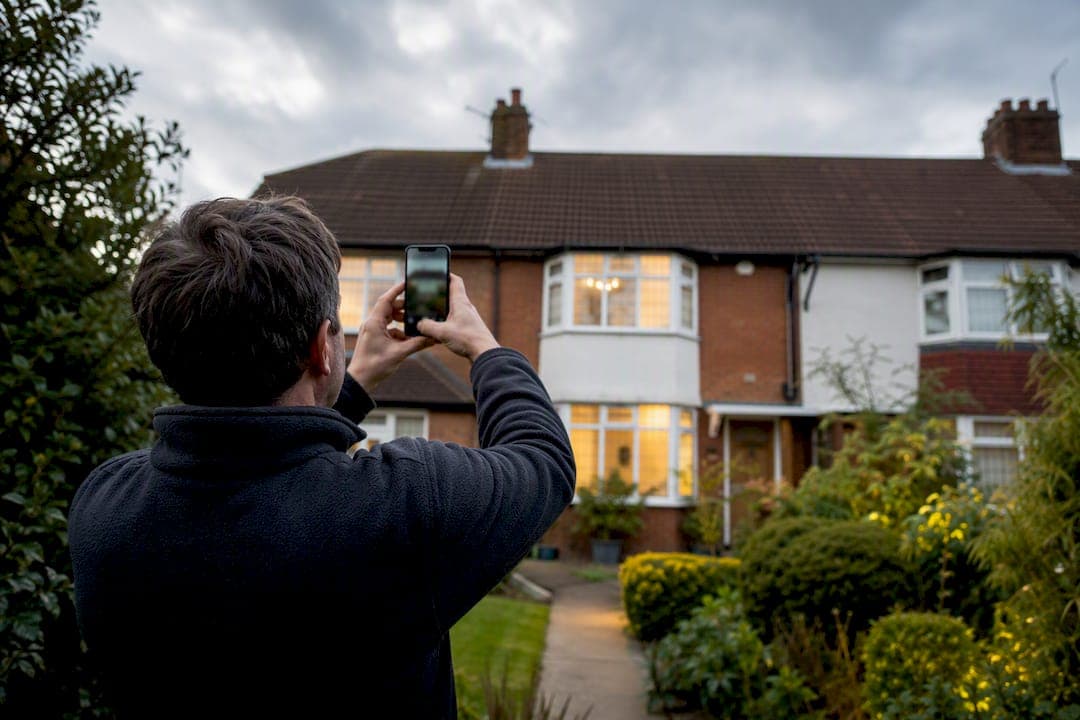
This checklist covers exterior surfaces, gutters, flashings, and the attic, in that order, and it starts from the ground. Walk your property line first, then check the attic, photograph anything that looks off, and note exactly where it is. If you see an active leak, sagging decking, or a large section of missing roofing, stop and call a professional immediately rather than climbing up to look closer.
TL;DR:
- Most roof defects are visible from the ground or attic, so walking on tile or slate rooftops is generally unnecessary and risky.
- Key signs include missing, cracked, or curling shingles, displaced ridge or valley lines, and metal seam issues, with urgent problems needing professional repair within weeks.
- Attic inspections revealing daylight, discolored insulation, or moisture buildup signal potential leaks and internal damage that require immediate attention.
- Gutter checks should focus on debris removal, sagging brackets, and ensuring downspouts direct water away from the foundation to prevent secondary damage.
- Regular biannual inspections and prompt documentation of problems with photos and detailed notes are essential for accurate estimates and timely repairs.
Table of Contents
- What You Need Before You Start a Roof Inspection Checklist
- Exterior Roof Surface Checklist: Tiles, Slates, Shingles and Metal
- Attic and Ceiling Signs of Roof Failure
- Gutters, Downspouts and Drainage Checklist
- Flashings, Chimneys, Skylights and Roof Penetrations
- Flat Roof and Low-Slope Roof Checklist
- When to Run a Roof Checkup and After Which Storms
- How to Document Roof Problems for a Quote or Claim
- What J.H. Roofing Asks for When You Call
- Why Catching Small Roof Problems Early Actually Saves Money
- Sources
What You Need Before You Start a Roof Inspection Checklist
You don't need special equipment for most of this. A sturdy ladder helps only for eaves-level viewing, never for walking the roof surface itself.
Roofing standards from InterNACHI recommend inspecting from the ground, the eaves, or the attic rather than walking the roof, especially on tile or slate surfaces that crack under foot traffic. That guidance exists for a good reason: most actionable defects are visible without ever setting foot on the roof.
- Binoculars for ridge, valley, and chimney flashing views from the ground
- Smartphone camera for dated, location-tagged photos
- Flashlight for attic corners and roof decking underside
- Notepad or phone app for logging locations and severity
Aim for two homeowner checks a year, spring and fall, with an extra look anytime a serious storm rolls through.
Exterior Roof Surface Checklist: Tiles, Slates, Shingles and Metal
Work your way from the eaves up to the ridge, scanning in sections rather than trying to take in the whole roof at once.
- Missing or slipped tiles and shingles. A gap in the pattern means water has a direct path to the decking below, and it usually needs quick attention.
- Cracked or curling shingles. Curling edges signal aging asphalt that's losing its seal against wind-driven rain.
- Granule loss. Bald patches on shingles, or granules collecting in gutters, point to a roof nearing the end of its service life.
- Ridge, hip, and valley condition. These lines take the most wind stress in a storm, so displaced ridge caps or opened valley seams deserve a closer look.
- Metal panel fasteners and seams. Loose screws or lifted seams on metal roofing let water track sideways under the panel.
Rate what you find as minor, moderate, or urgent. A handful of lost granules is minor and worth monitoring. A cracked ridge tile or an open valley seam is moderate and should get scheduled repair within weeks. A missing section exposing decking, or a tile that's slipped enough to leave a visible gap, is urgent and needs a professional look before the next rain.
Pro Tip: Photograph the same section of roof each season from the same spot on the ground. Side-by-side comparisons make it much easier to spot gradual granule loss or creeping tile displacement that's easy to miss in a single snapshot.
Attic and Ceiling Signs of Roof Failure
The attic tells you what the exterior often hides. Bring a flashlight and check the underside of the decking, not just the insulation.
- Daylight showing through the roof deck at the ridge or eaves
- Damp, matted, or discolored insulation, especially near penetrations
- Dark staining or streaking on rafters and sheathing
- A musty or mildew smell, which often shows up before visible mold does
- Soft or spongy timber when pressed gently with a gloved hand
Inside the living space, watch for water stains on ceilings, peeling paint near exterior walls, or plaster that's bubbling. These are downstream signs of a leak that's been running for a while.
Ventilation matters here too. Building-regulation guidance lists adequate ventilation to prevent condensation as one of a roof's five core functional requirements, alongside structural stability, moisture protection, thermal insulation, and drainage. Poor attic airflow traps moisture, which rots decking from the inside and, in colder months, raises the risk of ice damming at the eaves.
Gutters, Downspouts and Drainage Checklist
Gutters are the part of the roof system homeowners skip most often, and it's the one that causes the most secondary damage when it fails.
- Clear debris, leaves, and granule buildup from gutter runs
- Check for sagging brackets or gutters pulling away from the fascia
- Look for standing water sitting in the gutter after a dry day
- Confirm downspouts route water at least a few feet from the foundation
- Watch for staining on the fascia board, a sign water is already overflowing
A checklist built around exterior, gutter, and attic zones lets most homeowners assess the majority of common defects without ever climbing onto the roof itself. Standing water that sits for more than a day usually means a slope or blockage problem, not just leaves, and it's worth clearing immediately rather than waiting for the next storm to make it worse.
Flashings, Chimneys, Skylights and Roof Penetrations
Flashing failures cause more leaks than worn shingles do, because they're where two different materials meet and rely entirely on sealant and metal lap to stay watertight.
- Check step flashing and counter flashing along chimney sides for gaps or rust streaks
- Inspect chimney mortar joints for crumbling or missing sections
- Look at skylight seals for cracked caulk or lifted edges
- Examine pipe boots (the rubber collars around vent pipes) for cracking or shrinkage
- Note any flashing that looks patched with visible sealant rather than proper metal lap
Rust stains running down a chimney or skylight frame almost always mean the flashing underneath has already failed. If you can't get a clear view of the joint between chimney and roof from the ground or a ladder at the eaves, that's a sign it needs a closer professional inspection rather than a guess from a distance.
Flat Roof and Low-Slope Roof Checklist
Flat and low-slope roofs fail differently than pitched ones, and ponding water is the biggest threat.
- Check for ponding anywhere on the membrane, particularly near drains and low points.
- Look for blistering, bubbling, or seam separation across the membrane surface.
- Confirm drains and scuppers are clear of leaves, moss, and debris.
- Note any soft or spongy spots underfoot near the parapet or drains.
Ponding that lasts more than 48 hours after rain is a critical problem, not a cosmetic one. Standing water that sits that long accelerates membrane breakdown and adds weight the structure wasn't built to carry indefinitely. Clearing the drain is a reasonable temporary fix; membrane repair or replacement is a job for a specialist, and if you see multiple ponding areas developing across a single flat roof, that's usually a slope or drainage design issue rather than a one-off blockage.
When to Run a Roof Checkup and After Which Storms
A seasonal maintenance schedule (spring and fall homeowner checks, with a professional inspection annually or after major storms) is the pattern most roofing maintenance guides recommend, and it holds up well in practice.
- Spring: check for winter damage, ice-dam residue, and loosened flashing
- Fall: clear gutters before leaf season and check for summer heat damage
- After hail: look for dented metal, cracked shingles, and dislodged granules
- After high wind: check for lifted or missing tiles and displaced flashing
- After heavy snow: watch for sagging on flat roofs and ice-dam formation at eaves
Put a recurring reminder in your phone for early spring and early fall, and add an ad hoc check anytime your area gets a named storm or a hail warning.
How to Document Roof Problems for a Quote or Claim
Good documentation is what turns a vague concern into a fast, accurate quote. Take one wide shot of the affected area, then a close-up of the specific defect, and date-stamp both.
- Label each photo with a precise location, such as "north-facing slope, second valley from chimney"
- Rate each item as monitor, repair, or urgent based on what you found
- Keep a simple list rather than paragraphs of notes, item by item
- Include roof age and any prior repair history if you have it
Precise location language measurably improves the accuracy of contractor quotes, because it removes the guesswork a roofer would otherwise need a site visit to resolve. A one-page report with photos, locations, and severity ratings is usually enough to get a same-week callback instead of a delayed site assessment.
Pro Tip: Group your photos by roof area in your phone's album before you call anyone. A roofer who can flip through five organized shots gets to a quote faster than one working from a scattered camera roll.
What J.H. Roofing Asks for When You Call
If you find an active leak, a sagging section of roof, or a large missing area of tiles, that's an emergency call, not a next-week appointment. Contain water damage with a bucket or tarp indoors, move valuables away from the drip line, and photograph the area before you do anything else. Avoid climbing onto a wet or damaged roof yourself.
When you reach out to Jhroof for a fast, accurate quote, having your photos ready with location notes speeds things up considerably. It also helps to know your roof's approximate age and whether it's had prior repairs, since that shapes whether a targeted fix or a fuller roof replacement makes more sense. The company offers an emergency response service for urgent calls, supported by positive customer reviews from homeowners in Kent.
Why Catching Small Roof Problems Early Actually Saves Money
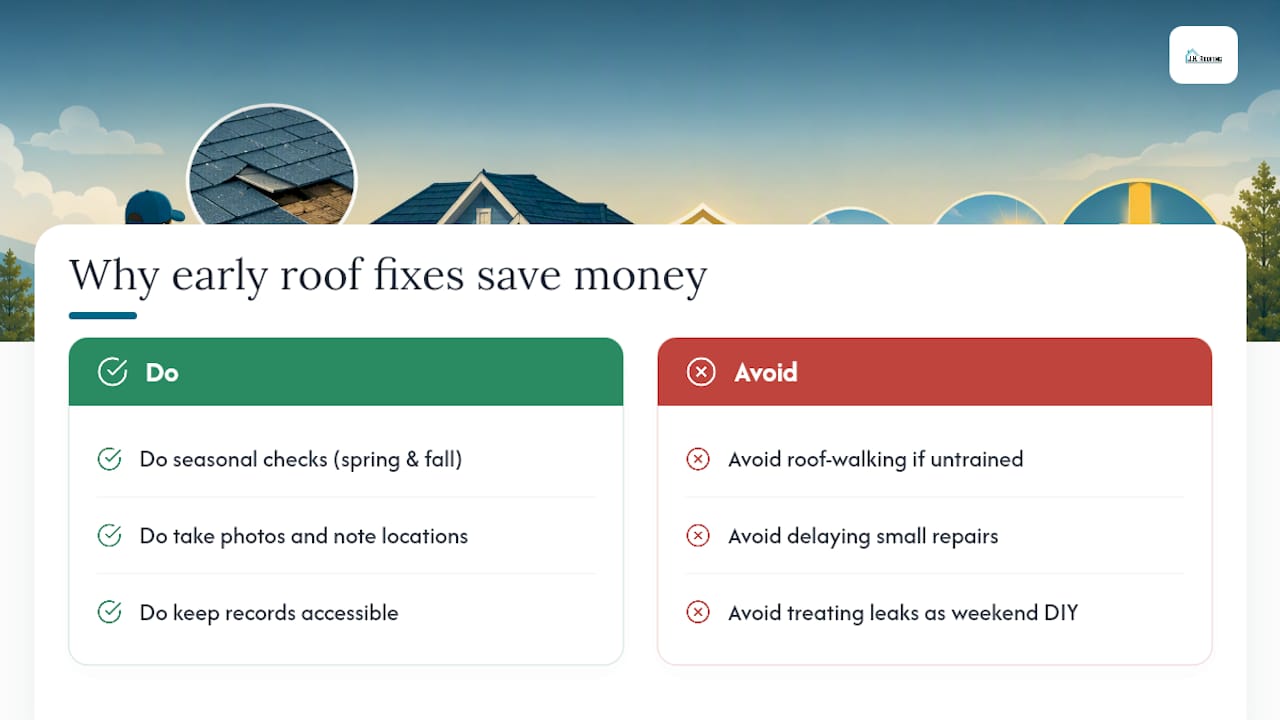
Most roof failures that end up costing homeowners the most started as something small enough to fix for a fraction of the price. A slipped tile ignored for two seasons becomes rotted decking. A clogged gutter left through one winter becomes fascia damage and a soffit repair.
The single highest-value habit here isn't a tool or a technique. It's the recurring spring and fall check, done consistently, with photos and location notes kept somewhere you can actually find them again. Skip the roof-walking entirely unless you're trained for it, and treat any active leak or structural sag as a same-day call to a professional rather than a weekend project.
— Gabbi
Sources
- Planning Portal – Building regulations for new roofs
- InterNACHI – How to perform roof inspections
- RoofScour – Free roof inspection checklist
- MyJobQuote – Roof inspection cost and what to expect