
In the UK, buildings insurance usually covers roof damage caused by sudden insured events like storms, falling trees, or fire. It does not cover damage caused mainly by wear and tear or poor maintenance. Whether your claim succeeds often comes down to what happened in the first 48 hours after you spotted the damage.
TL;DR:
- Most storm-related roof claims require evidence of damage occurring within the first 48 hours, including photographs and documented emergency repairs.
- Insurers confirm coverage only when local weather data aligns with the damage pattern and indicates storm conditions coincided with the loss.
- Underinsurance threatens to reduce payouts through the average clause unless homeowners regularly review and accurately declare their rebuild sum insured.
- Proper documentation of routine maintenance, timely reporting, and staged repair records strengthen your position during claims disputes or official assessments.
- For flats, shared roofs, or listed buildings, coordination among multiple owners and securing necessary permissions are crucial to avoid delays or claim rejections.
Table of Contents
- What Counts as a Roof Insurance Claim in the UK: Cover vs Exclusions
- Buildings vs Contents Insurance: Who Pays for What
- How Insurers Decide If a Storm Really Caused the Damage
- First 48 Hours: Protecting Your Roof Insurance Claim UK Homeowners Need to Act On
- The Roof Insurance Claim Process UK Insurers Follow, Step by Step
- Why Roof Insurance Claims Get Reduced or Refused
- Loss Adjusters, the Ombudsman, and How to Challenge a Refusal
- Roof Claims for Flats, Shared Roofs, and Listed Buildings
- Maintenance Records That Strengthen Your Next Claim
- How Roofers Document Storm Damage for Insurance Claims
- What Matters Most When You're Filing a Claim
- Where to Check the Rules Yourself
- Sources
- FAQ
What Counts as a Roof Insurance Claim in the UK: Cover vs Exclusions
Buildings insurance typically treats your roof as part of the structure, alongside chimneys, gutters, and permanent fixtures. Cover usually kicks in when damage comes from a sudden, identifiable event rather than slow deterioration.
Insurers generally pay out for:
- Storm damage from high winds, hail, or heavy snow
- Fallen trees or branches that strike the roof
- Fire damage, including smoke and heat effects on tiles or felt
- Vandalism or accidental impact, such as a satellite dish blown loose
They typically decline claims tied to:
- General wear and tear on aging tiles, flashing, or felt
- Gradual deterioration from years of weather exposure
- Damage traced to a lack of routine maintenance
- Vermin infestation that damages roof timbers or insulation
ABI guidance on home insurance confirms buildings policies cover the structure, including the roof, for sudden insured events, while flagging that wear and tear sits outside standard cover. The catch is that "storm" isn't defined the same way across every insurer. Some set a minimum wind speed; others rely on the loss adjuster's judgment call. Always check your specific policy wording rather than assuming a neighbor's payout applies to you too.
Buildings vs Contents Insurance: Who Pays for What
Your roof falls under buildings insurance, not contents. That distinction decides which policy you call first, and it matters even more when the two are with different providers.
Buildings insurance covers the structure and anything fixed to it:
- The roof covering, timbers, and felt
- Chimneys, gutters, fascias, and soffits
- Built-in fixtures like fitted kitchens or bathroom suites
Contents insurance covers what's inside, once water gets through:
- Furniture, electronics, and carpets damaged by a leak
- Clothing, curtains, and personal belongings
- Removable white goods not fixed to the structure
If your buildings and contents policies sit with separate insurers, notify both promptly and check your excess and cover limits on each. A leaking roof after a storm often triggers two simultaneous claims: one for the roof itself, one for the ceiling and belongings underneath it. Missing that split is a common reason homeowners under-claim or delay a payout.
How Insurers Decide If a Storm Really Caused the Damage
Insurers don't take your word that a storm happened. They cross-check local weather data, look at the damage pattern, and apply a specific test when a claim is disputed.
- Did storm conditions actually occur near the date of damage? Insurers pull records from sources like the Met Office's storm season data to confirm wind speeds, rainfall, or hail matched storm thresholds.
- Is the damage consistent with storm impact? A cluster of lifted tiles on the windward side of the roof looks very different to an adjuster than patchy, widespread deterioration.
- Was the storm the main cause, or did it just expose existing weakness? This is where many claims fall down: if your roof was already failing, the storm gets blamed as the trigger, not the cause.
This three-part sequence comes directly from how the Financial Ombudsman Service assesses storm damage complaints. Insurers also weigh local claim reports. If ten houses on your street reported storm damage the same week, that pattern supports your case.
First 48 Hours: Protecting Your Roof Insurance Claim UK Homeowners Need to Act On
What you do in the first two days after discovering roof damage shapes whether the claim succeeds. Speed matters, but so does documentation.
- Call your insurer immediately and get a claim reference number. Follow whatever guidance their emergency helpline gives you.
- Photograph everything before touching anything. Wide shots of the roof, close-ups of specific tiles or flashing, and images of any interior water damage.
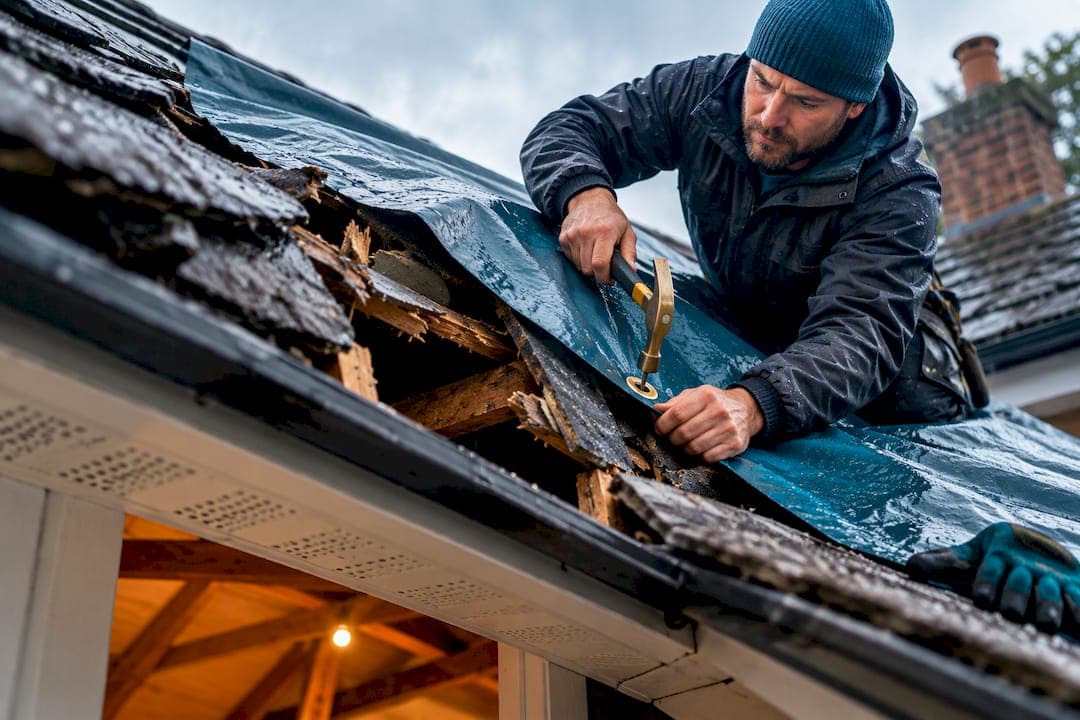
- Arrange emergency repairs only if safety demands it. Tarping a hole to stop further water ingress is expected. Keep every receipt.
- Move valuables away from the affected area and document interior damage room by room.
- Avoid permanent repairs until a surveyor has seen the damage, if at all possible. Once you've replaced the roof covering, there's less for an adjuster to inspect.
ABI's storm advice is explicit here: contact your insurer straight away, keep receipts for temporary repairs, and don't discard damaged materials unless they pose a genuine safety risk. Insurers may need to inspect the debris itself as part of verifying the claim.
The Roof Insurance Claim Process UK Insurers Follow, Step by Step
Once you've reported the damage, the claim moves through a fairly predictable sequence. Knowing what's coming helps you avoid getting caught out at each stage.
- Notification. You report the damage and answer questions about when it happened, what caused it, and the extent of visible harm.
- Initial assessment. Some insurers approve emergency repair costs over the phone; others wait for an inspection before authorizing any work.
- Loss adjuster visit. An adjuster inspects the roof, checks your photos, and may ask for contractor quotes. Have access arranged and your evidence organized before they arrive.
- Settlement offer. You'll typically get either an insurer-appointed contractor to carry out repairs, or a cash settlement to arrange your own.
- Repair and sign-off. Keep every invoice and receipt. If cash-settled, insurers sometimes ask for proof the work was actually completed.
The whole process moves faster when your evidence is ready on day one rather than assembled after the adjuster asks for it.
Why Roof Insurance Claims Get Reduced or Refused
Most declined claims share one of three root causes, and all three are largely avoidable with the right preparation.
Dominant cause disputes top the list. If an adjuster concludes wear and tear was the primary driver, and the storm merely exposed an already-weak roof, the claim gets refused even though a storm genuinely occurred.

Underinsurance catches out more homeowners than you'd expect. If your declared rebuild sum is lower than the actual cost to rebuild your home, insurers can apply what's known as the average clause, cutting your payout proportionally, even on an otherwise valid claim.
Timing and evidence gaps cause the rest. Waiting weeks to report damage, failing to photograph the roof before repairs, or carrying out permanent fixes before a surveyor arrives all weaken your position.
- Review your rebuild sum insured every few years, not just at renewal
- Report damage within days, not weeks
- Never assume "obviously storm damage" is enough. Document it anyway
Pro Tip: Keep a simple phone folder labeled with your address and the date of any roof work, storm, or inspection. When a claim comes up years later, that timestamped record does more to prove your roof was well maintained than any verbal assurance to an adjuster.
Loss Adjusters, the Ombudsman, and How to Challenge a Refusal
A loss adjuster works for the insurer, assessing the damage and recommending a settlement. If you disagree with their findings, you're entitled to commission your own independent assessor, though you'll usually cover that cost yourself.
Adjuster reports typically focus on:
- The pattern of damage (localized impact versus widespread deterioration)
- Maintenance history and the roof's general condition
- Photographic and contractor evidence you've submitted
If your claim gets declined and you believe it's wrong, complain to the insurer formally first, in writing, with your evidence attached. If that doesn't resolve it, escalate to the Financial Ombudsman. Ombudsman decisions consistently return to that same three-question test, and documented cases show homeowners succeeding when they can produce weather records, dated photos, and maintenance logs that contradict a wear-and-tear finding.
Roof Claims for Flats, Shared Roofs, and Listed Buildings
Ownership structure changes who actually files the claim, and getting this wrong wastes valuable time.
- Top-floor flats: the freeholder or landlord typically holds the buildings policy covering the roof, not the tenant. Renters generally need contents cover only, while the block's buildings policy handles structural repairs.
- Shared or tenement roofs: in Scotland especially, tenement buildings often share roof structures across multiple owners, requiring coordination among several policyholders before a claim proceeds.
- Listed buildings: repairs may need listed building consent before work starts, even for emergency fixes. Check with your local planning authority early, since using the wrong materials can create separate problems beyond the insurance claim itself.
Maintenance Records That Strengthen Your Next Claim
The strongest claims are often built long before any damage occurs. Insurers and adjusters respond well to evidence that your roof was in good condition beforehand.
- Schedule roof inspections every year or two, and clear gutters each autumn
- Replace slipped or cracked tiles promptly rather than leaving them
- Keep every maintenance invoice and contractor report on file
- Take dated photos of your roof's condition periodically, storm or no storm
- Commission a professional survey if your roof is older or you're planning to sell, since a written report becomes powerful evidence in any future dispute
Small, regular upkeep like this is exactly what our end-of-summer roof maintenance guide walks through in more detail.
How Roofers Document Storm Damage for Insurance Claims
Contractors see the evidence side of claims constantly, and the good ones document damage the way an adjuster wants to see it, not just the way a homeowner would.
- Detailed photos from multiple angles, including close-ups of flashing, ridge tiles, and any impact points
- Drone surveys for roofs that are steep, high, or otherwise hard to inspect safely from ground level, which our flat roof case study in Kent shows in practice
- Dated, written inspection notes that separate "storm damage" from "pre-existing wear"
- A clear line on when to wait for insurer approval versus when safety demands immediate tarping or boarding
Fast temporary action matters. A 24-hour emergency response that gets a tarp on a hole within hours often limits internal water damage significantly and preserves the roof's condition for the adjuster's inspection. For homes with staged repair needs, contractor playbooks for rapid roofing delivery outline how staged work keeps a property protected while a claim is still being assessed.
What Matters Most When You're Filing a Claim
Stop further damage first, then worry about paperwork. A roof that's actively letting water into your home needs a tarp or emergency board before it needs a photograph, though ideally you get both within the same hour.

Work with your insurer, but don't rely on them alone. Keep your own timeline, your own photos, and your own copies of every email. Adjusters are professional and generally fair, but they're assessing dozens of claims a week. Your file needs to make their job easy, not the reverse.
Bring in a qualified contractor for both the emergency work and any follow-up inspection. A rushed DIY tarp job or an unqualified opinion on "storm versus wear and tear" can undercut a claim that otherwise would have succeeded.
— Gabbi
Where to Check the Rules Yourself
For the underlying rules rather than secondhand summaries, go straight to the source. The ABI's home insurance guidance and its storm-specific advice cover what's typically included and excluded. The Financial Ombudsman's storm damage page explains the three-question test in full, with real decision examples. For weather verification, Met Office storm season records provide the objective data insurers themselves consult.
If your roof needs emergency attention or a full assessment before you even start the claims conversation, J.H. Roofing's team covers repairs, replacements, and emergency call-outs across Kent, with free, no-obligation quotes and a 24-hour emergency response. Whether you need a single tile repair or a full replacement after storm damage, getting a qualified inspection early gives you stronger evidence and a clearer picture of the real cost, before an adjuster ever sets foot on your roof.
Sources
- Common questions about home insurance / ABI
- Storm damage guidance / Financial Ombudsman Service
- Storm damage insurance claim guide / PCLA
FAQ
Why Won't My Insurance Pay for Roof Damage?
The most common reason is that the insurer's adjuster concluded wear and tear, not a sudden insured event, was the main cause. Buildings insurance generally excludes gradual deterioration and poor maintenance, even when a storm was the trigger that exposed the problem.
Am I Liable If a Roofer Falls Off My Roof in the UK?
If you've hired a properly insured contractor, their own public liability and employer's liability insurance should cover workplace accidents, not you as the homeowner. Always confirm a roofer carries valid insurance before work starts, since an uninsured contractor could leave you exposed to a claim.
How Long Do Roofers Guarantee Their Work in the UK?
Guarantee lengths vary by contractor and by the type of work carried out, so there's no single standard across the industry. Ask any roofer for their specific written guarantee terms before agreeing to a job, and keep that paperwork alongside your maintenance records.
How Much Does It Cost to Fix a Roof Leak in the UK?
Costs depend heavily on the cause and extent of the leak, from a single displaced tile to widespread flashing failure. A single tile repair starts from £150, while larger repair jobs are priced individually after inspection.