
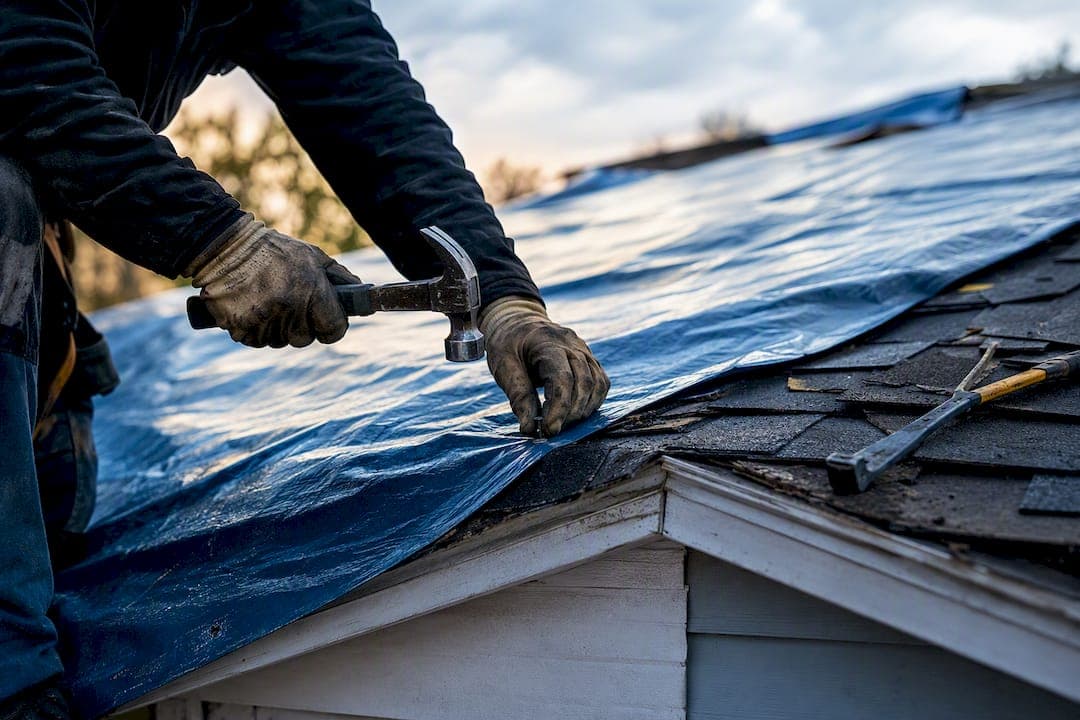
If water is actively pouring into your living space, your ceiling is sagging, or water is anywhere near an electrical fixture, stop reading and call a 24/7 emergency roofer now. Those conditions, along with a tree strike or a visible hole in the roof deck, define a true emergency that needs a professional on-site within hours, not days. A qualified crew will stabilize the roof first, usually with a tarp, then diagnose the damage and plan the permanent fix once the weather clears.
If the drip is slow and contained, you likely have time to work through basic containment steps tonight and book an inspection first thing tomorrow. Either way:
- Active water, sagging drywall, or electrical exposure: call now.
- Slow drip with no structural signs: contain it and schedule a same-day or next-day visit.
- J.H. Roofing answers emergency calls around the clock across Kent if you need a fast, local response tonight.
Key Takeaways
A roof leak becomes a true emergency the moment water flow is active, a ceiling sags, or water reaches an electrical fixture, and it demands an immediate professional response rather than DIY exterior repair.
| Point | Details |
|---|---|
| Triage first | Active flow, sagging drywall, or electrical exposure means call now; a slow drip can wait until morning. |
| Contain, don't climb | Buckets, plastic sheeting, and a careful ceiling puncture protect your home; exterior work waits for a pro. |
| Document everything | Timestamped photos and saved receipts are what insurers need to process a mitigation claim. |
| Expect a two-stage process | Emergency visits stabilize the roof first; permanent repair follows once conditions allow. |
| J.H. Roofing offers 24/7 dispatch | A family-owned Kent roofer with a 4.7-star rating provides round-the-clock emergency response and documented estimates. |
Table of Contents
- Roof Leak Emergency: Immediate Steps to Limit Damage
- Is Your Leak a True Emergency or Can It Wait?
- What Happens During the Emergency Roofer's First Visit
- Emergency Roof Repair Costs and Protecting Your Insurance Claim
- Safety Rules Every Homeowner Should Follow During a Leak
- How J.H. Roofing Handles a Roof Leak Emergency
- Why Most Emergency Roof Advice Gets the Priorities Backwards
- Get 24/7 Emergency Help From J.H. Roofing in Kent
- Sources
Roof Leak Emergency: Immediate Steps to Limit Damage
Before anyone arrives, what you do in the first thirty minutes determines whether you're dealing with a repair bill or a full ceiling replacement.
- Catch the water. Set buckets or bins directly under the drip and lay plastic sheeting or old towels around the area to protect flooring.
- Move valuables out of the drip zone. Furniture, electronics, and anything irreplaceable should come off the floor and away from the wet ceiling.
- Relieve a bulging ceiling, carefully. If drywall is ballooning with trapped water, a small controlled puncture in the center of the bulge, with a bucket underneath, can prevent a sudden collapse that would otherwise happen without warning.
- Cut power to the affected area if water is anywhere near outlets, fixtures, or a light in the ceiling. Shut off the breaker for that room rather than risk shock.
- Check the attic only if it's safe. Look for the wet insulation or staining with a flashlight from the access point; don't walk out onto joists you can't see clearly.
- Skip the exterior work unless it's genuinely safe. A quick, low-risk tarp over a small, accessible section is one thing; climbing a wet or steep roof is another. Leave anything beyond ground-level access to a professional.
- Photograph everything. Wide shots of the ceiling, close-ups of the water source, and timestamps on every image give your insurer the evidence they'll ask for later.
Pro Tip: Keep every receipt for buckets, tarps, or a hotel stay if you had to leave the house. Insurers generally reimburse reasonable mitigation costs, but only if you can show what you spent and when.
Is Your Leak a True Emergency or Can It Wait?
The line between "call tonight" and "call in the morning" comes down to how fast water is moving and what it's touching. An emergency means active flow, an exposed roof deck, visible structural movement, or water within reach of wiring. A slow, steady drip from an aging roof with no other red flags usually holds until daylight rates apply.
- Storm puncture from a fallen branch: emergency, call now.
- Slow drip after heavy rain, roof otherwise intact: contain and schedule next-day service.
- Old roof, gradual staining over weeks: not an emergency, but don't ignore it.
Damage escalates fast once water gets past the shingles. In the first 24 hours, drywall and insulation start absorbing moisture. Between 24 and 72 hours, mold growth becomes a real risk and wood framing can start to soften. After-hours and storm-surge response rates are often higher than normal pricing, reflecting the urgency and conditions., which is the tradeoff for stopping that clock immediately instead of waiting.
What Happens During the Emergency Roofer's First Visit
Emergency crews typically dispatch within one to four hours of your call for an active leak, faster if the storm has passed and roads are clear. Once on site, the sequence generally follows the same pattern regardless of who you hire:
- A safety check of the roof and attic access before anyone climbs anything.
- Temporary weatherproofing, usually a tarp, sometimes a patch, to stop water intrusion immediately.
- A diagnostic inspection to identify the actual failure point, not just the visible symptom.
- Written notes and a preliminary estimate outlining what stabilized the roof and what the permanent repair will involve.
Crews often stop at stabilization during active storms and schedule the permanent fix for once conditions and daylight allow proper work. That's not a stall tactic. It's how a roof actually gets fixed correctly instead of rushed.
Ask the technician for:
- A written breakdown of what was done today versus what's still pending.
- Photos they took during the inspection, in addition to your own.
- A rough timeline and estimate for the permanent repair.
Emergency Roof Repair Costs and Protecting Your Insurance Claim
Emergency pricing varies with how bad the damage is and how late the call comes in, but the ranges are fairly consistent across the industry.
| Service | Typical Cost Range |
|---|---|
| Professional emergency tarping | range depending on roof size and urgency |
| Standard emergency visit (call-out, diagnosis, minor patch) | typical range depends on service specifics |
| After-hours or storm-surge premium | 2 times normal rate |
| Major stabilization after severe storm damage | Varies by extent, often above $1,000 |
A moderately priced tarp today can prevent significant secondary water damage costs later. if it stops the leak from spreading into insulation and drywall overnight. That math is why paying an after-hours premium for tarping usually makes financial sense even when the invoice feels steep.
Get every emergency charge in writing before work starts, including the call-out fee and any after-hours add-on. If a storm caused the damage, insurers generally expect you to take reasonable mitigation steps and will reimburse them, so open your claim promptly and keep every photo and receipt organized.
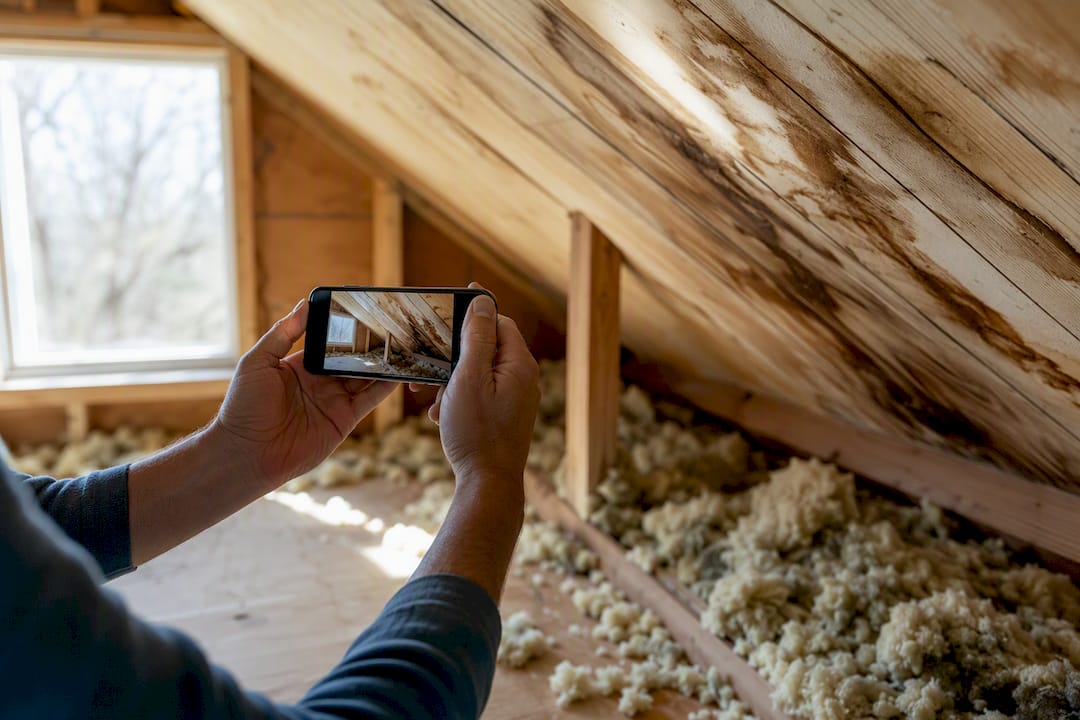
Pro Tip: Ask the contractor for an itemized estimate that separates the emergency tarp cost from the permanent repair quote. That split makes your insurance claim far easier to process.

Safety Rules Every Homeowner Should Follow During a Leak
Never get on a wet roof, in high winds, in the dark, or on a structure you suspect is weakened. Professional guidance is unambiguous on this point: interior containment is yours to handle, exterior work in bad conditions is not.
- Stay inside and manage buckets, plastic sheeting, and the ceiling bulge.
- Shut off power to any circuit near standing water or a wet ceiling fixture.
- Leave tarping, patching, and any roof-level inspection to a crew with fall protection and insurance.
- Skip the ladder in the dark. A slip costs far more than the leak ever will.
Licensed crews carry liability coverage that protects you if something goes wrong on your property, and their workmanship is typically backed by a warranty. A DIY patch gone wrong carries neither of those protections.
How J.H. Roofing Handles a Roof Leak Emergency
J.H. Roofing is a family-owned roofing company that's worked across Kent for more than 10 years, backed by a 4.7-star Google rating built on residential and commercial jobs. When you call the emergency line, here's what happens:
- A team member answers 24/7 and gets your address, the nature of the leak, and any safety concerns.
- A crew dispatches for tarping or temporary stabilization, prioritizing active leaks and storm damage.
- The technician documents the damage with photos and notes, then walks you through what was done and what's next.
- You get a written estimate for the permanent fix, and guidance on what your insurer will need for a claim.
Free, no-obligation quotes apply to the permanent repair stage once your roof is stabilized and safe.
| Point | Details |
|---|---|
| Family-owned, 10+ years | J.H. Roofing has operated across Kent for over a decade with a 4.7-star Google rating. |
| 24/7 dispatch | Emergency calls are answered around the clock, with crews prioritizing active leaks and storm strikes. |
| Documented process | Every visit includes photo documentation and written estimates for insurance purposes. |
| Two-stage repair | Stabilization (tarp/patch) happens first; permanent repair is scheduled once it's safe to do the work properly. |
Why Most Emergency Roof Advice Gets the Priorities Backwards
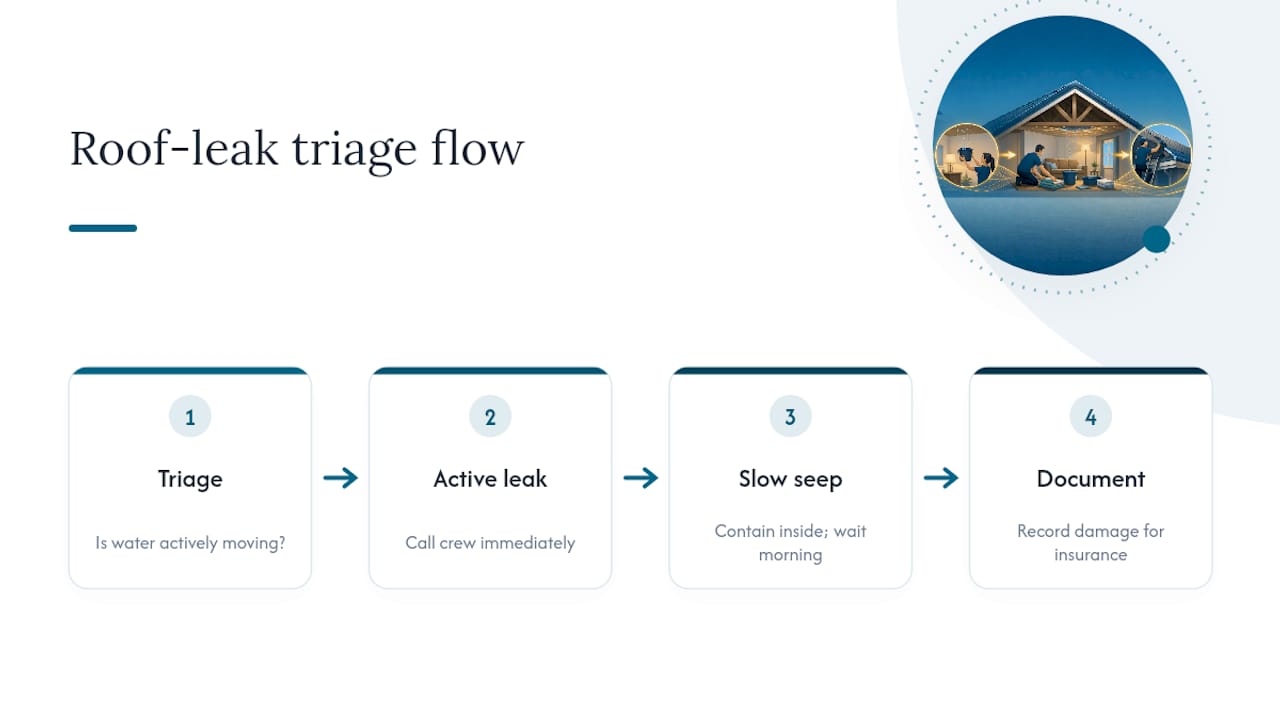
Most emergency roof guides bury the actual decision, whether to pay for a 2 a.m. call-out or wait until morning, under generic checklists. That's backwards. The real judgment call is triage: is water actively moving, or is it a slow seep you can manage until daylight? Get that right and everything else, buckets, tarps, insurance paperwork, falls into place.
The conventional advice oversells DIY exterior fixes. Plenty of guides suggest homeowners can "temporarily tarp" their own roof, glossing over the fact that a wet, sloped surface in storm conditions is how people get seriously hurt. Interior containment is genuinely DIY-friendly. Exterior work in bad weather isn't, no matter how confident the instructions sound.
What actually protects a homeowner isn't heroics on a ladder. It's fast containment inside, a documented paper trail for insurance, and a same-day or overnight call to a crew that can stabilize the roof safely. The permanent fix can wait a day or two. The water can't.
— Gabbi
Get 24/7 Emergency Help From J.H. Roofing in Kent
If you're staring at a spreading water stain right now, you don't need another checklist, you need someone on the way. J.H. Roofing runs a genuine 24/7 emergency line across Kent, backed by 10-plus years of local roofing work and a 4.7-star Google rating from homeowners who've been exactly where you are tonight. Where a generic call center might dispatch a subcontractor and disappear once the tarp goes up, J.H. Roofing stays with the job through the permanent repair, insurance documentation included.

Whether you're dealing with an active leak, storm damage, or a slow drip that needs a same-day look, the fastest next step is to reach out directly through the emergency repair page and request help. Free, no-obligation quotes apply once your roof is stabilized, so there's no pressure, just a fast, documented path from tonight's emergency to a proper permanent fix.
Sources
- Emergency Roof Repair Cost 2026: $250–$3,200 + What to Do First
- Emergency Roof Leak Repair
- Emergency Roof Leak Repair | Rapid Response Guide
- How to spot a roof leak and what to do if you have one