

A roof maintenance plan combines scheduled inspections, rapid checks after storms, and prioritized minor repairs into one ongoing service, and it is the most reliable way to protect a roof's lifespan. It catches small problems, such as a lifted flashing or a blocked gutter, before they become five figure repairs. If you don't have one yet, the next step is simple: book an inspection or draft a checklist covering the items below.
TL;DR:
- Roof inspections should be conducted at least twice a year with additional checks after storms or disturbances, costing between £120 and £650 depending on scope.
- A comprehensive maintenance plan must include clear inspection schedules, routine debris removal, and detailed reports with photos and cost estimates to prevent expensive repairs.
- Small repairs and checks for exterior signs of damage or leaks should be prioritized, with documentation to track recurring issues and inform replacement decisions.
- Contractors should provide explicit scope, response times, repair caps, and insurance proof, avoiding vague promises or contracts without clear exclusions.
- Keep an organized file with inspection records, warranties, and repair history to identify patterns and decide whether repairs or full replacements are necessary.
Table of Contents
- What Does a Comprehensive Roof Maintenance Plan Include?
- How Much Does a Roof Inspection Cost and When Should You Book One?
- What Should Be on Your Roof Maintenance Checklist?
- How Do You Choose the Right Roof Maintenance Plan?
- Building a Roof Information File That Actually Works
- How Long Do Roof Inspections and Repairs Actually Take?
- What Contract Terms Should You Check Before Signing?
- How Do You Compare Different Roof Maintenance Providers?
- What Do Maintenance Plans Typically Exclude?
- How Do You Judge Coverage Adequacy for Commercial Roof Types?
- Why Most Roof Maintenance Advice Undersells the Paperwork
- Let J.H. Roofing Put Your Maintenance Plan Into Practice
- Sources
What Does a Comprehensive Roof Maintenance Plan Include?
A genuine roof maintenance plan is more than a once-a-year glance from the ground. It should combine a fixed inspection schedule with a defined scope of minor repairs, so you know exactly what's covered before anything goes wrong.
Inspection cadence sits at the core. Most reputable plans build in bi-annual routine visits plus additional checks after any severe storm, and some providers now offer drone or aerial surveys for roofs that are hard to access safely, alongside an interior attic check to catch issues invisible from outside.
Routine maintenance tasks typically cover:
- Clearing leaves, moss, and general debris from gutters and roof surfaces
- Inspecting flashing, joints, and seals around chimneys and rooflights
- Checking and clearing downpipes to prevent water backing up under tiles
- Carrying out minor tile, slate, or shingle repairs on the spot
Deliverables worth demanding include a photographic report, a written condition log, and a prioritized list of recommendations with rough cost estimates attached. For commercial properties, look for added features like defined repair cover limits, priority call-out slots, scheduled cleaning cycles, and discounts on any larger remedial work that comes up later.
How Much Does a Roof Inspection Cost and When Should You Book One?
Roof inspection pricing varies more than most owners expect, and the range tells you something useful about what you're paying for. Standard inspection costs typically run between £120 and £400, while more detailed reports, the kind that include drone photography or a full attic assessment, can run £150 to £650.
What drives that spread:
- Roof complexity (multiple pitches, valleys, or flat sections cost more to assess)
- Access difficulty, particularly height and whether scaffolding or cherry pickers are needed
- Depth of reporting, since a two-page summary costs less to produce than a photo-documented condition survey
On timing, inspect roofs at least twice a year, in late autumn and again in spring, with an extra check after any storm or after rooftop work like solar panel or HVAC installation disturbs the surface. A proper written report should note every defect found, its exact location, and a recommendation with a rough price attached, not just a verbal "looks fine."
What Should Be on Your Roof Maintenance Checklist?
A working checklist splits into three zones: the roof surface itself, the water management system around it, and the interior spaces below it. Miss any one of the three and small problems tend to go unnoticed until they become expensive ones.
- Clear debris from the roof surface and gutters every autumn and spring, more often near overhanging trees.
- Inspect tiles and slates for cracks or slippage, and replace any damaged units before water gets underneath.
- Check flashings around chimneys, valleys, and ridge lines, since these joints fail years before the surrounding roofing material does.
- Remove moss or schedule professional cleaning, particularly on north-facing slopes that stay damp.
- Clean gutters and downpipes so rainwater actually drains instead of overflowing into the fascia.
- Check for ponding on flat roof sections, a sign the drainage falls need adjusting.
- Look for daylight, stains, or damp insulation in the attic, since interior signs like daylight through boards or ceiling stains often appear before any exterior symptom does.
- Confirm attic ventilation is working, since trapped moisture rots timber from the inside out.
Pro Tip: Keep a phone photo log of your attic taken from the same three spots each visit. Side by side comparisons over a year reveal slow leaks that a single glance would miss entirely.
Beyond the routine, book an unscheduled inspection immediately after any storm with winds over 50 mph, after scaffolding or solar work touches the roof, or the moment you spot a ceiling stain.
How Do You Choose the Right Roof Maintenance Plan?
Picking a provider comes down to specifics, not marketing language. Vague promises of "regular checks" or "full coverage" tell you nothing about what actually happens when something goes wrong.
Before you sign anything, weigh these criteria:
- Exact inspection frequency and whether post-storm checks are included at no extra cost
- A written definition of "minor repairs," including any monetary cap
- Stated response times for emergency call-outs, not just "as soon as possible"
- Whether reports come with photos and a written record, or just a phone call
- Proof of insurance and any workmanship guarantee on repairs carried out
Ask providers directly: what exactly is covered, what's the spending limit before you're charged extra, who performs the actual work (an in-house team or a subcontracted crew), and can they show a sample report from a previous job.
Watch for red flags. A provider unwilling to produce a written report, a scope of work described only in general terms, or a contract with a long minimum term and murky cancellation language should give you pause. So should the absence of any insurance documentation or references you can actually check.
Building a Roof Information File That Actually Works
The property owners who avoid repeat problems are almost always the ones keeping records. A roof information file should hold your original contract documents, roof plans, material specifications, manufacturer warranties, and a chronological log of every inspection and repair, complete with dated photos and marked defect locations.
That history does something a single inspection can't: it tells you whether a leak near the same chimney flashing is a recurring defect or a one-off. Chronological records like these help contractors and managers distinguish a pattern from an isolated incident, which matters when you're deciding between another patch repair and a full section replacement.
A flat roof replacement in Kent showed exactly this in practice: years of documented minor repairs on the same section eventually pointed to a structural issue no single patch job would have revealed on its own.
That case is a useful illustration of why the paperwork matters as much as the ladder work.
How Long Do Roof Inspections and Repairs Actually Take?
Most routine inspection visits typically take under two hours but can vary depending on roof size and access points. Minor repairs, like replacing a few slipped tiles or resealing small flashing gaps, usually complete within a few hours to a day. Larger structural work can take longer, extending over several days.
What pushes a job past its original estimate:
- Weather delays, since roofing work generally can't happen safely in heavy rain or high wind
- Restricted access, particularly on terraced properties or roofs needing scaffolding
- Hidden damage found once repair work is underway, a common discovery once existing surfaces are opened up
- Material availability, especially with reclaimed or specialist tiles like traditional Kent peg tiles
You can help keep things on schedule by clearing access to the roof and loft beforehand, having any previous inspection reports ready to hand over, and staying reachable for a quick walkthrough once the work is done.
What Contract Terms Should You Check Before Signing?
Most roof maintenance contracts run on a rolling annual basis, though some providers lock in a longer minimum term in exchange for a lower rate. Read the renewal clause carefully. Auto renewal is standard practice, but the notice period you need to give to opt out varies widely, and missing it by a few days can commit you to another full year.
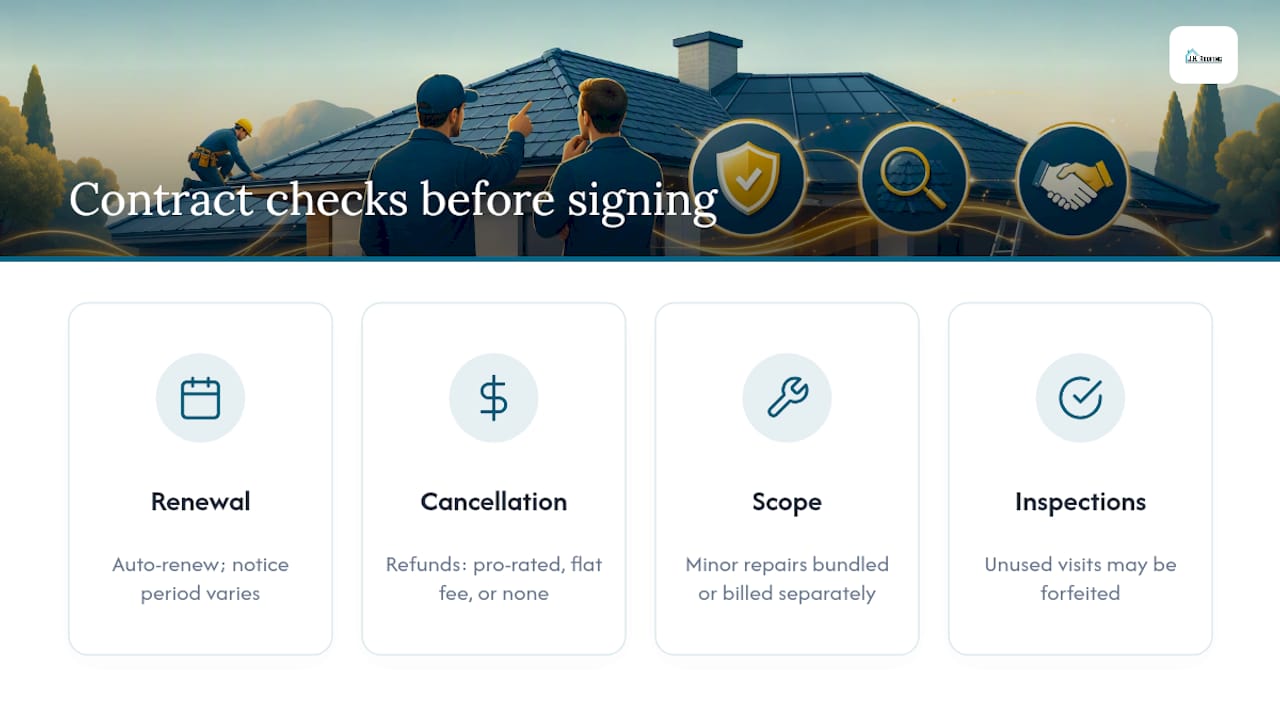
Cancellation terms deserve the same scrutiny. A fair contract states plainly what happens if you cancel early, whether that means a pro rated refund, a flat cancellation fee, or no refund at all for work already scheduled. If a provider won't put that in writing before you sign, treat it as a warning sign rather than an oversight.
Look closely at what counts as included work versus a chargeable extra. Some plans bundle a fixed number of minor repairs into the annual fee and bill anything beyond that at an hourly or per job rate. Others charge for every callout regardless of scale. Neither approach is wrong, but you need to know which one you're agreeing to before a bill arrives that doesn't match your expectations.
Finally, check what happens to unused inspection visits. A plan that includes two inspections a year but doesn't let you carry over a missed one, say, because access wasn't available in autumn, effectively costs you a service you paid for and never received. Ask the provider to confirm this in writing rather than assuming it works in your favor.
How Do You Compare Different Roof Maintenance Providers?
Reputation research takes more than reading a homepage. Start with independent review platforms rather than testimonials the company selected itself, and look specifically for reviews that mention maintenance plans rather than one off repairs, since the two services often reveal different sides of a contractor's reliability.
Certifications matter, but only the ones tied to actual accountability. A contractor's public liability insurance, any trade body membership, and proof of workmanship guarantees are worth confirming directly rather than taking on faith. Ask to see documentation, not just a badge on a website.
Response history is another signal worth digging into. A provider with strong reviews for routine work but no visible track record on emergency call-outs may not be the right fit if rapid response after a storm matters to you. Look for language in reviews about how quickly a provider actually showed up during a genuine emergency, not just how the initial quote process went.
Local reputation carries particular weight for roofing work, since a contractor working consistently in your area will know regional weather patterns, common roof types, and material sourcing better than one operating at a distance. A 4.7 star rating built from dozens of local reviews tells you more than a national chain's aggregated score across hundreds of postcodes with wildly different conditions.
What Do Maintenance Plans Typically Exclude?
Every maintenance plan has boundaries, and understanding them before you sign avoids disputes later. Most plans exclude structural repairs beyond a certain cost threshold, meaning a collapsed section of roof deck or a full re-roof falls outside routine maintenance cover entirely and gets quoted separately.
Damage from causes outside normal wear is another common exclusion. This includes storm damage beyond a defined severity, subsidence, or damage caused by other trades working on the property, such as a satellite installer disturbing flashing during an unrelated job. Some plans also exclude pre existing damage present before the contract started, which is exactly why an initial baseline inspection with photographic evidence matters.
Age and material limitations show up frequently too. A plan may cover routine maintenance on a roof under 20 years old but require a separate assessment, or exclude cover entirely, once a roof passes a certain age where general wear becomes the dominant issue rather than isolated defects. Flat roofing systems and traditional materials like slate or clay peg tiles sometimes carry different terms than standard pitched tile roofs, given how differently they age and fail.
Read the smaller print on response time guarantees as well. Many plans promise priority scheduling but define that loosely, and "priority" during a widespread storm event affecting hundreds of local properties simply means less delay than a non contract customer, not an instant visit.
How Do You Judge Coverage Adequacy for Commercial Roof Types?
Commercial roofs vary enormously, and a maintenance plan sized for a simple pitched roof rarely fits a large flat commercial deck or a mixed material industrial building. Start by matching plan scope to your actual roof composition. A flat roof with membrane covering needs different inspection points, ponding checks, and seam inspections than a pitched tile roof, and a plan that doesn't specify how it handles flat sections separately probably wasn't designed with your building in mind.
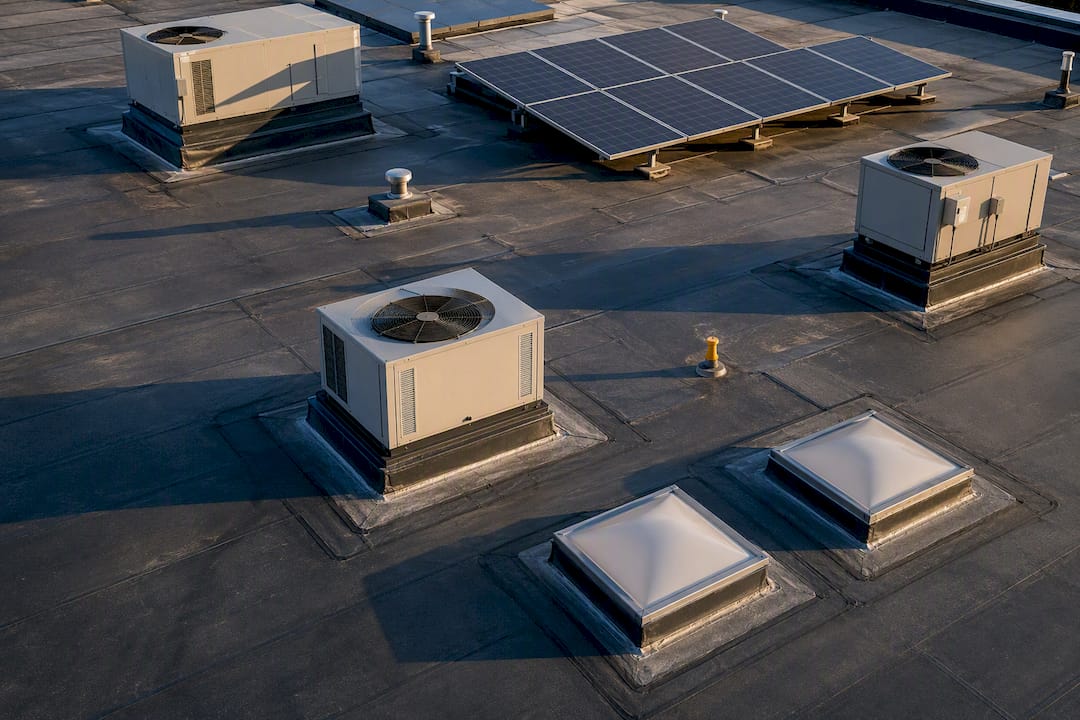
Scale changes the calculation too. A large commercial roof with multiple HVAC units, skylights, or solar installations has far more penetration points where leaks originate, so coverage limits and repair caps need to reflect that complexity rather than a flat per property rate that assumes a simple residential roof.
For portfolios spanning several buildings or roof types, a single chronological log per roof, rather than one blended record for the whole property, makes it far easier to track recurring defects, warranty periods, and component lifecycles separately. This turns maintenance from a reactive expense into planned capital budgeting you can forecast year to year.
If your roof carries recent additions, like new HVAC equipment, solar panels, or access platforms, confirm the plan includes a mandatory post-installation inspection clause. These works are a frequent cause of latent leaks from disturbed flashing, and a plan without this clause may leave a gap right where new risk was just introduced. For unusually complex commercial roofs, a topographic survey can also give you the precise plans needed to judge whether a proposed plan's scope actually matches your building's real layout.
Why Most Roof Maintenance Advice Undersells the Paperwork
The roofing industry talks a great deal about inspection frequency and not nearly enough about what happens to the information an inspection produces. A photo taken once and never compared against the next visit's photo is barely better than no inspection at all. The real value of a maintenance plan isn't the visit itself, it's the pattern that emerges once you have three or four visits stacked against each other.
Conventional advice tends to treat minor repairs as a cost center to minimize. I'd argue the opposite: a plan that fixes small issues quickly and documents them thoroughly is what keeps a roof out of the expensive repair category for another decade. The owners who skip minor repairs to save a callout fee are usually the ones facing a five figure replacement quote a few years earlier than they needed to.
If you take one thing from this guide, prioritize the written report and the record keeping over the marketing language on a provider's website. A contractor who hands you a dated, photographed condition log every visit, without you asking, has already shown you more about their reliability than any star rating can.
— Gabbi
Let J.H. Roofing Put Your Maintenance Plan Into Practice
Reading through a checklist is one thing. Having someone reliable actually carry it out, visit after visit, is another. A reliable roofing contractor working locally, offering insured services and emergency response options for urgent roofing needs.
Inspections ideally include a photographic report and a list of recommendations, so there's clarity about what minor repairs cover and potential costs before work begins. That approach played out directly in a recent flat roof replacement in Kent, where documented inspection history helped identify the real scope of the problem before any work began.
If your roof hasn't had a proper inspection this year, or you're ready to move from ad hoc repairs to a documented plan, get in touch for a free, no obligation quote and see the full range of roofing services J.H. Roofing offers across Kent.
Sources
- Roof inspection cost guide - Checkatrade
- Roof maintenance checklist - EMC Insurance
- The 7 most common roofing failures in UK homes (how to spot them early) - Aussie Group