

Most roof noise in wind comes from something loose, not something failing. A whistle, rattle, or creak usually means a fixing has worked free, flashing is vibrating, or underlay is fluttering, and all of that is repairable. The exception is sudden loud bangs, new cracks, visible movement, or fresh water stains. Those need a professional inspection before the next storm, not after it.
TL;DR:
- Most roof noise in wind results from loose or under-fixed tiles, flashing vibrations, fluttering underlay, or timber framing movement, not structural failure.
- Distinct sounds, such as high-pitched whistles, flapping, rattling, creaking, or banging, indicate specific sources that can often be diagnosed by ear.
- Sudden loud bangs, new cracks, visible roof movement, drafts, or water stains signal potential damage requiring professional inspection immediately.
- Temporary checks, like examining gutters and attic framing or recording noises, can help identify issues before calling a roofer for repairs.
- Lasting fixes include re-securing tiles, resealing flashing, reinforcing attic framing, and ensuring proper roof and attic maintenance to prevent future wind noise.
Table of Contents
- What Causes Roof Noise in Wind?
- Matching the Sound to the Source
- Red Flags That Mean Call a Professional Now
- Quick Checks You Can Safely Do Yourself
- Permanent Fixes That Actually Stop the Noise
- Preventing Wind Noise Before It Starts
- A Real Repair: From Rattling Roof to Silent Nights
- A Roofer's Honest Take on Wind Noise
- Get Your Wind Noise Diagnosed and Fixed
- Sources
- FAQ
What Causes Roof Noise in Wind?
Wind doesn't create noise on its own. It finds every loose part of your roof and turns it into a small instrument, and different parts make very different sounds.
The most frequent culprits fall into a short list, and most of them trace back to age or a fixing that was never quite tight enough:
- Loose or under-fixed tiles and slates. Failed clips or corroded nails let individual tiles lift slightly and drop back down with every gust, producing a knock or clatter.
- Vibrating flashing, ridge caps, or vent fittings. Thin metal edges around chimneys and ridges hum or whistle when wind passes over a gap that's opened up over time.
- Underlay flutter at the eaves. The felt or membrane under your tiles can billow in strong wind if it isn't fully tacked down, creating a fast flapping sound along the roofline.
- Attic framing movement. Timber rafters and trusses flex under wind load, and where two members rub against each other, you get a creak or groan rather than a bang.
- Loose gutters, soffits, and fascias. These exterior fittings often loosen years before anyone notices, and wind sets them chattering against the wall or fixings.
- Metal roof panels. On flat or metal sections, panels can drum or oscillate if fasteners have loosened, particularly near ridge lines and edges.
Wind-driven roof noise generally comes from moving components rather than structural failure, according to InspectApedia's wind noise diagnostics, though structural members flexing under load can also contribute. That distinction matters when you're deciding whether to grab a flashlight or grab the phone.
Matching the Sound to the Source
Your ears are a decent diagnostic tool if you know what to listen for. Roofing industry guidance groups wind noise into a few recognizable categories, and each one points toward a different fix.
- High-pitched whistle: usually a gap around a vent, soffit, or underlay seam where wind is being forced through a narrow opening.
- Flapping or snapping: almost always loose underlay or a lifted shingle edge catching the wind.
- Rattle: loose gutters, soffits, or small hardware vibrating against a fixed surface.
- Creak or groan: structural timber flexing under wind load, most common in older attic framing.
- Bang or knock: a failed fastener, a displaced tile or panel, or something loose physically striking the structure.
Metal roofing standards define this same breakdown as underlay flutter, wind banging, and flashing vibration, and recommend eaves flashing and stiffened flashing edges as the standard controls, according to New Zealand's metal roofing code of practice. Pro tip: A whistle that changes pitch as wind speed changes almost always means a gap and not a structural issue. A creak that stays steady regardless of wind speed is more likely something rubbing under constant tension.
Red Flags That Mean Call a Professional Now
Most wind noise is a nuisance, not a hazard. A short list of symptoms changes that.
- A sudden, loud bang that wasn't there in previous storms, especially if it repeats.
- New cracks in ceilings, walls, or around roof penetrations appearing after windy weather.
- Visible roof movement you can see from the ground or from inside the attic.
- A new draft or daylight coming through where there wasn't one before.
- Fresh water staining on ceilings following a windy, wet spell.
If you spot any of these, move valuables away from the affected area, photograph or film the noise and any visible damage, and avoid climbing onto the roof while wind is still active. When you call an emergency roofer, give them the wind conditions at the time, how long the noise has been happening, and whether it's gotten louder or more frequent.
Pro Tip: A voice memo of the actual noise, even ten seconds, helps a roofer diagnose the problem faster than a verbal description ever will.

Quick Checks You Can Safely Do Yourself
You don't need to be on the roof to gather useful evidence. A calm, methodical walkthrough often narrows the source before anyone calls a professional.
- Walk the exterior and look up for lifted tiles, loose flashing, sagging gutters, or anything hanging that shouldn't be.
- Go into the attic during a windy spell and listen. Sound travels differently indoors, and you can often localize a creak or rattle to one section of framing.
- Check vents and soffits for gaps, and note whether covering one temporarily changes the sound (only do this briefly and never during severe wind).
- Look for daylight or drafts at roof penetrations, which often reveal the same gap that's whistling.
- Record the noise with a timestamp, along with rough wind speed and direction, so a roofer can cross-reference conditions later.
Temporary tests like taping over a suspect vent can help pinpoint a source, but they should only be done in calm conditions and never as a substitute for a proper inspection, per InspectApedia's diagnostic guidance. Pro Tip: Note the wind direction along with the noise. A whistle that only happens with wind from one direction usually points to a gap on that specific side of the roof.
Permanent Fixes That Actually Stop the Noise
Temporary quiet after the wind drops doesn't mean the problem is solved. Lasting fixes address the loose component itself, not just the symptom.
- Re-fixing tiles or slates with correct clips and nails, replacing failed battens where tiles have worked loose over multiple seasons.
- Flashing overhaul, including re-bedding, resealing penetrations, and stiffening edges that have started to vibrate.
- Structural bracing in the attic to reduce timber flex, which is the standard fix for persistent creaking under wind load, according to Ask The Builder's structural analysis.
- Underlay re-tacking, particularly at the eaves, to stop flutter and flapping.
- Attic air-sealing and insulation, which reduces the "speaker box" effect where the attic cavity amplifies wind noise into the rooms below, a step Tactic Roofing identifies as one of the highest-return fixes available.
A proper professional inspection typically starts with a visual exterior check, sometimes using a drone survey for steep or hard-to-reach sections, followed by attic access to check framing and insulation. Roofers often test a suspected fix on-site, tightening a fastener or resealing a flashing joint, before confirming the noise has actually stopped rather than just guessing. Even a correctly installed roof can produce some noise under cyclical wind loads. The realistic goal for many fixes is to reduce and stiffen movement, not eliminate every trace of sound.
Preventing Wind Noise Before It Starts
A little seasonal maintenance keeps small problems from becoming loud ones.
- Clear gutters and valleys of debris at least twice a year, since blocked gutters loosen fixings over time as water backs up.
- Trim overhanging branches that can rub the roof or drop debris that dislodges tiles.
- Schedule a fastener and flashing check every one to two years, especially before winter storm season.
- If you're planning a re-roof anyway, ask about wind-rated fixings and dry-fix ridge systems designed to resist this exact problem.
- Keep attic insulation and air-sealing in good condition, since gaps that leak heat are often the same gaps that let wind noise through.
Our end-of-summer roofing checklist walks through a similar seasonal routine if you want a fuller checklist before autumn winds pick up.
A Real Repair: From Rattling Roof to Silent Nights
One recent Kent job involved a homeowner reporting a persistent knocking sound during storms, traced to loose ridge tiles and a section of flashing that had corroded free of its seal.
- Symptoms: intermittent banging, worse in gusty conditions, no visible leak yet.
- Fixes applied: ridge tiles re-bedded with a dry-fix system, flashing resealed and re-bedded.
- Outcome: noise eliminated, no further reports through the following storm season.
The inspection followed the same order homeowners can use themselves: exterior walkaround first, then a targeted attic check. You can read a related flat roof case study for a similar look at how these repairs play out from first call to finished job.
A Roofer's Honest Take on Wind Noise
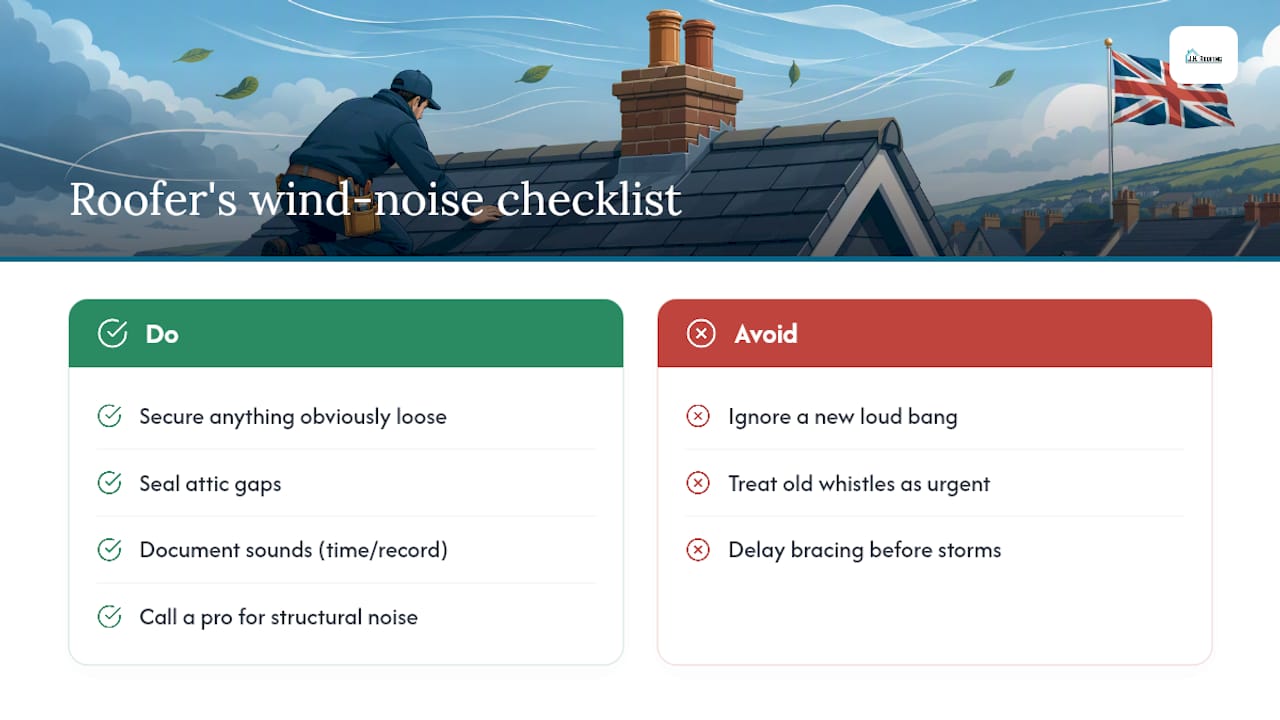
Most homeowners overreact to the wrong noises and underreact to the right ones. A whistle that's been there for years is rarely urgent. A single loud bang you've never heard before, even once, deserves a phone call the next morning.
Start cheap: secure anything obviously loose, seal attic gaps, and document what you hear. If the sound is structural, coming from framing rather than fittings, that's when a professional needs to look at bracing before the next storm makes the decision for you.
— Gabbi
Get Your Wind Noise Diagnosed and Fixed
Professional roofing services often offer a free, no-obligation quote and emergency response options if urgent issues are detected.

Before you call, take a few photos of anything loose you spotted on your walkaround, note the wind direction when the noise happens, and if you can, record a short clip. That handful of details lets our team narrow down the likely cause before anyone even steps on a ladder. Whether the fix turns out to be a simple tile and flashing repair or something bigger like a full roof replacement, you'll get honest pricing and no pressure either way. Run your details through the Roof Quote Calculator to get a fast estimate, or reach out directly if the noise started suddenly and you'd rather have it checked this week than next month.
Sources
For deeper technical background beyond this guide, InspectApedia's wind noise diagnosis guide covers detection methods in detail, the metal roofing code of practice defines industry noise categories, and Tactic Roofing's noise control guide explains attic-focused fixes. For related sound issues indoors, door-based sound reduction options are worth a look.
- Wind Noise at Buildings — Diagnose, & Cure Wind-Caused Noises at Buildings
- Metalroofing
- Roof Noise Control: Quiet Rain & Wind | Tactic Roofing
- House creaks in wind (Ask The Builder)
FAQ
Why am I hearing sounds in my roof when it's windy?
Wind is moving through or vibrating a loose component, most often a fixing, flashing, or underlay section that has worked free over time. It's rarely a sign of imminent failure unless it's accompanied by a sudden bang, new cracks, or visible movement.
How can I reduce wind noise coming through my roof?
Start by sealing attic bypasses and improving insulation, since the attic cavity often amplifies wind sound into the rooms below, a step Tactic Roofing flags as one of the most effective fixes. If the noise traces back to a specific fitting, tightening or resealing that component usually solves it permanently.
What are the signs that wind has damaged my roof?
Look for lifted or missing tiles, sagging sections, new water stains on ceilings, and daylight visible through the attic where there shouldn't be any. Any of these paired with a new noise pattern is worth a professional inspection rather than a wait-and-see approach.
Why does my house creak when it's windy?
Timber framing flexes under wind load, and creaking usually happens where two structural members rub against each other during that movement, according to Ask The Builder. Occasional creaking in strong gusts is common in older homes, but persistent or worsening creaks can signal a need for added bracing.
How much does it cost to fix a noisy roof?
Simple fixes like re-fixing a single loose tile start from £150, while larger jobs involving flashing overhauls or structural bracing depend on the scope of work. Jhroof provides free, no-obligation quotes so you know the cost before any work begins.