
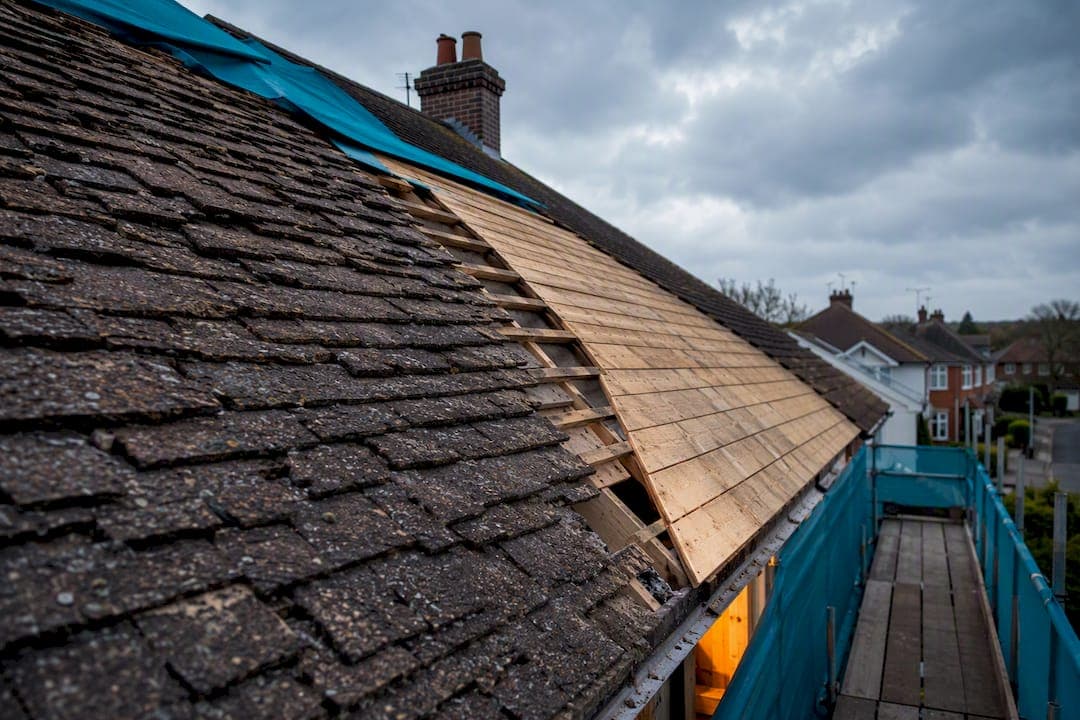
For most homeowners, a full roof replacement is the better long-term choice, and a roof overlay is only worth considering if you have a single existing shingle layer, dry and sound decking, no active leaks, and either a short ownership horizon or a tight budget right now. Overlays trade upfront savings for a shorter lifespan, a hidden risk under the new shingles, and often a weaker warranty.
TL;DR:
- A roof overlay typically lasts 10 to 16 years and may void manufacturer warranties, making replacement more cost-effective long-term.
- Overlays cost 20 to 40 percent less upfront but often lead to hidden risks like trapped moisture and weaker warranties.
- Full roof replacement allows inspection and repair of underlying deck issues, potentially extending roof lifespan to 20 to 30 or more years.
- Legal and building code restrictions usually limit roofs to two layers, meaning an overlay is not an option if a second layer already exists.
- If homeowners plan to stay longer than 10 years, replacing the roof generally offers better value due to durability and warranty coverage.
Table of Contents
- Roof Overlay vs Replacement: A Side-By-Side Comparison
- Overlay vs Full Replacement: Weighing the Real Trade-Offs
- Roof Overlay Cost vs Replacement: What UK Homeowners Actually Pay
- How to Choose Between Roof Overlay and Replacement
- What to Expect Day by Day on Each Job
- Does an Overlay Void Your Roof Warranty?
- The Hidden Risks Behind a "Cheap" Overlay
- When J.H. Roofing Recommends Overlay (and When We Don't)
- Why Most Overlay Advice Misses the Point
- Get a Straight Answer on Your Roof
- Sources
Roof Overlay vs Replacement: A Side-By-Side Comparison
Before you call a contractor, it helps to see both options laid out against the factors that actually decide long-term value.
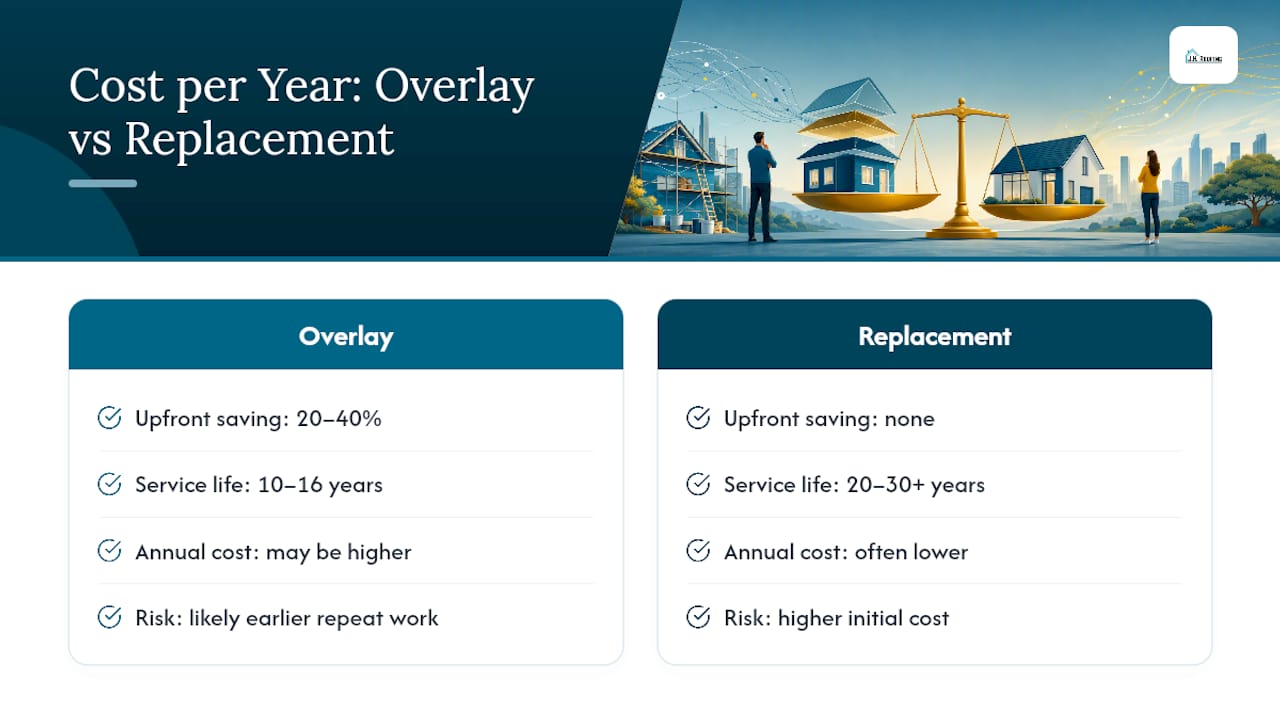
- Upfront cost: Overlay typically costs 20 to 40 percent less than a tear-off. You save cash today, but you're deferring, not avoiding, the bigger expense.
- Expected lifespan: Overlay systems generally last 10 to 16 years, versus 20 to 30-plus years for a properly installed replacement. That gap alone should reframe how you think about "savings."
- Deck inspection: A tear-off is the only method that lets a contractor actually see and repair the deck and underlayment. An overlay buries whatever is under there, good or bad.
- Warranty impact: Many manufacturers limit or void product warranties when shingles go over an existing layer. Get this in writing before you sign anything.
- Disruption and timeline: Overlays are fast, often a one or two-day job with minimal mess. Replacements take longer and involve more noise, more waste, and more trades on-site.
- Code and layer limits: Most jurisdictions cap roofs at two layers. If your roof already has one, an overlay now just guarantees a full tear-off later.
The pattern is consistent across every dimension: overlay wins on speed and short-term cost, replacement wins on everything that determines how long your roof actually protects your home.
Overlay vs Full Replacement: Weighing the Real Trade-Offs
Neither option is universally right, and pretending otherwise does homeowners a disservice. Here's where each genuinely earns its place, and where it quietly costs you more than you expected.
Overlay advantages show up mostly in convenience. It costs less upfront, wraps up in a day or two, and generates far less debris since you're not tearing anything off. That makes it a reasonable move if you're selling the house within a few years, need to stop a cosmetic issue cheaply, or are managing cash flow around a bigger renovation.
Overlay disadvantages are where the trade-off bites. You cannot see or fix decking problems hiding underneath, and that concealment is the core risk of the whole approach. Expected shingle life drops noticeably, warranty coverage is often reduced or void, and the added weight of a second layer puts extra stress on the roof structure.
Replacement advantages run in the opposite direction. Tearing off the old roof gives your contractor a direct look at the deck and underlayment, so rot, soft spots, and moisture damage get caught and fixed before new shingles go down. You get the full manufacturer warranty, a system built to last two or three decades, and the chance to upgrade insulation, flashing, and ventilation details while everything is exposed anyway.
Replacement disadvantages are mostly financial and logistical: higher upfront cost, more demolition, and added expense for skip hire, scaffolding, and disposal.
- Overlay: cheaper now, shorter life, hidden risk, weaker warranty.
- Replacement: costlier now, longer life, full inspection, full warranty.
Pro Tip: Ask any contractor quoting an overlay to state in writing whether the manufacturer warranty still applies. If they hesitate, that's your answer about which option you actually need.
Roof Overlay Cost vs Replacement: What UK Homeowners Actually Pay
Sticker price tells you almost nothing useful on its own. What matters is cost per year of protection, and that number often flips the "cheaper" option into the more expensive one.
A pitched-roof overlay on an average UK semi-detached house tends to sit meaningfully below the cost of a full tear-off and re-roof, reflecting that 20 to 40 percent savings gap. For flat roofs specifically, a standard replacement in the UK is commonly benchmarked around £75 per m², with full strip-and-rebuild jobs running higher once deck or insulation replacement is added in.
Now run the math the way it actually matters: divide total cost by expected years of service. An overlay costing less upfront but lasting only 10 to 16 years can easily land at a higher annual cost than a replacement that runs 20 to 30-plus years, once you account for the fact you'll likely need a second roofing job sooner. Several cost-per-year models show replacement coming out ahead on annualized cost precisely because it front-loads the expense instead of spreading a shorter-lived fix across two purchases.
Watch for the line items that quietly inflate a quote. Deck repair, new insulation, scaffolding hire, and VAT where applicable can all add substantially to a headline number. UK specialists flag that quotes excluding deck repair are essentially provisional. If a tear-off exposes soft or rotten timber, and it often does on older roofs, that "cheap" quote can climb fast once work is underway.
A roof quote calculator can help you sanity-check estimates before you commit, but the safest approach is asking every contractor to itemize what happens if they find decking damage once the old roof comes off.
How to Choose Between Roof Overlay and Replacement
A short, practical checklist beats guesswork here, especially since the decision hinges on things you can actually inspect or ask about directly.
- Check roof age and layer count. If your roof already has two layers of shingles, code in most areas rules out a third overlay entirely.
- Look for leak history and interior staining. Water marks on ceilings, musty smells in the attic, or sagging felt are all signs the decking is compromised, not just the surface.
- Ask contractors to lift a sample section. A reputable roofer will pull back a small area, or use moisture or infrared testing, to check the deck before quoting an overlay.
- Get warranty terms in writing. Ask exactly how the manufacturer's warranty changes if shingles go over an existing layer versus a full tear-off.
- Match the decision to how long you're staying. Selling within two or three years makes an overlay defensible if the roof otherwise qualifies. Staying a decade or more tips the math firmly toward replacement.
Certain conditions are outright red flags regardless of budget: a roof that already carries two layers, decking that feels soft or springy underfoot, a pattern of repeat repairs in the same spots, or a substrate like tile or slate that was never designed for an overlay in the first place. Our slate roofing guidance covers why those substrates need a different approach entirely. If you're not sure which category your roof falls into, our seasonal roof checklist walks through the same warning signs in more depth.
What to Expect Day by Day on Each Job
Timeline and disruption differ enough between the two methods that it's worth planning around them separately, especially if you work from home or have a tight driveway.
An overlay on an average pitched roof usually wraps in one to two days. Crews strip nothing, so there's minimal debris, fewer trades involved, and less noise overall.
A tear-off and replacement runs longer, often several days once you factor in stripping old material, repairing any decking issues found underneath, installing new underlay and insulation, and coordinating scaffold and skip logistics. Ask your contractor how they'll protect driveways and gardens during removal, and get a clear sign-off checklist written into the contract before work starts. Our Ashford re-roof guide outlines what a typical multi-day sequence involves for local properties. Weather matters too: wet or freezing conditions can delay tear-off jobs where the deck sits exposed longer than a same-day overlay ever would.
Does an Overlay Void Your Roof Warranty?
Often, yes, and that single fact should weigh heavily in your decision. Many shingle manufacturers limit or void product warranties when their material is installed over an existing layer rather than on a clean deck. Always ask for that confirmation in writing rather than taking a verbal assurance at face value.
Building codes reinforce the same limit from a different angle. Most jurisdictions cap roofs at two layers of shingles, which means if your home already has one layer and you add a second, any future work becomes a mandatory tear-off. There's no overlay option left. A contractor recommending replacement should be able to list the specific system warranty you'd gain by starting fresh, not just the labor cost.
The Hidden Risks Behind a "Cheap" Overlay
The real danger of an overlay isn't visible on installation day. It's what happens underneath over the following years: trapped moisture with nowhere to escape, accelerated wear from double the weight sitting on aging framing, and concealed rot that spreads quietly until it shows up as a ceiling stain or, worse, a structural repair.
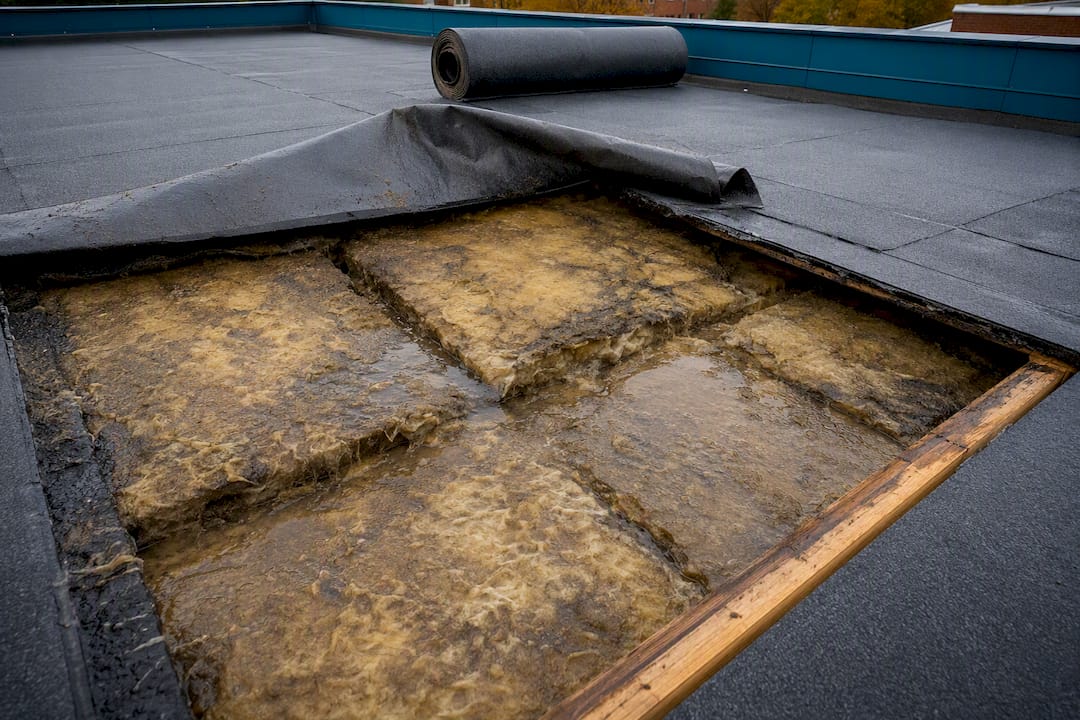
Consider two common scenarios. A homeowner overlays a 15-year-old roof to save money, then discovers at year nine that the original layer trapped moisture against the deck, forcing an emergency tear-off years earlier than planned. Compare that to a flat roof where insulation is already saturated: recoating over wet insulation rarely holds, and replacement becomes unavoidable within a short window anyway.
The simple rule: if you plan to stay in your home 10 or more years, replacement almost always wins on annual cost and resale value once you account for the second job an overlay tends to trigger.
When J.H. Roofing Recommends Overlay (and When We Don't)
Field experience across Kent properties tells the same story the data does: overlay earns its place occasionally, replacement earns it most of the time. We recommend overlay only when a roof genuinely meets the narrow criteria, single layer, sound dry decking, no leak history, and even then we're clear about the shorter lifespan involved.
Our flat roof replacement case study in Kent shows what a proper tear-off delivers in practice: a repaired deck, upgraded insulation, and a fully warrantyable system rather than a patch job sitting on unknown problems. If you're weighing the two options on your own property, a free, no-obligation inspection settles the question with facts instead of guesswork, backed by our 24-hour emergency response and a 4.7-star Google reputation built on jobs like that one.
Why Most Overlay Advice Misses the Point
The conventional advice on overlay versus replacement tends to stop at price. That's the wrong finish line. The number that actually matters is cost per year of protection, and once you run that calculation, a lot of "budget-friendly" overlays stop looking budget-friendly at all.
What gets underrated is the inspection opportunity a tear-off provides. Homeowners fixate on the shingles because that's what they see, but the decking underneath is what determines whether either option even makes sense. A contractor who skips lifting a sample section before quoting an overlay is guessing, not diagnosing.
My honest read: prioritize the decking check before anything else. Ask about layer count, get warranty terms in writing, and if you're staying put for a decade or longer, let the annualized math make the call rather than the invoice total. Most homeowners who regret an overlay don't regret the shingles. They regret what nobody looked at first.
— Gabbi
Get a Straight Answer on Your Roof
If this comparison has you leaning toward replacement, or you simply want a professional to check what's happening under your existing layer before you decide, Jhroof is built for exactly that call. We handle inspections, full tear-off and replacement, and flat-roof systems across Kent, with the same deck-first approach that shaped this article.
Our roofing services page covers inspections, re-roofs, and emergency repairs in detail, and the flat roof replacement case study shows exactly what a proper tear-off looks like from start to finish. Request a free, no-obligation quote and we'll tell you plainly whether your roof is a candidate for overlay or needs the full job, no upsell, just the deck-first answer your roof actually needs.
Sources
- Roof Overlay Vs. Tear-Off (2026) | HomeMatchup
- Roof Overlay Vs. Tear-Off: Which Is Right for Your Home? | Today's Homeowner
- Flat Roof Repair vs Replacement UK: Costs, Lifespan & Best Option in 2026 | Up Top Roofing