
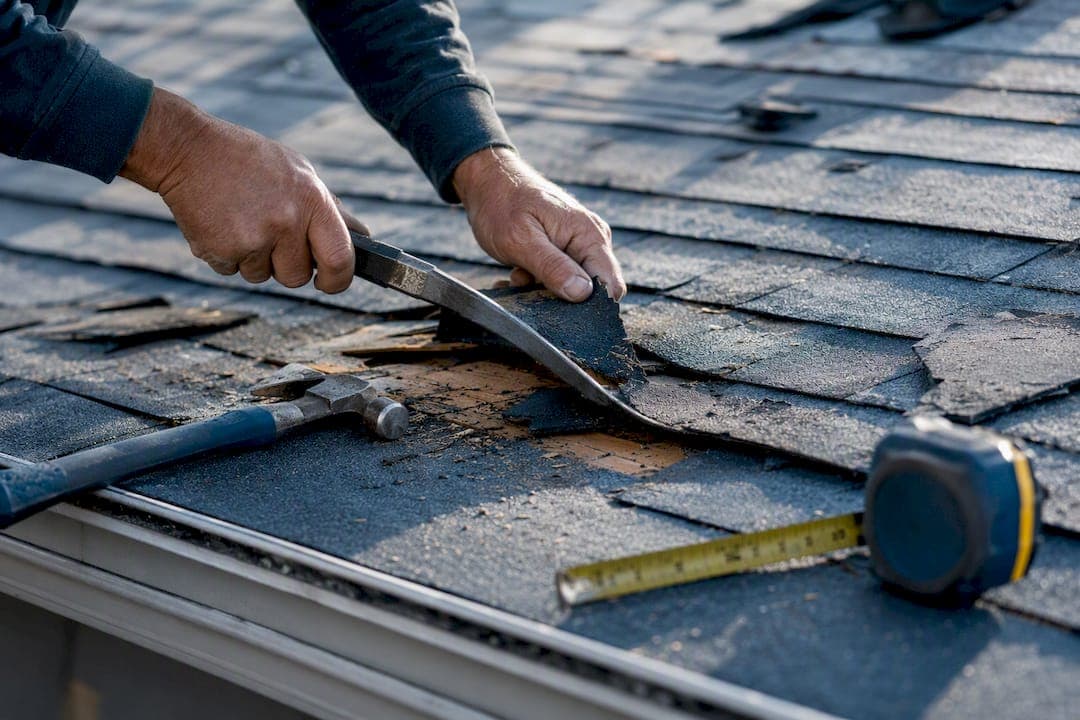
Repair smaller, isolated problems on a relatively young roof. Replace when damage is widespread, the decking is compromised, or a repair estimate creeps close to about one quarter of what a full replacement would cost. That's the working rule most roofing professionals use, and it holds up whether you're looking at a handful of cracked shingles or a ceiling stain that's been spreading since last winter.
Two numbers make this decision easier than it feels in the moment. If repair costs run above roughly 25% of what a new roof would cost, replacement usually wins on long-term value. The same goes if damage covers around 30% or more of the total roof surface. Below those thresholds, a targeted repair is often the smarter, cheaper move.
Before you call anyone, run these three checks:
- Look at the roofline from the street. Sagging, dips, or an uneven ridge point to structural trouble, not a simple patch job.
- Check your gutters for granules. A handful is normal wear; a steady buildup signals the shingles are failing faster than expected.
- Peek in the attic during daylight. Any light coming through the roof boards means water and air are getting in somewhere.
Pro Tip: Take photos of anything you spot during these checks. A roofer can often narrow down the likely cause and rough cost range before ever stepping on your roof.
Key Takeaways
Repair localized, minor damage on a younger roof; replace when repair costs approach 25% of replacement, damage covers 30% or more of the surface, or the deck itself is failing.
| Point | Details |
|---|---|
| Know the 25% rule | If a repair estimate nears a quarter of a full replacement quote, replacement usually pays off long-term. |
| Watch the 30% area rule | Damage spread across roughly 30% or more of the roof surface favors replacement over another patch. |
| Match age to material lifespan | Asphalt lasts 25 years, metal 40–70, slate 75–100. Compare your roof's age against its type. |
| Treat attic signs seriously | Stains across multiple rafters or daylight through the decking signal system failure, not a single leak. |
| Get documented help | Jhroof provides insured inspections, drone surveys, and free written estimates across Kent for repairs and replacements. |
Table of Contents
- The Factors You Must Weigh: Age, Damage, Material, Cost, and Plans
- How Do You Inspect a Roof Safely for Warning Signs?
- What Do Roof Repairs and Full Replacements Actually Cost?
- Quick Decision Checklist Before You Call a Contractor
- When Should You Hire a Contractor, and What Should You Ask?
- Sources
The Factors You Must Weigh: Age, Damage, Material, Cost, and Plans
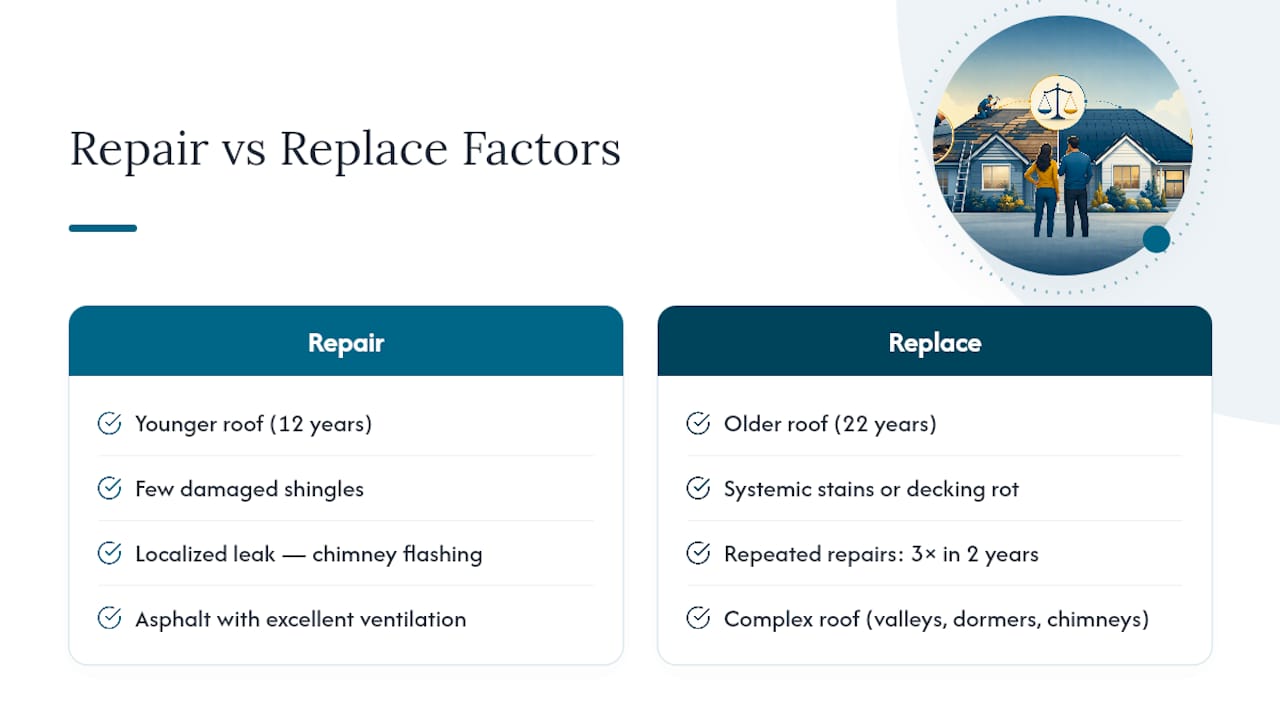
Roof age is the first thing worth knowing, because every material has a shelf life, and where your roof sits on that timeline changes the math entirely. A 12-year-old asphalt roof with a few damaged shingles is a repair candidate. A 22-year-old asphalt roof with the same damage is often past the point where repair makes financial sense.
These lifespan ranges are guidelines, not guarantees. A metal roof in a coastal climate with heavy salt exposure won't necessarily hit 70 years, and an asphalt roof with excellent attic ventilation might outlast the low end of its range.
Extent of damage matters just as much as age. A single leak around a chimney flashing is a localized, repairable problem. Water stains across multiple rafters, or rot spreading through several sections of decking, points to a systemic issue that a patch won't fix for long.
Repair history tells its own story. If you've called someone out three times in two years for the same general area, you're not solving the problem, you're deferring it. Roof complexity plays a role too. Roofs with multiple valleys, dormers, or chimney penetrations have more failure points, and repeated repairs around those features often mean the whole section needs attention.
Finally, think about your own timeline. If you plan to stay in the home for another decade, investing in a full replacement with a fresh warranty tends to pay for itself. If you're selling within a year or two, a well-documented repair might be all the situation calls for.
How Do You Inspect a Roof Safely for Warning Signs?
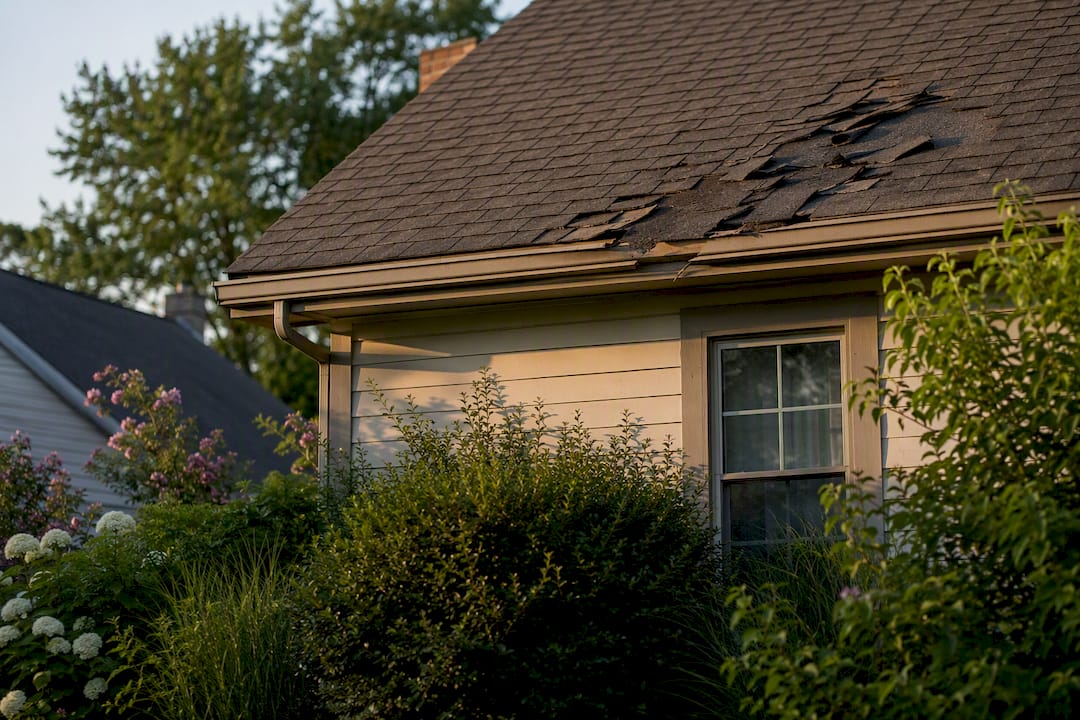
Start from the ground. Missing or curled shingles, bald patches where granules have worn away, and a roofline that sags instead of running straight are all visible without a ladder. If you can see daylight through gaps in the roof boards from inside your attic, that's not a minor issue. It means the roof's water barrier has already failed in that spot.
Attic checks reveal more than exterior ones. Water stains spread across several rafters, damp or spongy decking, and wet insulation all point to a system-wide problem rather than a single pinhole leak. One stain near one nail is a repair. Stains in three different spots usually mean the underlayment has failed broadly.
Some signs demand immediate action: a visibly sagging deck, multiple active leaks, or soft spots you can feel underfoot in the attic. Others, like a few missing shingles after a storm, can be scheduled for repair without panic.
Pro Tip: Never climb onto your roof to inspect it yourself unless you're trained and equipped for it. Binoculars from the ground, or a drone survey from a licensed and insured contractor, gets you the same information without the fall risk.
What Do Roof Repairs and Full Replacements Actually Cost?
Money is usually what settles this decision, so it helps to know the real ranges before a contractor shows up. Repair jobs typically run $300 to $1,000, though larger patch jobs involving flashing or decking repair can climb toward $3,000. Full replacements generally fall between $5,000 and $16,000, depending on your roof's size, pitch, and material.
Timelines differ just as sharply. Most repairs wrap up in a few hours to a few days. A full replacement usually takes 2 to 5 days, though weather delays, steep pitches, or decking replacement can stretch that window.
The 25% and 30% rules, in practice: if a written repair estimate lands at or above 25% of a replacement quote, or if visible damage covers close to 30% of the roof surface, replacement typically delivers better long-term value than paying for another round of patches.
Compare both numbers against written estimates, not verbal ballpark figures. A number scribbled on a business card doesn't hold up the same way when you're deciding how to spend several thousand dollars.
Quick Decision Checklist Before You Call a Contractor
Work through these four steps in order, and you'll walk into any contractor conversation already knowing what questions matter most.
- Compare your roof's age to its material's expected lifespan. Note how many repairs you've already paid for on this roof.
- Walk the ground and attic checks. Mark whether the signs you find are isolated to one area or spread across the roof.
- Get two written estimates: one for repair, one for full replacement. Divide the repair cost by the replacement cost. If it's near 25% to 30%, replacement is usually the stronger financial move.
- Weigh your timeline. If you're staying long-term, factor in warranty coverage and insurance implications. If you're selling soon, a documented repair paired with disclosure may be enough.
When Should You Hire a Contractor, and What Should You Ask?
Call a professional the moment you see attic daylight, a sagging deck, leaks in more than one room, or a repair estimate that starts approaching replacement cost. At that point, guessing costs more than getting an inspection.
A thorough inspection covers more than the shingles. A reputable roofer checks decking condition, flashing around chimneys and vents, ventilation, underlayment, and every slope, not just the section where you spotted the leak. Ask for a written report, not just a verbal summary.
Before signing anything, ask these questions directly:
- Are you licensed and insured, and can you provide proof?
- Does the warranty cover materials, workmanship, or both, and for how long?
- Does the quote include underlayment and flashing replacement, or just surface shingles?
- Who handles cleanup and disposal of old roofing material?
- What's the written timeline and payment schedule?
Pro Tip: Get at least two written estimates before committing. If one contractor's report mentions decking issues that another completely missed, that gap tells you which inspection was more thorough.
Why Making a Clear Decision Saves Money and Stress
Repeated repairs on a failing roof rarely save money in the long run. They tend to buy a few months of relief while mold and deck rot spread quietly underneath. A roof replaced at the right time, backed by a real warranty, protects both your home's structure and its resale value. Evidence-based decisions, not guesswork, are what actually protect your wallet here.
How J.H. Roofing Can Help You Decide With Confidence
Getting a straight answer on repair versus replacement shouldn't require you to become a roofing expert overnight. Jhroof handles both ends of that decision directly: roof repairs, full replacements, flat roofing, chimney and leadwork, and 24 hour emergency response across Kent, backed by drone surveys that spot decking and flashing issues without anyone climbing a ladder.

When you contact Jhroof, you get an insured contractor's documented inspection, a written estimate that spells out material and labor separately, and a plain conversation about warranty terms before you commit to anything. As a family-owned business with over 10 years of experience and a 4.7-star Google rating, Jhroof treats every quote as a chance to earn the job, not just fill a slot on the schedule. If you've spotted any of the warning signs covered above, request a free, no-obligation quote or reach out for emergency repair if a leak needs attention tonight.
Sources
- Understanding Residential Roof Repairs How Do I Know if my Roof Needs to be Replaced
- Roof Repair vs. Roof Replacement
- Do I Need a New Roof?
- How to know when roof needs replacing
Save one or two of these pages before your contractor visit so you can compare their written estimate against the language used here.