
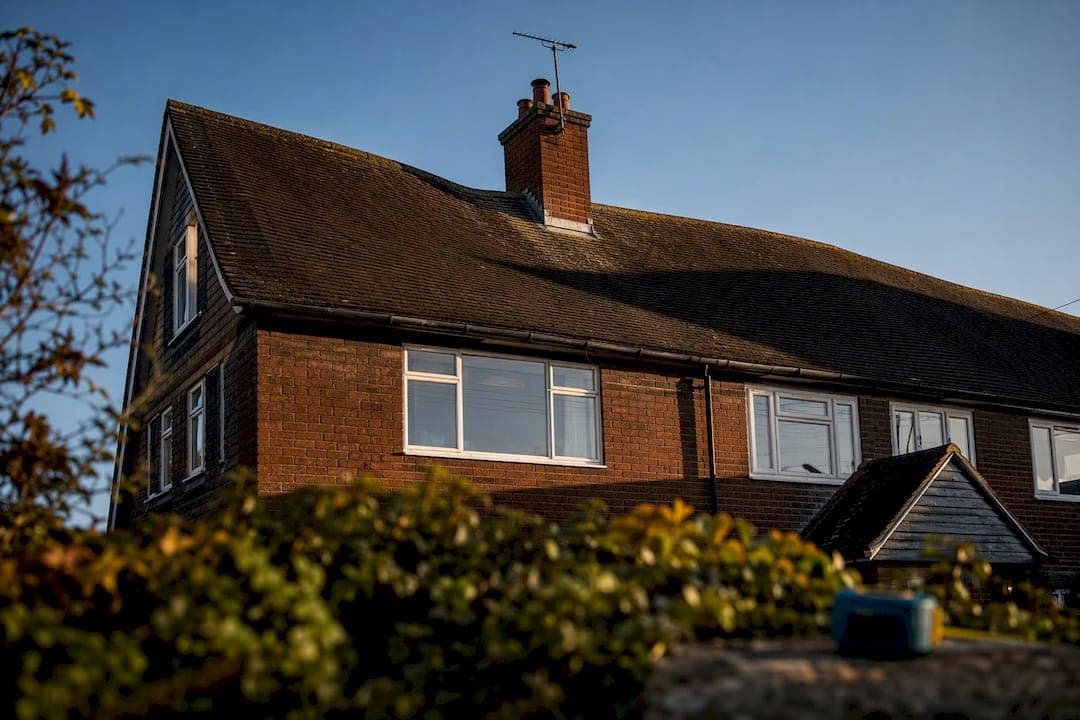
A sagging roof usually signals real structural stress. The most common roof sagging causes are water-damaged decking, failed or undersized rafters and trusses, and excess load from snow or too many roofing layers. If you spot any dip in your roofline, inspect it safely from the attic first, then call a professional for anything beyond a shallow, cosmetic bow.
TL;DR:
- Roof sag under 1 inch is usually cosmetic and stable, while over 3 inches indicates serious structural issues requiring immediate professional assessment.
- Water-damaged decking is the leading cause of severe sag, often identifiable by attic stains and trampoline-like decking underfoot.
- Sagging caused by roofing loads, such as excess layers or snow, can be prevented through regular maintenance and avoiding frequent shingle layering.
- Proper inspection from the attic and ground, avoiding roof climbing with suspicions of sag, helps identify the cause early and guides appropriate repairs.
- Repair approaches vary from sistering rafters to full structural replacements, depending on the extent and cause of the sag, with clear quotes preventing double costs.
Table of Contents
- What Roof Sag Actually Means (and When It's Urgent)
- Common Causes of Roof Sag, Cause by Cause
- Signs of Roof Damage and How to Inspect Safely
- Why You Shouldn't Ignore Roof Structure Failure
- How Roofers Fix a Sagging Roof
- When to Call a Roofer vs. a Structural Engineer
- Preventing Roof Sagging Before It Starts
- What a Real Roof Sag Diagnosis Looks Like
- Why Homeowners Get Roof Sag Diagnosis Wrong
- Sources
- FAQ
What Roof Sag Actually Means (and When It's Urgent)
Roof sag is a visible dip or wave in the roofline where the structure has lost its original straight or slightly crowned shape. Not every irregularity means trouble. Older homes sometimes have gentle waviness that has been stable for decades and isn't a structural concern.
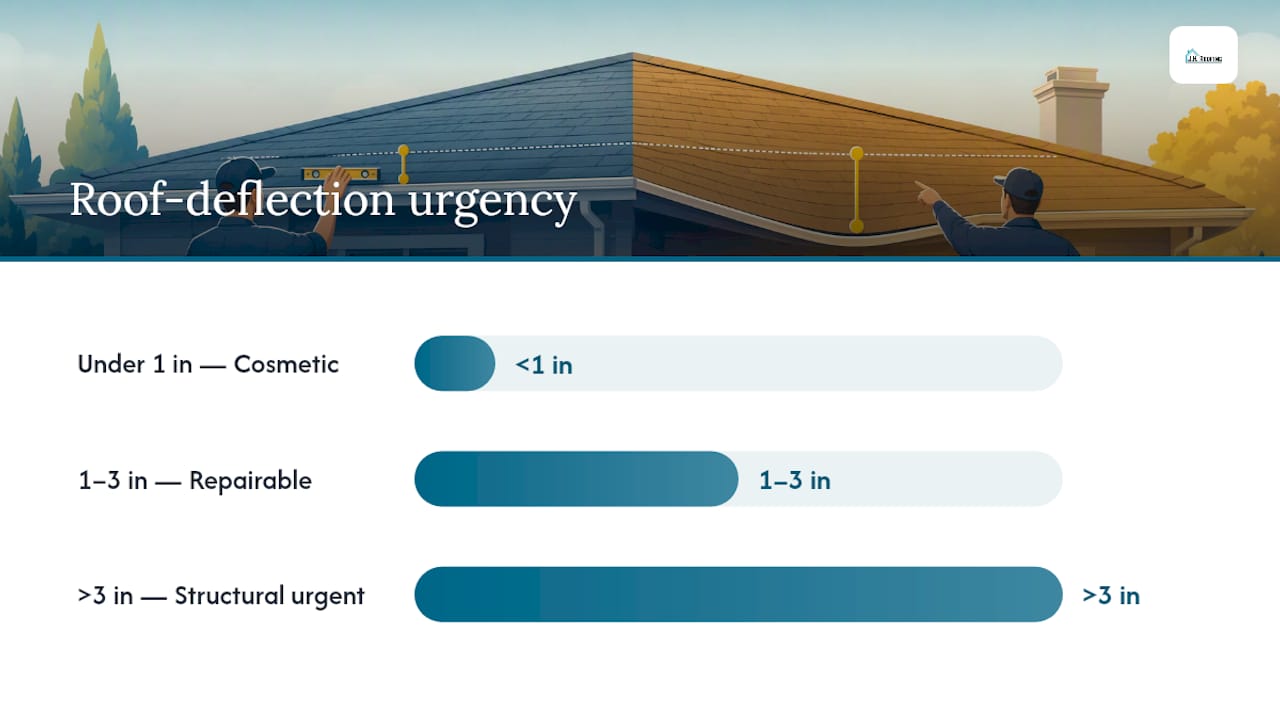
The distinction that matters is depth and progression. Contractors commonly use three rough bands to triage urgency: under 1 inch of deflection is often cosmetic and stable, 1 to 3 inches usually indicates a repairable problem like a weakened rafter or localized rot, and anything over 3 inches frequently points to decking failure or a broken structural member that needs prompt professional attention.
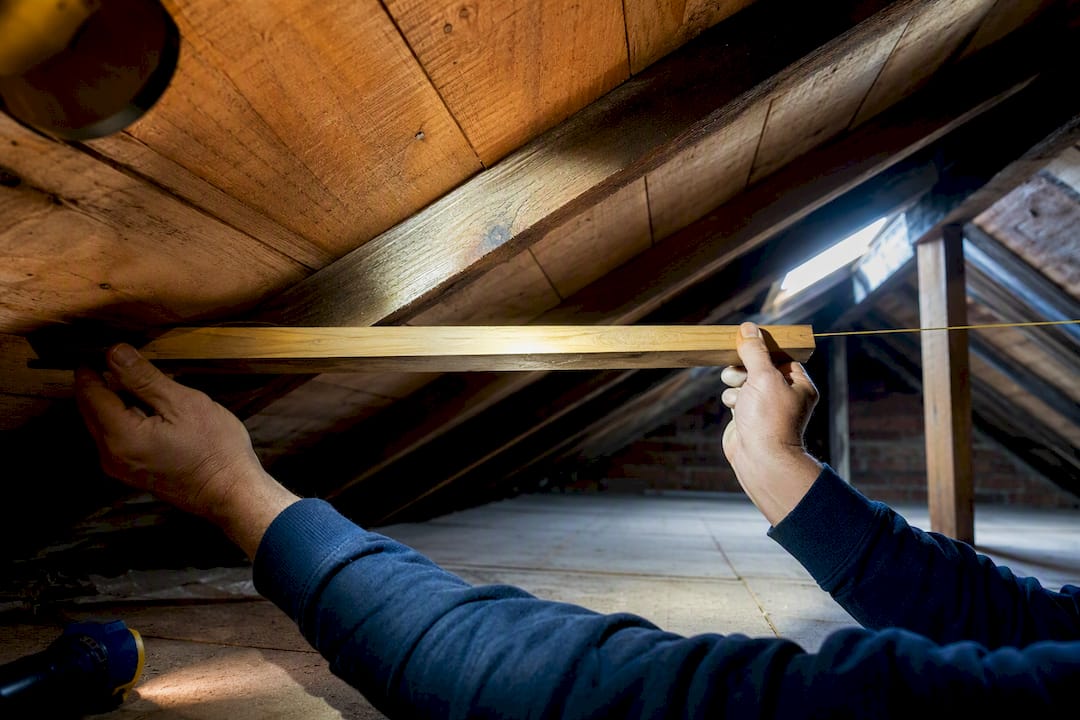
You can measure this yourself with a straight board or string line held against the ridge or eave line, checking the gap at the low point. From the attic, look along the underside of the roof deck with a flashlight, sighting down the rafter line for dips. Outside, stand back from the house and sight along the ridge and eaves in low, angled light, which makes small dips easier to see.
Pro Tip: Never climb onto a roof you already suspect is sagging. Do all your initial checks from the ground and the attic floor, and stay off any decking that looks discolored or feels soft underfoot.
Common Causes of Roof Sag, Cause by Cause
Most sagging traces back to one of eight problems, and each leaves its own fingerprint.
- Water-damaged decking. This is the most frequent cause of severe, localized sag. Water infiltrates through worn shingles or flashing, and the plywood or OSB decking softens and creates scalloped dips between rafters. Attic staining and springy, trampoline-like decking underfoot are the giveaway signs.
- Undersized or fatigued rafters, missing collar ties. Rafters cut too light for the span, or roofs missing the horizontal ties that resist spreading, tend to bow along the ridge over years of slow creep rather than sagging suddenly.
- Truss or connector failure. Manufactured trusses depend on every member and metal gusset plate staying intact. A sag that appears localized near ductwork, a skylight, or old wiring work often traces back to someone cutting or removing a truss member during a past renovation.
- Excess roofing layers. Each additional layer of asphalt shingles adds roughly 2 to 4 pounds per square foot to the roof. Stack two or three layers over the original, and you can push the total load well past what the framing was designed to carry.
- Snow and ice overload. Wet, heavy snow accumulating on flat or low-slope sections, especially over unheated additions or garages, can create sudden acute loads that sag a roof in a single storm rather than over years.
- Foundation or wall movement. When exterior walls shift or a foundation settles unevenly, the whole roof plane can drop or twist, showing up as sag that runs the full length of the house rather than in one spot.
- Pest damage. Termites and carpenter ants hollow out rafters and sheathing from the inside, weakening wood that looks sound from the surface until it's tested with real weight.
- Poor original construction or renovation shortcuts. Undersized lumber from the original build, or supports removed during a loft conversion without proper engineering, both show up years later as sag in exactly the spot where the shortcut was taken.
Roughly a third of the sagging cases contractors see trace back to that first cause alone: water-damaged decking is the single most common driver of severe sag, which is why the attic inspection matters more than the exterior one.
Signs of Roof Damage and How to Inspect Safely
Work through this checklist before calling anyone, since the details you gather help a roofer or engineer diagnose the cause faster.
- Check the interior first. Look for bowed ceiling drywall, nail pops along ceiling seams, cracked plaster, and any daylight visible at the ridge from inside the attic.
- Walk the exterior at a distance. Sight along the roofline for uneven dips, check for pooled water on flat sections, lifted flashing at valleys, and cracked mortar around chimneys.
- Inspect the attic carefully. Look for water staining, dark mold, and soft or delaminated decking that gives when pressed with a screwdriver, along with any nails that have pulled loose from rafters.
- Move safely. Never step directly on unknown decking. Bring a helper, use a plank or board bridged across joists to spread your weight, and keep a flashlight and phone with you.
- Watch for immediate danger signs. Cracking or popping sounds, sag that visibly worsens within days, or large gaps opening at the ridge mean you should leave the area and call an emergency roofer right away.
Why You Shouldn't Ignore Roof Structure Failure
A small, stable sag rarely stays small. Water that softened one section of decking keeps spreading laterally along the grain, and a weakened rafter under sustained load eventually cracks rather than just bending further. Structural analysis shows that sag lets wall tops get pushed outward under the roof's own weight, which is how a roof problem becomes a wall and foundation problem.
Secondary damage compounds quickly: trapped moisture breeds mold, wet insulation loses its R-value, ceiling finishes crack and stain, and damp conditions near old wiring raise electrical hazard risk. If a storm or heavy snow load caused sudden sag, document everything with photos, dated notes, and a written inspection report before repairs begin. Insurers frequently want proof that damage was reported and addressed promptly, not after months of visible sagging.
How Roofers Fix a Sagging Roof
The right roof sagging repair depends entirely on the cause and how far the damage has spread, not just how deep the sag looks from the ground.
- Sistering rafters. For moderate sag from a weakened but not broken rafter, a roofer bolts a new piece of lumber alongside the existing one, restoring strength without a full teardown.
- Adding rafter or collar ties. Where the original framing lacks proper ties, installing them stops the roof from spreading further and can flatten out mild ridge bowing over time.
- Re-sheathing. When decking has rotted, the damaged plywood or OSB gets cut out and replaced, either in a patch or across the whole slope depending on how far the rot traveled.
- Partial or full truss and rafter replacement. A broken or badly cut structural member usually can't be patched. It gets replaced, sometimes with temporary shoring holding the roof up during the swap.
- Purlins or ridge beam additions. For long spans that are sagging from years of load, adding a horizontal purlin or upgrading the ridge beam redistributes weight across new support points.
- Full re-roof and structural rebuild. Widespread decking rot combined with multiple failed rafters usually means starting over is cheaper and safer than patching piece by piece.
Pro Tip: A written contractor quote for roof sagging repair should specify whether temporary shoring is included, whether the work happens in phases, and exactly which framing members are being sistered, replaced, or added. Vague quotes are how homeowners end up paying twice.
When to Call a Roofer vs. a Structural Engineer
- Call an emergency roofer immediately for rapid, worsening sag, cracking or popping sounds, or any visible rot spreading fast. This is not a wait-and-see situation.
- Call a structural engineer when sag exceeds 3 inches, decking rot is widespread rather than localized, or you suspect the problem started with foundation or wall movement rather than the roof itself.
- Know what each professional delivers. A roofer typically provides inspection notes, photos, and a repair quote. An engineer produces a stamped structural assessment with specific load calculations, which insurers and contractors both rely on for larger repairs.
Ask for both photo documentation and a written scope before agreeing to any structural work, so you can compare quotes on equal footing.
Preventing Roof Sagging Before It Starts
- Keep gutters and roof valleys clear, and repair lifted or damaged flashing as soon as you notice it, since most severe sag traces back to water that had months or years to work.
- Avoid layering new shingles over old ones. A full tear-off costs more upfront but removes the overload risk entirely.
- Make sure attic ventilation and insulation are adequate, since poor airflow drives ice dams and trapped moisture, both of which soften decking from underneath.
- Schedule an attic inspection and pest check once a year, ideally in spring or autumn when temperatures make attic access comfortable and any winter damage has had time to show itself.
Interior ceiling cracks and stains from a sag often need separate attention once the roof repair is done, and specialists like Top Tier Painting & Drywall handle that kind of finish work.
What a Real Roof Sag Diagnosis Looks Like
Gabbi covers roofing and home maintenance topics for Jhroof, drawing on the diagnostic patterns J.H. Roofing sees across its Kent service area. J.H. Roofing is family-owned, has operated for more than 10 years, carries full insurance, and holds a 4.7-star Google rating from local clients.
One recent example: a flat roof replacement in Kent began with a visible dip near a drainage outlet. Inspection found the decking beneath had softened from years of slow ponding, not a single storm. The fix required cutting out the rotted section, replacing the support underneath, and re-sheathing before the new membrane went down. A written inspection from a roofer at this level should give you photos, a clear cause, and a scoped repair plan, not just a price.
Why Homeowners Get Roof Sag Diagnosis Wrong
Most advice on sagging roofs treats every dip the same way, recommending "call a professional" without helping the homeowner understand what they're actually looking at first. That's backward. The single most useful thing you can do before anyone shows up is match what you see to a probable cause, because it changes both the urgency and the likely repair cost.
The conventional wisdom also underweights how often the cause is renovation-related, not weather-related. A truss that lost a member during a loft conversion five years ago behaves nothing like water rot, yet homeowners often assume every sag is a leak problem. It isn't.
If there's one priority I'd push above the rest, it's the attic check. Exterior sag is the symptom you notice; the attic is where the actual cause is sitting, visible, waiting for a flashlight. Do that fifteen-minute check before you call anyone, and you'll ask better questions, get a more accurate quote, and avoid paying for a diagnosis you could have started yourself.
— Gabbi
Sources
- Sagging Roof: Severity, Cause, Repair Cost 2026 | The Roofing Brief
- Roof collapse forces and reasons — InspectApedia
- Roof Sagging: Causes, Danger Signs & Repair Options for NJ Homes (2026) | R&E Roofing
FAQ
How Serious Is a Sagging Roof?
It depends on depth and speed: sag under 1 inch is often cosmetic, but sag over 3 inches usually signals decking rot or a failed structural member that needs prompt professional attention.
How Expensive Is It to Fix a Sagging Roof?
Cost depends heavily on cause and scope. Sistering a single rafter costs far less than re-sheathing a whole slope or replacing multiple truss members, so getting an accurate cause diagnosed first is the best way to avoid overpaying.
Can a Sagging Roof Be Repaired?
Yes, in most cases. Sistering rafters, re-sheathing rotted decking, adding purlins or ties, and replacing damaged truss members address the vast majority of sag causes without requiring a full rebuild.
How Do You Strengthen a Sagging Roof?
Strengthening usually means adding support where it's missing: sistering a weak rafter, installing rafter or collar ties, or adding a purlin under a long span to redistribute the load.
Ready to get a professional opinion on your roofline? Request a free, no-obligation quote from J.H. Roofing, or if you're seeing rapid movement or cracking sounds right now, contact their emergency repair team directly.