
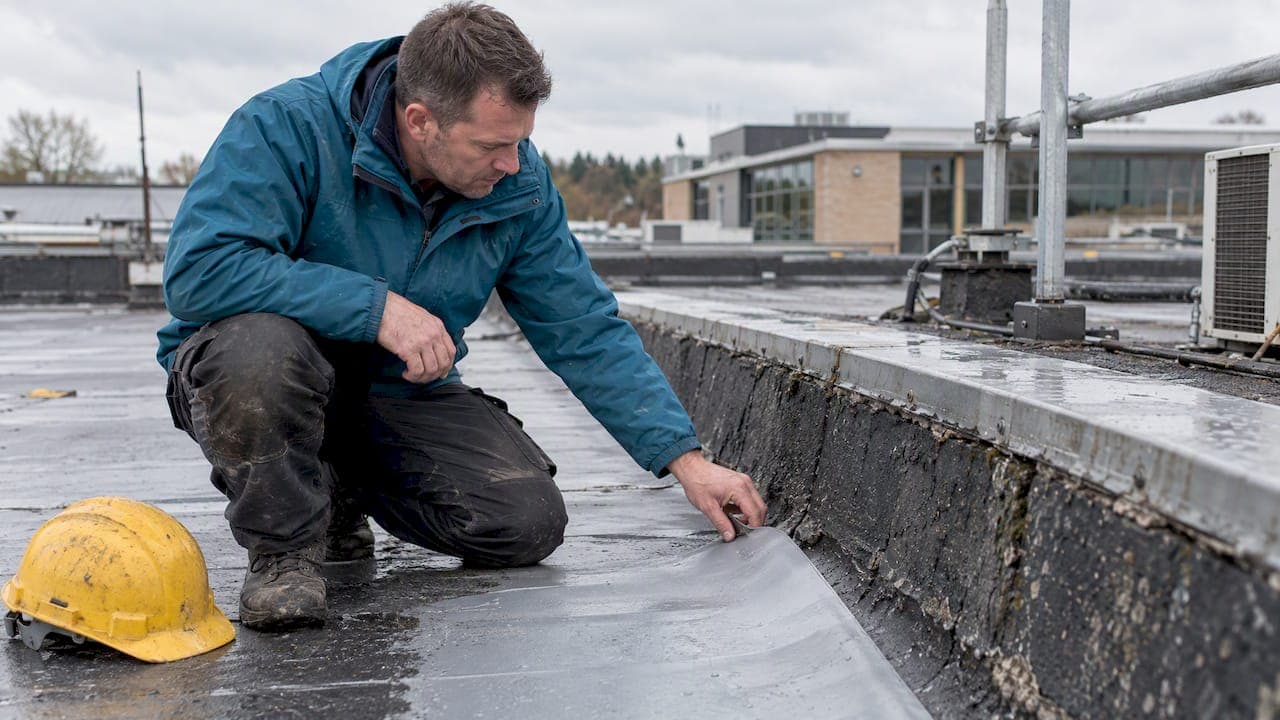
Single-ply membranes usually suit fast, lightweight commercial projects best, while a high-performance built-up roof (BUR) tends to win on long-term value for roofs that take heavy traffic or need maximum lifespan. The deciding factors are lifespan, whole-life cost, and the fire-safety checks that UK Building Regulations require of the full roof build-up, not just the top layer.
TL;DR:
- Single-ply membranes often have shorter service lives but install faster and are less expensive upfront compared to high-performance built-up roofs.
- Built-up roofing typically offers better durability and traffic tolerance for roofs with heavy foot traffic and rooftop plant, but weighs more and requires careful fire and weather considerations during installation.
- The total cost of ownership favors built-up systems over a 30-year span if renewal cycles and maintenance are factored in, especially for long-term assets.
- Properly assessing the deck condition, fire safety compliance, and including a life-cycle cost estimate are crucial steps before choosing between single-ply and built-up systems.
- Installing either system requires matching the fixing method to the substrate, considering site-specific factors such as wind, access, and weather, to ensure longevity and safety.
Table of Contents
- Single ply vs built-up at a glance
- What single-ply membranes are and how they work
- What built-up roofing is and how it works
- Cost, lifespan and whole-life considerations
- Installation, substrates and practical suitability
- Maintenance, warranties and fire safety rules to know
- How to choose between single ply and built-up for your roof
- What we have learned fitting both systems across Kent
- What actually matters when you are comparing these systems
- Get a free quote for your commercial flat roof
- Sources
- FAQ
Single ply vs built-up at a glance
Property managers rarely need a lecture on bitumen chemistry. What you need is a fast way to match a roof's job to the right system. Here is how the two compare across the factors that actually drive a decision.
Single-ply membranes, typically PVC, TPO/FPO or EPDM, are lightweight and quick to lay, which keeps labor costs and site disruption down. Built-up roofing, made from multiple layers of reinforced bitumen felt, costs more to install but has a track record of standing up to decades of foot traffic and plant access.
- Lifespan: Standard single-ply systems often run shorter service lives than a high-performance, multi-layer BUR designed for 30-year-plus service.
- Upfront versus whole-life cost: Single-ply usually has the lower sticker price; a premium built-up system can cost more to install but less over its full life.
- Installation speed: Single-ply goes down faster with a smaller crew, which matters when a building cannot close for long.
- Foot traffic and plant: Built-up systems and reinforced single-ply handle regular foot traffic and rooftop plant better than a basic membrane.
- Weight: Single-ply adds very little dead load, a real advantage on older or lighter-framed structures.
- Warranty shape: Material and workmanship guarantees are usually separate, and the strongest cover comes from a single-source system backed by one manufacturer.
- Fire and regulatory fit: Both systems can meet UK fire requirements, but the whole build-up, not just the membrane, has to carry the evidence.
Single-ply membranes are widely installed annually in the UK, reflecting how often they're specified for jobs needing speed, light weight, or compatibility with solar panels and green roofs. Built-up roofing continues to be one of the most common flat roof solutions by installed area across the UK, due to its durability where roofs see regular use.
For a straightforward refurbishment on a sound timber or metal deck, single-ply is usually the pragmatic choice. For a new build with rooftop plant, service access, or a 30-year investment horizon, a high-performance built-up or reinforced bitumen membrane (RBM) system often pays for itself. Roofs with occasional access, such as for maintenance only, sit in between and usually come down to budget and expected building life.
What single-ply membranes are and how they work
Single-ply roofing uses one layer of a flexible synthetic membrane, most commonly PVC, TPO/FPO, or EPDM rubber, rolled out and jointed by welding or adhesive. Single-ply systems can be mechanically fastened or fully adhered, and the choice depends heavily on the deck underneath.
Mechanically fixed membranes work well over lightweight metal decking, where fasteners anchor the sheet through insulation into the structural deck. Adhered systems suit cementitious or timber substrates better, bonding the membrane directly for a cleaner finish with fewer visible fixings.
The appeal for UK commercial buildings goes beyond speed. Many single-ply products allow flame-free application, which makes them a practical choice for refurbishment work where hot works near existing structures carry real risk. Repairs are usually straightforward too, since damaged areas can be patched by heat-welding a new section over the old one.
- Flame-free refurbishment: No open flame needed during installation, reducing fire risk on occupied buildings.
- PV and green roof compatibility: FLL-certified membranes suit rooftop solar arrays and planted roofs without extra waterproofing layers.
- Wind flutter management: Mechanically fixed systems need fastener patterns matched to wind zone and building height to avoid membrane flutter.
- Weight saving: Minimal dead load makes single-ply a strong option for older or structurally limited decks.
Pro Tip: Always match the fixing method to the deck. Mechanical fixing suits metal decking; adhered systems generally perform better over cementitious substrates.
What built-up roofing is and how it works
Built-up roofing is the older, heavier-duty cousin of single-ply: multiple layers of reinforced bitumen felt are bonded together, usually three or four plies, then finished with a mineral cap sheet or solar-reflective surfacing. Built-up systems remain a mainstay of the UK commercial roofing market, prized for their ability to shrug off years of foot traffic.
Higher-specification variants, often called reinforced bitumen membrane (RBM) systems, use fewer but stronger layers with better reinforcement, giving similar or better durability with less installed weight than a traditional four-ply build.
The robustness comes at a cost beyond the invoice. Felt layers are typically torch-applied or hot-bonded, which means the roof needs careful fire protection during installation and a dry, controlled site. The extra plies also add weight, something to check against the structural capacity of an older building before specifying BUR as a replacement for a lighter system.
- Multi-layer construction: Typically three to four plies of reinforced felt bonded in sequence, then capped.
- Traffic tolerance: Handles regular foot access and rooftop plant better than a basic single-ply membrane.
- Weight consideration: Multiple bitumen layers add meaningful dead load, relevant on older structures.
- Installation constraints: Torch or hot-bonded application requires fire protection measures and dry working conditions.
Cost, lifespan and whole-life considerations
The headline price on a quote rarely tells the full story. A life-cycle costing exercise, sometimes expressed as net present value (NPV), compares total spend across a roof's entire service life rather than just the install invoice.
A life-cycle costing comparison can show that a higher-cost, high-performance built-up system has lower total expenditure than a standard single-ply membrane over a 30-year period, because the single-ply option needed full renewal earlier. That example, published by Garland UK, sets out construction cost, maintenance, and renewal cost side by side for both systems, and the premium BUR comes out ahead once the standard single-ply's earlier replacement is factored in.

That does not mean built-up always wins. A standard single-ply membrane with routine maintenance can deliver good value on a shorter-horizon asset, a leased building, or a roof due for redevelopment within 15 years. The calculation changes once you are planning for 25 to 40 years of ownership, where renewal cycles and the labor cost of re-roofing start to dominate the total figure.
Maintenance pattern matters as much as material choice. A well-maintained roof, regardless of system, tends to reach the upper end of its expected service life, while deferred inspections and ignored ponding water shorten it regardless of what is on top of the deck.
Installation, substrates and practical suitability

Getting the system right on paper means little if it fights the building underneath it. Substrate, access, and weather windows all shape which option actually works on site.
Lightweight metal decking generally favors mechanically fixed single-ply, since fasteners anchor cleanly through the insulation into the structural profile. Cementitious decks and older timber substrates tend to suit adhered single-ply or a built-up system better, where a bonded finish avoids puncturing a deck that may already have some age-related weakness.
Installation speed differs meaningfully. Single-ply membranes install quickly with smaller crews, which matters for buildings that cannot shut down for weeks. Built-up roofing takes longer, needs drier conditions for torch or hot-bonded application, and benefits from careful weather forecasting before work starts. On exposed or seafront sites across Kent, wind uplift calculations should guide the fastener pattern or adhesive coverage on single-ply, since coastal gusts put real stress on a mechanically fixed membrane.
- Metal decks: Favor mechanically fixed single-ply for speed and minimal added weight.
- Cementitious or timber decks: Often suit adhered single-ply or built-up systems better.
- High-wind or coastal sites: Need fastener patterns or adhesive coverage specified for local wind loading.
- Refurbishment projects: Flame-free single-ply reduces fire risk where hot works near occupied space are a concern.
Pro Tip: On any built-up roof installation, keep torch-applied work away from combustible materials stored on site, and schedule hot works only in dry, settled weather.
Maintenance, warranties and fire safety rules to know
Both systems need routine inspection, ideally twice a year and after any major storm, checking for membrane lifting, split seams, blocked outlets, and standing water. Built-up roofs also need a visual check of the surfacing layer, since mineral cap sheets can wear thin over time and expose the felt beneath.
Warranties typically split into material cover from the manufacturer and workmanship cover from the installer. The strongest protection usually comes from a single-source system, where one manufacturer backs both the membrane and the installation under one guarantee.
- Inspection routine: Twice-yearly checks plus a post-storm walk-round catch most developing issues early.
- Warranty structure: Material and workmanship guarantees often come from different parties unless the system is single-sourced.
- Fire evidence: Contractors should provide test evidence that the full roof build-up meets required fire ratings, not just the top membrane, under UK Building Regulations.
How to choose between single ply and built-up for your roof
Start with four questions: how long do you need the roof to last, does the building see regular foot traffic or rooftop plant, what is the deck made of, and how fast does the job need to happen. The answers point you toward one system faster than any spec sheet will.
- Ask the contractor for the expected service life of the proposed system and what drives that figure.
- Request a life-cycle cost comparison, not just a CAPEX quote, especially on a 25-year-plus building.
- Confirm the deck type and whether mechanical fixing or an adhered or bonded system suits it.
- Ask for written evidence that the full build-up meets the required fire rating, not a verbal assurance.
- Check whether the warranty is single-sourced or split between material and workmanship cover.
A red flag worth noting: a quote with no mention of substrate condition or fire testing usually means the survey was rushed. On older buildings, or where rooftop plant is planned, order a structural check and a condensation risk analysis before finalizing the spec.
Pro Tip: Get at least two quotes that include a life-cycle cost estimate, not just an installed price, before deciding.
What we have learned fitting both systems across Kent
On a recent flat roof replacement in Kent, a case study we carried out showed how substrate condition and access constraints, more than budget alone, decided the final spec. The deck's condition ruled out a heavier build-up option before cost even entered the conversation.
Site work consistently points to the same priorities: survey the deck and structure first, protect adjacent areas properly during installation, and hand over clear warranty documentation so the owner knows exactly what is covered and for how long. With extensive experience working on roofs across Kent and offering a 24-hour emergency response service for when things go wrong unexpectedly, a survey-first approach is applied to every flat roofing project.
What actually matters when you are comparing these systems
Most advice on this topic treats the choice as single-ply versus built-up, full stop. That framing undersells the real decision, which is whole-life cost versus upfront budget. A cheap single-ply membrane on a 30-year asset can end up costing more than a premium built-up system once you add in an early full renewal.
The conventional advice also underweights the deck itself. Too many specifications get written around the membrane before anyone has properly assessed the substrate, and that is where expensive surprises creep in during installation rather than at the quoting stage.
If you manage a commercial flat roof, prioritize a proper structural and condensation risk check before you compare system prices. Get the life-cycle numbers on paper, not just the install quote, and ask every contractor for written fire evidence on the whole build-up. The system that looks cheapest on day one is rarely the one that costs least over 30 years.
— Gabbi
Get a free quote for your commercial flat roof
Whichever system fits your building, the hard part is usually getting an honest survey and a quote you can actually compare against the numbers above. Free, no-obligation quotes for commercial and residential flat roofing are provided across Kent, including Ashford, Folkestone, Canterbury, and Maidstone.
Our relevant services include:
- Flat roofing installation and replacement for single-ply and built-up systems
- Roof Repairs & Maintenance for ongoing inspection and minor works
- Emergency Repairs with 24-hour response for storm damage or sudden leaks
- Drone Surveys to assess substrate condition and roof access before specification
To get an accurate quote, have the roof area, deck type, any known access issues, and a few photos ready when you contact us. If your roof already needs attention, our fast repairs page covers emergency call-outs, and our roof replacement service is the place to start if you are planning a full re-roof. For readers who also need complementary building work, we work alongside trusted partners like Quay Point Plastering for wider flat roof refurbishment and EvoStruct for structural assessments on larger commercial projects.
Start with a free quote and we will talk you through which system actually fits your building and your budget.
Sources
For deeper technical detail, consult the RIBAJ guidance on choosing a flat roof, Garland UK's life-cycle costing example, and IKO's technical guidance referencing BS 6229 on fire and build-up compliance. These are useful references rather than a substitute for a site-specific survey.
- Choosing a flat roof
- Roof Life Cycle Costing - Garland UK
- Technical Information Sheet OCT 2021
- Single-Ply Roof Membrane
- Single Ply Roofing: Benefits And Installation Methods | SOPREMA UK
FAQ
Is single-ply roofing any good for commercial buildings?
Single-ply roofing works well for commercial buildings that need a lightweight, fast-install solution, particularly on refurbishment projects or roofs supporting solar panels. It is one of the most widely specified systems in the UK, valued for its speed and low installed weight rather than being the only option worth considering.
What is the best flat roof material in the UK?
There is no single best material; the right choice depends on lifespan target, budget approach, and how the roof will be used. Single-ply suits fast, lightweight jobs, while a high-performance built-up or reinforced bitumen membrane system often delivers better whole-life value on long-term assets.
What is a 4 ply built-up roof?
A four-ply built-up roof uses four layers of reinforced bitumen felt bonded together, then finished with a protective cap sheet or mineral surfacing. This traditional construction is valued for handling regular foot traffic and plant access better than lighter single-layer systems.
What are the most common roof types in the UK for commercial buildings?
Built-up roofing remains common by installed area across the UK commercial market, alongside single-ply membranes, which are installed on millions of square meters of commercial roofing every year. Both systems are widely specified, with the choice usually coming down to budget, lifespan target, and how the building will be used.