
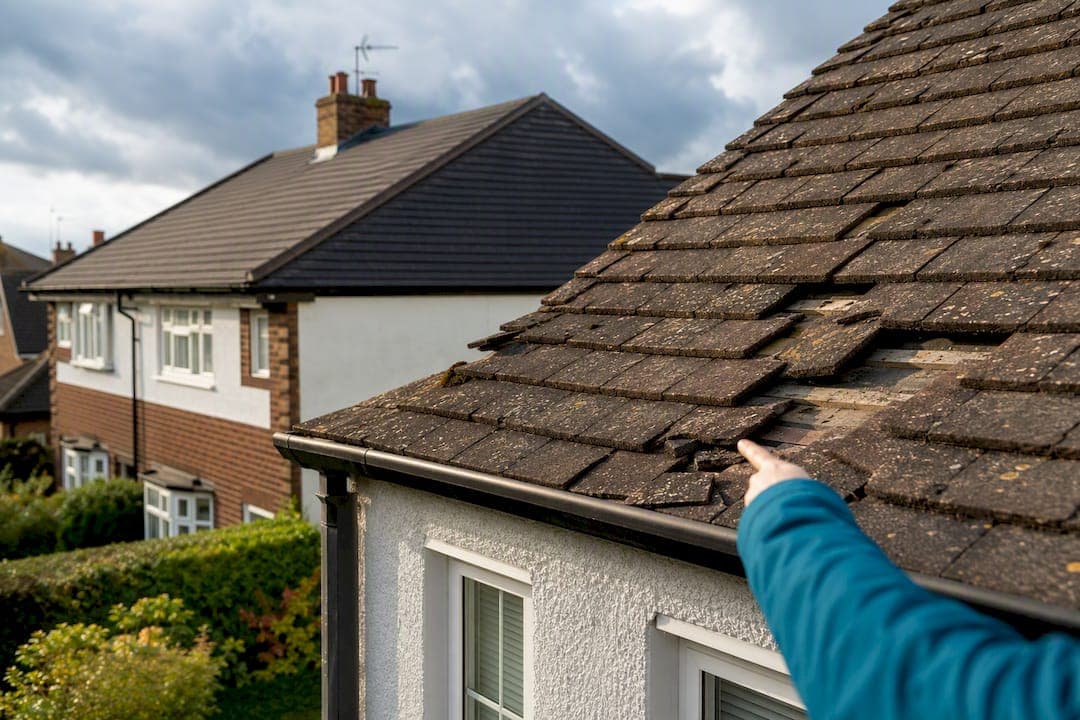
If you can see daylight through the attic boards, the roofline is sagging, or you're patching leaks in a different spot every few months, replace the roof rather than repair it again. Widespread granule loss in the gutters is another strong signal. Before signing anything, get a written inspection and at least two quotes, one for repair and one for replacement, so you can compare them side by side.
TL;DR:
- Visible daylight through the roof deck, sagging, or widespread moss buildup indicate systemic failure and require immediate replacement.
- Widespread curling, cracking, or missing shingles across multiple slopes, along with heavy granule loss, signal that the roof’s protective layer has significantly deteriorated.
- Roofs exposed to poor installation or lacking maintenance typically reach the end of their lifespan sooner, especially asphalt shingles under harsh sun or inadequate attic ventilation.
- Repair is usually sufficient for localized issues like a single missing tile or small leak, while extensive damage or recurring leaks across the system justify full replacement.
- The decision to replace should consider the roof’s age relative to its material’s expected lifespan, repair costs approaching one-third of replacement, and the homeowner’s long-term plans.
Table of Contents
- Signs you need a full roof replacement
- How long does a roof actually last?
- Should you repair or replace: a decision framework
- When is the best time to schedule roof replacement?
- What does roof replacement typically cost?
- A practical inspection checklist before you call anyone
- Why I'd rather see homeowners replace than keep patching
- Get a free roof inspection and quote from J.H. Roofing
- Sources
Signs you need a full roof replacement
Not every roof problem calls for a full tear-off. The trick is knowing which signs point to a contained fix and which point to a system that's failing across the board.
Start in the attic, not on the roof itself. According to the HomeOwners Alliance, daylight visible through the roof deck, a sagging structure, widespread slipped tiles, and moss or mould buildup are among the clearest indicators that a roof has reached the end of its useful life. GAF, a major roofing manufacturer, backs this up with a specific recommendation: inspect the attic first, because deck-level failure often shows up there well before it's obvious from the ground.
Here's what tends to separate "call a contractor tonight" from "add it to next spring's list":
- Daylight through the roof deck or attic ceiling stains that spread over a few weeks rather than staying put.
- Soft, spongy, or visibly rotted decking and rafters, which usually means moisture has been getting in for a while, not just after last week's storm.
- Sagging rooflines, especially dips near valleys or the ridge, which point to structural stress rather than a surface issue.
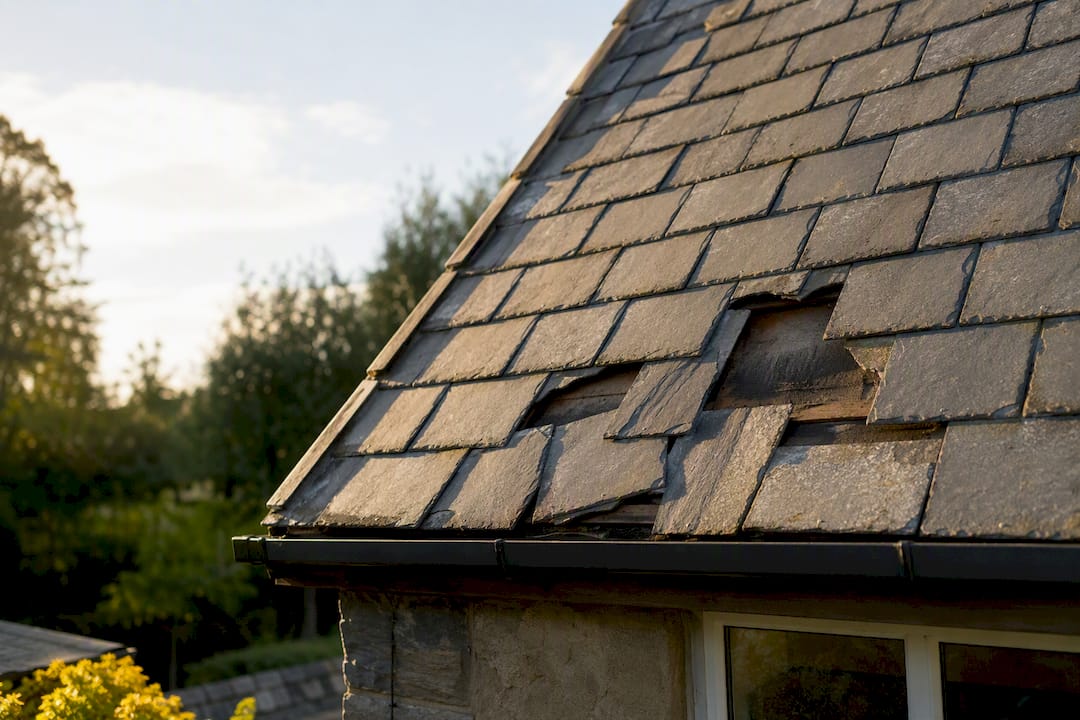
- Widespread curling, cracking, or missing tiles and slates across multiple slopes, not confined to one section.
- Heavy granule loss collecting in gutters and downspouts, a sign that asphalt shingles have lost their protective coating.
- Leaks appearing in different rooms over time, rather than the same spot recurring after each repair.
Pro Tip: Take a flashlight into the attic on a sunny day and turn off the lights. If you see pinpricks of daylight anywhere along the roof deck, that's your cue to call for an inspection within the week, not next month.
Isolated problems tell a different story. A single missing tile, one failed section of flashing around a chimney, or a small localized leak in an otherwise sound roof is typically a repair job, not a reason to replace the whole system. Get Global Roofing makes this distinction clearly: contained, single-point failures are usually fixable, while damage spread across multiple areas or repeated leak locations signals a roof that's failing systemically. The difference matters financially. Patching one weak spot might run a few hundred dollars. Chasing leaks across a deteriorating roof for two or three years can cost more than the replacement would have, with none of the peace of mind.
How long does a roof actually last?
Age by itself doesn't determine whether a roof needs replacing, but it's the number you should weigh against everything else you're seeing. A 12-year-old asphalt roof with a few curling shingles is a different conversation than a 12-year-old roof with soft decking and daylight coming through.
JJ Roofing Supplies puts together lifespan ranges that hold up well across most climates, with the caveat that installation quality and ongoing maintenance shift these numbers considerably in either direction.
| Roofing material | Typical lifespan | Notes |
|---|---|---|
| Asphalt or composite shingles | 15 to 30 years | Sun exposure and poor attic ventilation shorten this range significantly |
| Natural slate | 50+ years | Among the longest-lasting options when installed correctly |
| Clay tile | 50+ years | Durable but tiles can crack individually and need periodic replacement |
| Metal roofing | Several decades | Performance varies by coating and fastener quality |
| Flat-roof coverings | Under 20 years in many cases | Highly variable; membrane type and drainage design matter enormously |
Slate and clay tile roofs often outlast the homeowners who install them, provided the original workmanship was solid. Flat roofs sit at the other end of the spectrum. Some coverings fail well before the 20-year mark if drainage was designed poorly or ponding water was never addressed. A flat roof replacement case study shows how much scope and cost can vary even within that single category.
Where a roof falls within its material's range should shift your attention, not settle the question outright. A slate roof at 45 years with no visible deterioration can often go several more years with routine maintenance. The same roof at 45 years with slipped tiles and attic staining has run out of runway.
Should you repair or replace: a decision framework
Most homeowners don't need a roofing degree to make this call correctly. You need three things: a clear read on the visible signs, an honest attic check, and one simple financial comparison.
- Check for structural or systemic red flags first. Sagging, soft decking, or leaks that keep reappearing in new locations point toward replacement almost regardless of the roof's age. Self Build notes that replacement becomes the clear choice once damage is widespread or the deck itself is compromised, since patching over rotten sheathing just invites the same leak to come back.
- Get two written estimates: one for repair, one for full replacement. This is the single most useful step you can take, and it costs nothing but a phone call.
- Run the percentage test. Compare the repair estimate to the replacement estimate. When repair costs start climbing toward a quarter to a third of what full replacement would cost, most contractors and industry writers treat that as the tipping point where replacement becomes the better long-term value. Treat this as a practical rule of thumb rather than a fixed law. It shifts depending on your specific situation.
- Factor in your timeline. If you're selling within a year or two, a well-documented repair might satisfy a buyer's inspection without the cost of full replacement. If you plan to stay, the math usually favors solving the problem once.
- Confirm contractor credentials before committing. Ask for proof of insurance, references from recent local jobs, and a written scope of work, not just a verbal quote.
Pro Tip: Ask any contractor to photograph the attic before and after their inspection. A reputable roofer will hand these over without hesitation. Reluctance to document the problem is itself a warning sign.
When is the best time to schedule roof replacement?
Timing affects both cost and quality of work more than most homeowners expect. Roofing materials install best in moderate, dry conditions, which makes late spring and early autumn the seasons contractors generally prefer.
- Late spring and early autumn offer the most predictable weather windows, reducing the odds of work stalling mid-project due to rain or extreme heat.
- Winter installations are possible but often mean higher costs, slower material curing, and more scheduling risk if snow or freezing rain moves in.
- Book scaffold and materials early. Good crews and scaffold hire get booked out weeks in advance during peak season, so lining up a seasonal inspection ahead of time avoids scrambling later.
- Ask for a realistic project timeline up front, including how weather delays would be handled, before you sign anything.
- If you're filing an insurance claim, get the roof inspected and photographed before contacting your insurer, not after. Document the damage thoroughly, then loop in the adjuster once you have written evidence in hand.
What does roof replacement typically cost?
Every roof quote is really a sum of several separate cost categories, and understanding them helps you evaluate whether a bid is realistic or missing something important.
- Roof area and pitch. Larger and steeper roofs take longer to install and require more safety equipment, which raises labor costs.
- Access and scaffold. Roofs with limited access, tight side passages, or tall structures cost more to scaffold safely.
- Material choice. Asphalt sits at the more affordable end; slate, clay tile, and standing-seam metal cost considerably more upfront but stretch that cost over a much longer lifespan.
- Underlay and deck condition. If the deck needs partial or full replacement due to rot, that adds materials and labor beyond the visible tiles or shingles.
- Leadwork and chimney flashing. Detail work around chimneys, valleys, and vents adds cost but is often where leaks originate if skipped or done poorly.
- Waste disposal. Stripping an old roof generates a substantial amount of debris that needs proper disposal, and this is sometimes left off cheaper quotes.
Treat any single number you see quoted online as a rough band, not a promise, since pitch, access, and material choice shift the total considerably from one property to the next. Insurance commonly covers replacement when the damage stems from a specific storm or impact event, less often for gradual wear from age. Check your policy's wording on wear-and-tear exclusions before assuming a claim will cover the work.
A practical inspection checklist before you call anyone
Before you contact a contractor, spend fifteen minutes doing your own attic check. Grab a flashlight and look for daylight around the roof deck, water stains that look fresh or have spread since you last checked, and any decking that feels soft or springy when you press on it. Photograph anything you find.
When you do call a roofer, ask for:
- Proof of insurance and a written scope of work, not a verbal estimate.
- Attic photos taken during their inspection, so you can see what they saw.
- A realistic timeline, including how they'd handle weather delays.
- References from recent local jobs similar to yours.
Jhroof has worked as a family-owned roofing service across Kent for over 10 years, offering free, no-obligation quotes, 24-hour emergency response, and a 4.7-star Google rating built on jobs like the ones described above.
Why I'd rather see homeowners replace than keep patching
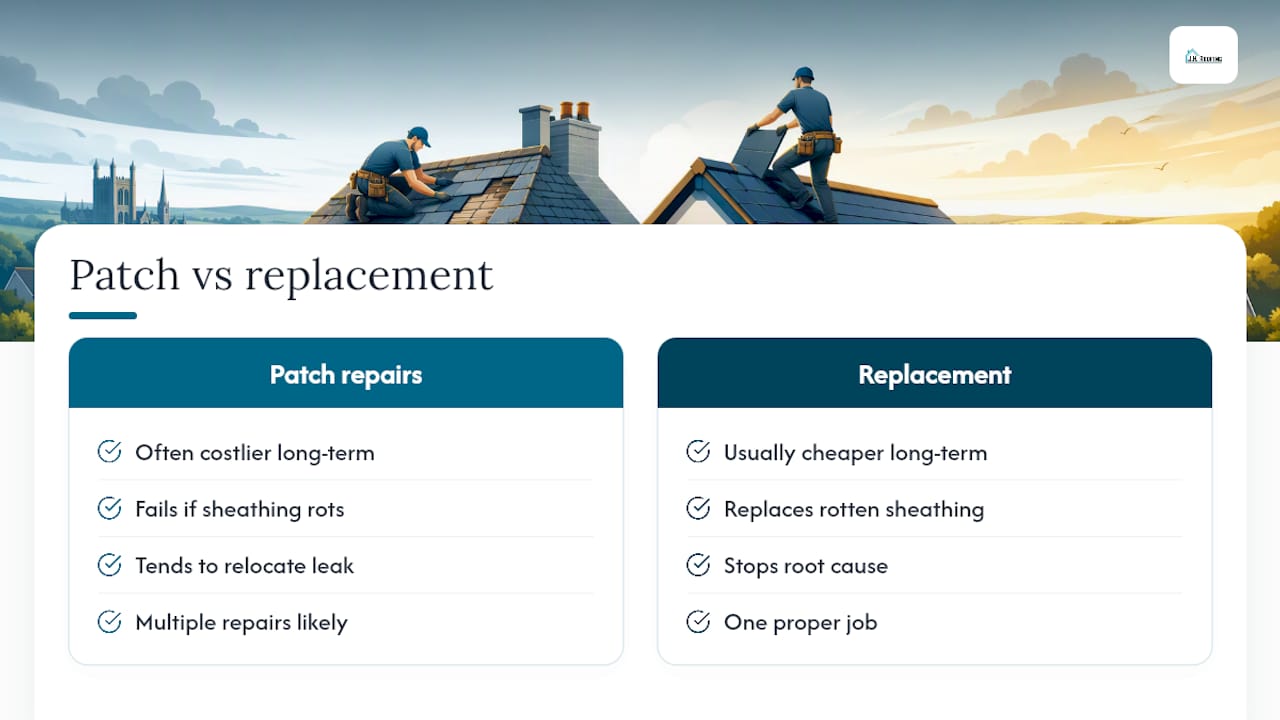
I've read enough roofing case studies to know the pattern: three small repairs in two years almost always costs more than one properly done replacement, especially once the deck is involved. Once rot sets into the sheathing, patching over it just relocates the leak rather than solving it.
One more thing worth saying plainly: be wary of contractors who show up unsolicited right after a storm pushing immediate replacement. Get a second opinion and written evidence before signing anything.
— Gabbi
Get a free roof inspection and quote from J.H. Roofing
If your roof is showing any of the signs above, sagging, attic daylight, repeated leaks, or granule loss piling up in the gutters, Jhroof gives you a faster, more direct path to an answer than shopping around for estimates on your own. As a family-owned service across Kent with over 10 years of experience, Jhroof handles new roof installations, flat roofing, chimney and leadwork repairs, and 24-hour emergency callouts, all backed by insured workmanship and a 4.7-star Google rating.
Every quote starts with a free, no-obligation site visit, so you get a written scope and an honest repair-versus-replacement comparison before spending a cent. If your roof needs urgent attention, the 24-hour emergency service means you're not waiting days for someone to look at it. Ready to find out where your roof actually stands? Visit Jhroof's roofing services page to request your free inspection, or run your numbers first through the roof quote calculator for an instant estimate.
Sources
- Does My Roof Need Replacing? — HomeOwners Alliance
- How often do roofs need to be replaced in the UK? — JJ Roofing Supplies
- Should You Repair or Replace Your Roof? — Self Build
- Understanding residential roof repairs: How do I know if my roof needs to be replaced? — GAF