
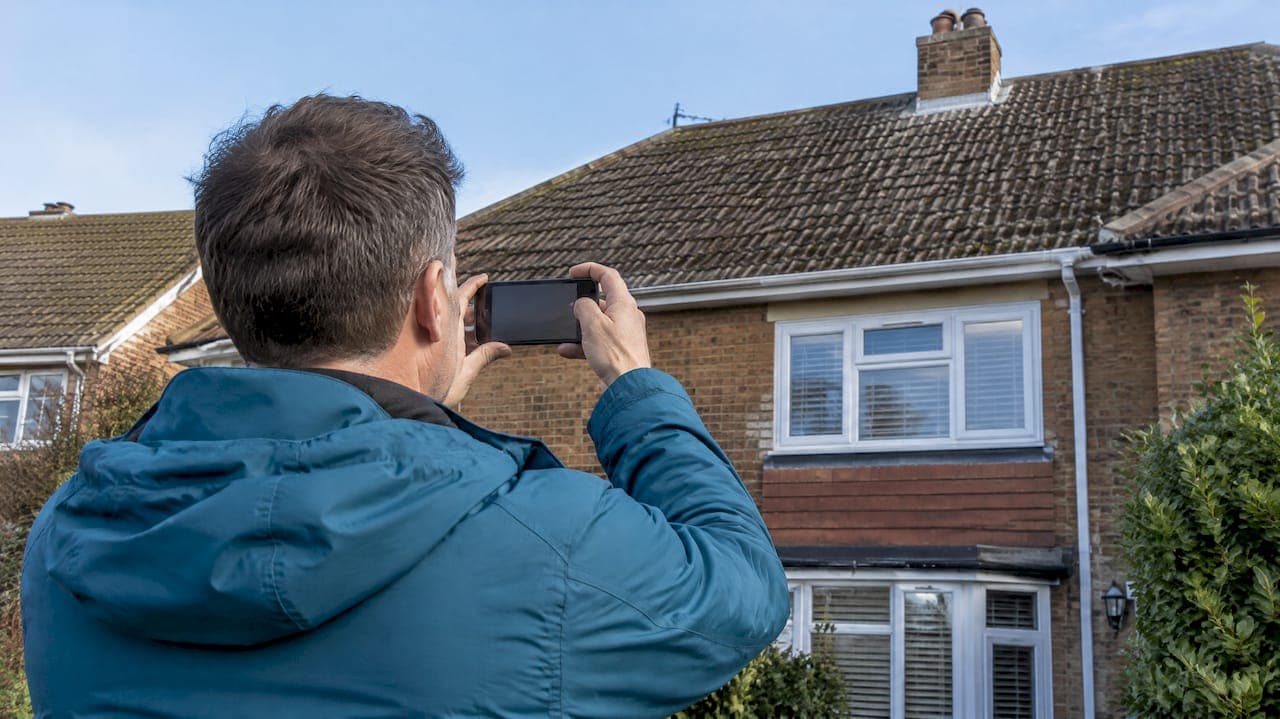
Before the gales arrive, take three steps: bolt your loft trapdoor and bring loose garden items inside, check the roof from the ground with binoculars and clear your gutters, and call an insured emergency roofer if water is getting in. Met Office advice backs the first step. Dated photos and receipts also speed up any insurance claim.
TL;DR:
- Use binoculars from the ground to spot lifted flashings, cracked tiles, loose ridge mortar, or chimney mortar damage; check the loft for damp patches.
- Never climb onto a roof after a storm; once conditions ease, inspect from the ground within 24 to 72 hours and photograph visible damage.
- Call emergency services and an insured roofer if water reaches electrics or the structure fails; switch off power only if you can reach it safely.
- Check gutters and roof slopes in October and March, and take a 30 minute walk around after every named storm.
- Keep gutter clearing and ground checks as do it yourself tasks; leave roof repairs, moss removal, and temporary coverings to insured contractors.
Table of Contents
- What should you do before a storm hits your roof?
- How do you stay safe when a storm is overhead?
- How do you check for damage and document it for insurance?
- What inspection calendar suits the UK seasons?
- When should you call an emergency roofer?
- Which long-term fixes make a roof harder for storms to damage?
- Why dated records matter more than speed
- How we help Kent homeowners before and after storms
- FAQ
- Sources
What should you do before a storm hits your roof?
Most pre-storm work happens at ground level or in the loft, and none of it needs a ladder on the roof. Work through this list in order:
- Bring in or tie down garden furniture, plant pots and bins, because loose items turn into debris. Government preparedness guidance gives the same advice.
- Trim or report overhanging branches that could land on the roof.
- Close and bolt your loft trapdoor, especially if your roof pitch is shallow. The Met Office specifically mentions pitches under 30°.
- Secure large external doors and garage doors, particularly those facing the prevailing wind.
- Scan the roof with binoculars for slipped, cracked or missing tiles, lifted flashings, gaps in ridge mortar and crumbling mortar around chimneys.
- Clear gutters and check downpipes, then watch that water flows freely in heavy rain.
- Look into the loft with a torch for damp patches or disturbed insulation.
Photograph every issue with the date on it. Our roof inspection checklist shows how to take useful photos safely from the ground and the loft.
Pro Tip: Take a "before" set of photos of each roof slope in clear weather. A dated baseline makes it much easier to show what changed after a storm.
How do you stay safe when a storm is overhead?
Stay inside. The Met Office is clear that repairs should not be attempted while the storm is in progress, and the HSE's roof work guidance expects weather and wind to be considered before anyone works at height. If you notice a leak:
- Keep away from damaged walls, windows and trees.
- Move furniture and valuables away from the drip and put buckets under it.
- Keep internal doors closed so wind pressure does not build up inside.
- Switch off electrics at the consumer unit only if you can reach it safely.
- If water is reaching electrics or part of the structure fails, call emergency services and an insured roofer.
A tarpaulin or other temporary cover is a contractor's job, done when the weather allows. Photograph any temporary works and keep the receipts.
How do you check for damage and document it for insurance?
In the first 24 to 72 hours after a storm, triage from safe positions. Look from the ground for displaced tiles, broken flashings, blocked outlets and anything visibly hanging loose. Our guide to roof storm damage covers the next steps in more detail.
- Photograph everything with timestamps, and keep a dated log of what you saw and did.
- Take loft photos only if you can stand on a stable platform.
- Keep receipts for temporary make-safe work and note any constraints, such as weather or access.
- Separate urgent problems (active leaks, risk to people) from repairs that can wait.
Insurers respond well to evidence. A twice-yearly inspection rhythm with event-based checks after named storms is described as helping claims process faster. Our guide to saving a roof insurance claim explains the timelines.
What inspection calendar suits the UK seasons?
Aim for gutter clears and binocular checks in October and March, plus a 30-minute walk-round after every named storm. The same Taskino calendar adds an annual chimney sweep.
- Spring: treat moss and check the loft.
- Summer: look for condensation in the roof space, which can be mistaken for storm damage, as NHBC guidance explains.
- Autumn: clear gutters after leaf-fall and check tiles before storm season. Our end-of-summer roof tips help here.
- Winter: walk the property after each storm.
Gutter clearing and ground checks are DIY jobs. Anything on the roof itself belongs to a contractor, and a typical repair gives you a sense of scale: we list a single tile repair from 150 GBP. Planned inspections also build a prioritized defect register and photo log that supports insurers and safety records. A seasonal workflow can help you keep to the schedule.
When should you call an emergency roofer?
Call straight away if water is reaching live electrics, roof elements look ready to fall, or you can see structural movement. Before anyone starts work, check these points:
- Proof of insurance.
- An emergency response option.
- A written estimate.
- Risk assessments and method statements (RAMS).
- References from recent customers.
- A photo record of temporary and permanent work.
Pro Tip: Ask for the make-safe photos to be sent the same day. They double as claim evidence.
An insured roofer should do the make-safe because falls from damaged roofs are a real danger. Expect a temporary fix first, then a plan for permanent repair. Put safety ahead of speed, and keep every receipt. Our emergency repair cost guide gives Kent budget context.

Which long-term fixes make a roof harder for storms to damage?
Temporary fixes only buy time. The durable work looks like this:
- Re-bed ridge mortar when it crumbles or cracks.
- Renew worn underlay and replace damaged battens.
- Upgrade tile fixings where tiles lift in wind.
- Make sure solar panels and other roof-mounted systems have correct flashings and MCS-certified installation.
- Book a drone survey and a planned maintenance schedule if your home is exposed, since government research shows extreme wind exposure is higher on UK coasts and projected to increase.
If a repair involves altering roof timbers, an engineer's calculations matter, and structural engineering support exists for that. Larger jobs take longer to schedule, so plan them outside peak storm months.
Why dated records matter more than speed
Never climb onto a roof after a storm. A photo from the pavement and a note in your phone achieve more than a risky ladder trip. Consistent, dated records make claims smoother and help a roofer find the real fault faster. If you are in Kent, we can survey safely and make your roof safe in an emergency.
— Gabbi
How we help Kent homeowners before and after storms
When a storm leaves your roof leaking or unsafe, our emergency roofing team responds around the clock across Kent.

- Insured emergency make-safe, including tarpaulin cover and temporary flashings
- Single tile repairs and permanent repair plans
- A free quote, risk assessments and a photo record of the work
Call us for an emergency response or book a roof inspection today.
FAQ
Do you need ventilation on a warm roof?
Yes, roof spaces still need airflow. Blocked eaves vents can cause condensation and rot that look like storm damage, as NHBC guidance explains. Make sure insulation does not cover vents.
What time of year is the cheapest to replace a roof?
Prices are not tied to one month, but demand tends to ease outside storm season. Planning a replacement in spring or summer lets you compare quotes calmly rather than during an emergency. Ask us for a free quote on our roof replacement service.
How long does a new roof take in the UK?
It depends on the roof size, type and weather. Smaller roofs can take days, while larger or more complex jobs take longer. We confirm timings in a written quote.
How can I remove moss from my roof in the UK?
Moss removal and treatment are best left to a contractor, since walking on a wet or mossy roof is dangerous. It is a good spring task, and we offer moss removal as part of our services.