
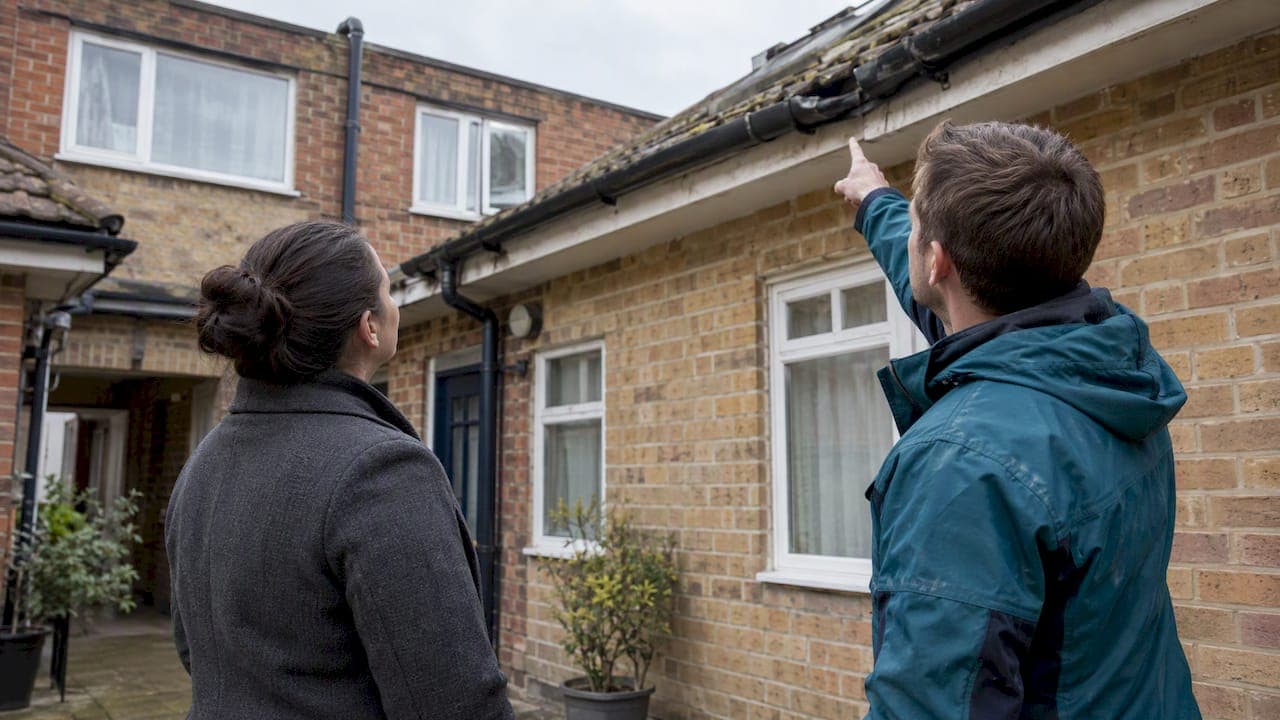
Landlords in the UK are legally responsible for keeping a rented property's roof and exterior in repair, and this duty cannot be removed by a tenancy agreement. The main legal basis is Section 11 of the Landlord and Tenant Act 1985, backed by Gov, with exceptions for certain leasehold arrangements and listed buildings. If you are facing an active leak, your first move is a temporary fix and a call to a qualified contractor.
TL;DR:
- Treat leaks or water near electrics as emergencies, acknowledge reports in writing within 24 to 48 hours, and arrange urgent inspections within 3 to 7 days.
- For leasehold roof works above the statutory threshold, freeholders must consult leaseholders; skipping consultation usually limits recoverable costs, though urgent work may qualify for dispensation.
- Keep dated reports, inspection photos, contractor quotes, invoices, and completion records together; contact the local council’s environmental health team if serious hazards go unaddressed.
- Schedule roof inspections annually in early autumn and after severe storms, checking tiles, flashing, gutters, and flat roof seals before winter weather exposes defects.
- Scotland follows its own Repairing Standard, while listed buildings may need consent before roof covering changes; check local requirements before commissioning work.
Table of Contents
- Statute and official guidance that set landlord roof repair obligations
- Reasonable timescales and response expectations for roof problems
- How roof repairs work in leasehold flats: who pays and what Section 20 requires
- How to accept, record and manage tenant reports so you meet obligations
- Inspection checklist and preventative maintenance for roofs
- When to hire a professional roofer and how to manage emergency fixes
- Local roofer perspective: common landlord mistakes and quick fixes
- How J.H. Roofing supports Kent landlords with repairs and records
- FAQ
- Sources
Statute and official guidance that set landlord roof repair obligations
Your duty to maintain a rented property's roof comes directly from statute, not from goodwill or convention. Section 11 of the Landlord and Tenant Act 1985 implies a covenant into most residential tenancies requiring you to keep the structure and exterior in repair, and this explicitly covers drains, gutters and external pipes alongside the roof itself. You cannot draft this obligation out of a tenancy agreement. Even if a lease states otherwise, the statutory duty overrides it.
GOV.UK's private renting guidance confirms the same point in plainer terms: the structure and exterior of a property, including the roof, sit squarely with the landlord, and tenancy terms that try to shift this responsibility onto tenants carry no legal weight. Shelter's guidance for tenants echoes this, listing the main structure and roof among the repairs landlords must handle and encouraging tenants to report problems in writing.
A few practical caveats matter:
- Scotland operates under its own Repairing Standard, which sets specific response timescales for issues like damp and mould and applies instead of Section 11.
- Listed buildings or properties in conservation areas often require listed building consent before you replace roof coverings, and unauthorized changes can trigger enforcement action from the local planning authority.
- Building regulations may apply where roofing work affects insulation, structural elements or fire safety, particularly on larger renovation projects.
Knowing which rules apply to your property before work starts saves you from costly corrections later.
Reasonable timescales and response expectations for roof problems
Not every roof issue demands the same urgency, and treating a small drip like a full emergency wastes resources just as treating an emergency like routine maintenance creates liability. A good starting framework separates problems into three tiers: emergency issues such as a major leak soaking through ceilings or water entering near electrics, urgent issues like a persistent small drip during heavy rain, and routine matters such as moss buildup or a few slipped tiles with no active water ingress.
The Housing Ombudsman frames "reasonable time" as something that shifts with severity, health risk, weather conditions and parts availability rather than a fixed number of days. A practical response sequence looks like this:
- Acknowledge the tenant's report within 24 to 48 hours, in writing.
- Arrange an inspection within 3 to 7 days for urgent issues, sooner for emergencies.
- Send a written repair timeline and keep the tenant updated if anything changes.
Pro Tip: Put your acknowledgment and timeline in writing every time, even for minor issues. It takes two minutes and becomes your strongest evidence if a dispute ever reaches a tribunal.
How roof repairs work in leasehold flats: who pays and what Section 20 requires
If you own a leasehold flat rather than a freehold house, the roof usually falls under the freeholder's or managing agent's responsibility, with costs recovered from leaseholders through the service charge. This changes who you need to chase when a roof problem appears above your flat, but it does not change the underlying principle that someone is obligated to keep the structure watertight.
Major works, including most roof replacements, trigger the Section 20 consultation process once costs exceed the statutory threshold. This process requires the freeholder to notify leaseholders, invite observations, and in most cases obtain at least two competitive quotes before proceeding.
- Skipping proper consultation ordinarily caps what the freeholder can recover from each leaseholder, regardless of the actual repair cost.
- In genuinely urgent cases, a freeholder can apply for dispensation from consultation, and a First-tier Tribunal decision illustrates how tribunals weigh urgency against potential prejudice to leaseholders before granting it.
- Leaseholders who believe charges are unreasonable can challenge them at the First-tier Tribunal, and in some circumstances pursue Right to Manage or enfranchisement as longer-term remedies.
Running the consultation properly, with documented quotes and timelines, reduces the risk of a costly challenge later.
How to accept, record and manage tenant reports so you meet obligations
Documentation is what separates a landlord who meets their obligations from one who merely intends to. When a tenant reports a roof problem, acknowledge it immediately and confirm an inspection date in writing so there is no ambiguity about what was agreed and when.
- Log the report with the date, description and any photos the tenant provides.
- Collect your own dated photos during inspection, along with written contractor quotes and reports.
- Keep completion receipts and invoices once work finishes, filed alongside the original report.
- Contact environmental health at the local council if a landlord fails to act on a serious hazard, since this can trigger formal enforcement.
This paper trail protects you if a dispute reaches a tribunal or if an insurance claim depends on proving when a defect was reported and addressed.
Inspection checklist and preventative maintenance for roofs
Routine inspection catches small problems before they become emergency calls. We recommend an annual check timed for early autumn, plus an additional inspection after any severe storm.
- Tiles and slates: look for cracks, slippage or missing pieces.
- Flashing around chimneys and roof windows: check for lifting or corrosion.
- Gutters and downpipes: clear debris and confirm water flows freely.
- Flat-roof seals and leadwork: check for blistering, cracking or standing water.
Climbing onto a roof yourself carries real risk, and a contractor inspection or drone survey gives you a safer, more thorough view of problem areas, including spots a ground-level check would miss. Keep a simple written maintenance plan noting inspection dates, findings and any work completed, and schedule gutter clearing and moss removal as part of that same routine.
Pro Tip: Book your annual roof check for September or October, well before winter storms arrive, so small repairs do not turn into mid-winter emergencies.

When to hire a professional roofer and how to manage emergency fixes
Some roof problems are beyond reasonable DIY scope and call for an insured professional without delay. Major leaks, visible structural sagging, and any work involving lead flashing or listed-building materials all fall into this category.
- Interim measures like tarping over a damaged section, temporary flashing repairs or scaffold protection are acceptable short-term fixes while you arrange permanent repairs.
- Before hiring, confirm the contractor carries current insurance, ask for references, and get a written quote before work begins.
- Keep every invoice and completion report, since these documents support both service-charge records and any future insurance claim.
For landlords managing properties across Kent, having a contractor who offers 24-hour emergency response, like our own emergency roof repair service, means a leak reported at midnight does not sit untouched until Monday morning.
Local roofer perspective: common landlord mistakes and quick fixes
The most common mistake we see is delay: a landlord notices a small drip, decides it can wait, and finds themselves dealing with rot and a much larger bill by winter. Thin records come a close second, with landlords unable to say exactly when a tenant first reported an issue. The fix is simple. Take photos the day you hear about a problem, arrange a temporary cover if needed, and book your pre-winter inspection before the weather turns.
— Gabbi
How J.H. Roofing supports Kent landlords with repairs and records
Meeting your roof obligations gets easier when your contractor hands you documentation you can actually use, not just a repaired roof. We provide emergency repairs, scheduled maintenance, and drone roof surveys that double as inspection records for your files.

- Free, no-obligation quotes before any work starts.
- Workmanship with written reports suitable for service-charge or tenant communication records.
- Emergency response when a leak cannot wait until morning.
Get a free quote through our roof repairs page and we will walk you through what your property needs.
FAQ
Is a landlord responsible for roof repairs?
Yes, in almost all tenancy types you are responsible for keeping the roof and exterior in repair under Section 11 of the Landlord and Tenant Act 1985. This duty applies regardless of what the tenancy agreement states, with leasehold flats usually routing the obligation through the freeholder instead.
How long does a landlord have to fix a leaking roof in the UK?
There is no single fixed deadline. Response time depends on severity, with emergency leaks expecting inspection within days and acknowledgment in writing within 24 to 48 hours, while routine issues allow more flexibility based on weather and parts availability.
What are the new responsibilities of a landlord in 2026?
Core roof repair obligations remain governed by Section 11 and GOV.UK guidance, with no change to that foundation. Landlords in Scotland should note that 2026 regulations set specific timescales for investigating damp and mould under the Repairing Standard, including a 10-working-day investigation window.
What are the landlord's maintenance responsibilities in the UK?
You are responsible for the structure and exterior of the property, including the roof, gutters, external pipes and drains, as stated in GOV.UK's repairs guidance. Routine upkeep like gutter clearing and inspection falls to you as the party legally obligated to prevent disrepair, while day-to-day cleanliness inside the property typically remains the tenant's responsibility.