
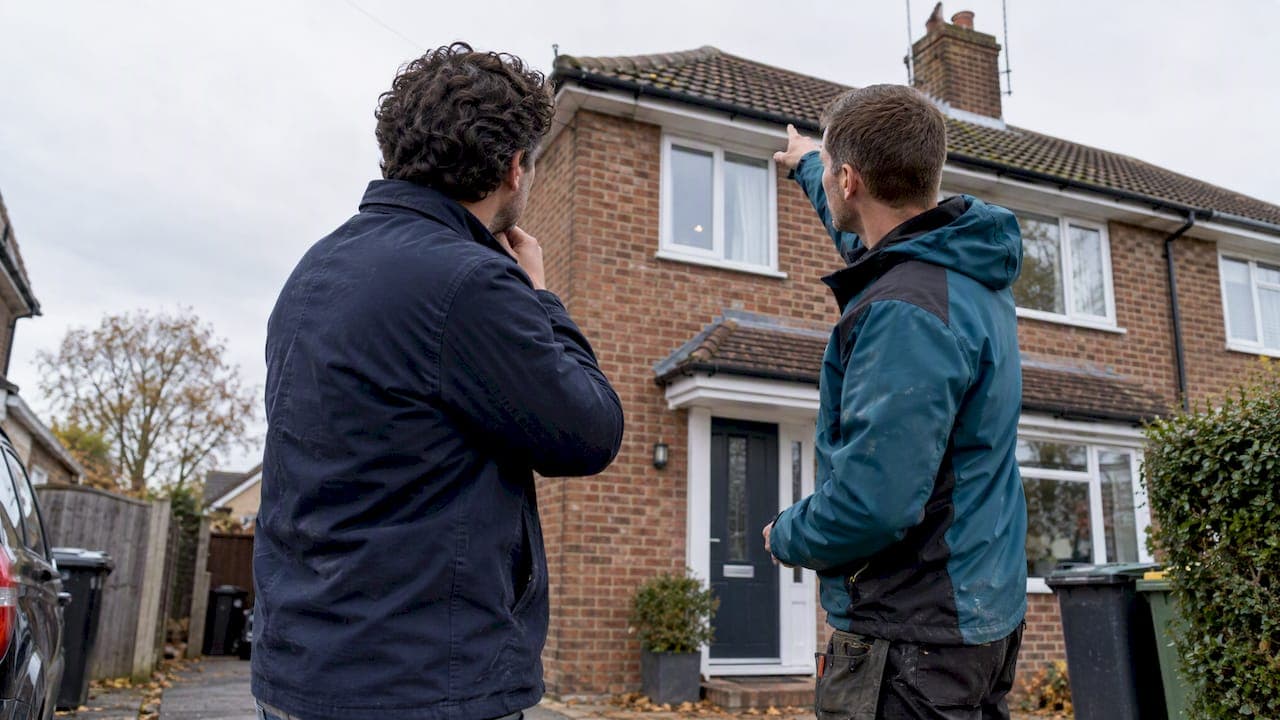
The best questions to ask a roofer are about proof, not promises. Ask to see their insurance certificate, a written quote with a fixed price, a guarantee in writing, and who will certify the work under Building Regulations. Then ask who will be on your roof, because the answer tells you a lot. This guide gives you the questions in the order we would ask them, and what a good answer sounds like.
We are J.H. Roofing, a family-owned roofing company covering Kent. Plenty of homeowners ask us these questions, and we are glad when they do. A roofer who is happy to answer them is usually a roofer worth hiring.
TL;DR
- Ask for the insurance certificate itself, not a verbal "yes". Public liability cover is expected on domestic work, and employers' liability is a legal requirement if there are staff.
- Get a written quote with a fixed total, a breakdown of work and materials, and how long the price is valid.
- Ask who certifies the work under Building Regulations on a re-roof, and who issues the guarantee.
- Ask whether the people on your roof are employees or subcontractors, and who supervises them.
- Be cautious of pressure to decide on the doorstep, cash-only demands and vague answers.
Table of Contents
- Questions about who they are
- Questions about insurance
- Questions about accreditation and Building Regulations
- Questions about the quote
- Questions about the work itself
- Questions about the people on your roof
- Questions about guarantees and problems
- Warning signs worth walking away from
- Our view: what we would ask if it were our roof
- Getting a quote from us
- A short checklist to take to your quotes
- FAQ
- Sources
Questions about who they are
These are the quickest to answer and the easiest to check. Start here.
What is your full company name and physical address?
A reputable roofer gives you a trading name, a business address and a landline or mobile number that is answered. You want somewhere you could send a letter if something went wrong. One reader on a MyBuilder discussion about faulty roofing put it well: a guarantee is only as good as the person issuing it, so check they are still in business and you have an address.
A "local" label is not enough on its own. Switch's guide to vetting local roofers makes the point that a nearby office does not guarantee quality, and that recognised trade memberships matter more.
How long have you been trading, and can you show recent work?
Years in business is a reasonable signal, not a verdict. Ask for photos of jobs similar to yours and, better still, the addresses of one or two roofs finished a few years ago in your area so you can see how they have aged. For us, that means a family business with over 10 years of experience in Kent, and a 4.7-star Google rating you can read for yourself.
Can I speak to a past customer?
A confident roofer will give you a name or point you to reviews. Read the reviews that describe a problem and how it was handled. That tells you more than a page of five-star ratings.
Questions about insurance
This is where a vague answer should end the conversation.
Do you have public liability insurance, and can I see the certificate?
Public liability covers damage or injury caused by the work: a dropped tile through a conservatory roof, a damaged car, a neighbour's fence. Zmartly's 2026 guide to public liability insurance says it is not a legal requirement for sole traders but is effectively mandatory in practice for hiring, and that standard cover is £1 million to £2 million for domestic work, with £5 million or more for commercial or larger projects.
Check the name on the certificate matches the company quoting, the policy is in date, and the activities covered include roofing. A policy for "general building" or one with exclusions for work at height may not respond to a roofing claim. If the amount of cover is unclear, ask the insurer or broker named on the certificate.
Do you have employers' liability insurance?
If the business has staff, including subcontractors working under its direction, employers' liability is compulsory. The same Zmartly guide cites a minimum of £5 million cover and a fine of up to £1,000 per day for failing to produce a valid certificate when asked. For you, the point is simple: if someone is hurt on your roof and the roofer is uninsured, a claim can become very difficult to resolve.
We are fully insured, and we are happy to show you our certificates when you ask for a quote.
Questions about accreditation and Building Regulations
Which trade bodies or schemes are you registered with?
Look for recognised names such as the National Federation of Roofing Contractors (NFRC) or the government-endorsed TrustMark scheme. According to the Switch guide above, these memberships give you a structured route for complaints and signal a commitment to industry standards. They are not compulsory, so a missing logo is a reason to ask more questions, not an automatic reason to walk away. Always check membership on the scheme's own website rather than trusting a logo on a van.
Who deals with Building Regulations on a re-roof?
This one is missed more than any other. Replacing a significant amount of roof covering can fall under Building Regulations in England. The NFRC Competent Person Scheme lets registered roofers self-certify their roof refurbishment work in England. If your roofer is not registered with a competent person scheme, the legal responsibility to notify Building Control, and to pay for an inspection, can fall on you. The Switch guide notes this is often discovered only when you come to sell.
So ask two things: "Are you registered to self-certify?" and "Will I receive the compliance certificate, and when?" Keep it with your property papers. Your solicitor will want it.

Questions about the quote
Will you give me a written quote, and is it free?
Some traders charge for quotes, so ask first. We give free, no-obligation quotes. Whoever you choose, do not rely on a verbal figure. Citizens Advice says a quote is a promise to do the work at an agreed price, and that a written one lets you check and prove what was agreed.
According to the same page, a good quote includes:
- a fixed total price, not a daily rate
- a breakdown of the work and the materials needed
- separate costs for each material and part of the job
- how long the price is valid
- whether VAT is included
- when the price can go up, for example only if you agree to extra work
What is included, and what could cost extra?
Roofs hide problems until the old covering comes off. Ask what happens if the roofer finds rotten battens, damaged rafters or failed felt. A good answer is that they will photograph it, tell you before doing anything, and agree the cost with you in writing. A bad answer is "we will sort it out".
Also ask about the small items that get left out of cheaper quotes: scaffolding, skip hire and waste removal, flashing, ridge and hip details, fascias and guttering where they are disturbed, and making good afterwards.
Why is your price different from the others?
If you collect three quotes and one is far lower, do not assume you have found a bargain. Compare line by line. A lower figure often means thinner materials, no underlay replacement, no scaffolding or no insurance. If you are weighing repair against a new roof, our guide on how homeowners decide between roof replacement and repair shows what each quote should be telling you.
For smaller jobs, we publish a starting figure: a single tile repair is from £150. Anything bigger needs a survey first, because the real cost depends on access, materials and the condition underneath.
Questions about the work itself
What materials will you use, and why?
A roofer should be able to name the tile, slate, membrane or felt, and the underlay, and explain why it suits your house. In Kent, many older homes have traditional peg tiles, and matching them properly matters for appearance and for planning in conservation areas. Flat roofs have their own choices, such as GRP (fibreglass), felt or single-ply membranes, and each has a different lifespan and maintenance routine.

Will you inspect the loft and the roof structure?
Many leaks start inside the roof space or at details such as chimneys and valleys. A thorough roofer checks the underlay, battens, rafters and ventilation, not just the tiles you can see from the ground. We also use drone roof surveys where they help to inspect a roof safely without anyone climbing on it, and to show you photos of what we find.
How long will it take, and what happens if the weather turns?
Ask how the roof will be kept watertight overnight and what the plan is for rain. A roofer who strips a whole slope with no cover plan is taking a risk with your home. To get your house ready, our attic steps and safety checks before a roof replacement cover what to do beforehand.
Questions about the people on your roof
Will your own team do the work, or do you use subcontractors?
Using subcontractors is not wrong in itself. Many good firms bring in specialists for scaffolding, leadwork or flat roofing. What matters is that the company quoting takes responsibility for the result, has checked the subcontractors' insurance, and supervises the job. If you are curious how firms vet their subcontractors, this subcontractor prequalification guide explains the checks a contractor can run, though it is written with the US market in mind.
The practical questions for you are: who will be on site, who is in charge, and who do I call if something is not right?
How do you protect my property, and the neighbours?
Ask about scaffolding, protecting gardens and driveways, daily tidying, and working hours. Check that the scaffold is erected by trained people and that there is a plan for access to your neighbours' boundaries if it is needed.
Questions about guarantees and problems
What guarantee do you give, and what does it cover?
Get it in writing before work starts. Citizens Advice says you should check how long a guarantee lasts and what it covers. Then ask the questions that decide whether it is worth anything:
- Is the guarantee for workmanship, materials, or both?
- Who stands behind it if the company stops trading?
- Is it insurance-backed?
- Are there conditions, such as annual maintenance, that would void it?
Our article on the three roof warranty covers to get in writing goes through these in detail.
What are your payment terms?
Be wary of large cash deposits or requests to pay everything upfront. A reasonable arrangement for a larger job is a modest deposit, with stage payments agreed in the contract and the balance on completion, once you are satisfied. Never be pushed into paying in cash for a discount. Get a receipt and a proper invoice.
What happens if something goes wrong?
Ask how they handle complaints and who you contact. A clear answer, ideally pointing to a scheme or trade body complaints route, is a good sign. Hesitation is another.
Warning signs worth walking away from
- A trader knocks on your door and says they noticed loose tiles while passing, then wants to start the same day.
- No address, no landline, only a mobile and a first name.
- Reluctance to show insurance or put anything in writing.
- A price that is only valid "today".
- Photos of damage you cannot verify, or a claim that the whole roof needs replacing when a repair might do.
If you are helping an older relative, our seven-step plan against roofing scams covers the situations to watch for. If you are a landlord, check our guide to roof duties and Section 20 traps, because shared buildings add consultation rules.
Our view: what we would ask if it were our roof
We are a family business, and we have spent more than 10 years on Kent roofs. Our honest view is that homeowners ask too many questions about price and too few about accountability.
A roof is rarely the thing you think about until it leaks, usually at night, usually in a storm. That is why we run a 24-hour emergency response service, and why we think the questions that matter most are the ones about what happens after the job. Who comes back? Who has the paperwork? Who is insured?
If we were choosing a roofer for our own family, we would want three things on the table before saying yes: the insurance certificate, a written quote with the work broken down, and a clear answer on Building Regulations and the guarantee. Everything else, including how friendly the person is, matters less than those three documents.
We also think a good roofer should sometimes tell you that you do not need a new roof. A repair is the right answer more often than people expect, and we would rather earn your trust on a small job than win a big one by overselling.
— Gabbi
Getting a quote from us
If you want to put these questions to us, we are happy to answer them. We offer free, no-obligation quotes for homeowners, landlords, property managers and businesses across Kent, including Ashford, Hythe, Folkestone, Canterbury and Maidstone. You can see what we do on our roofing services page, read about roof replacements in Kent, or look at roof repairs in Ashford. If water is coming in now, go to our fast repairs page and call us.
A short checklist to take to your quotes
Print this or save it on your phone. Fill it in for each roofer you speak to, and compare the answers side by side.
| Question | What you want to hear |
|---|---|
| Company name and address | A trading name and a real address you can verify |
| Public liability certificate | Shown on request, in date, covering roofing |
| Employers' liability | Certificate for staff and any subcontractors |
| Trade body or scheme | Named, and you can check it on the scheme's site |
| Building Regulations | Self-certifies and issues the certificate, or tells you clearly what you must do |
| Quote | Written, fixed price, itemized, valid for a stated period |
| Extras | A written process for agreeing extra work |
| Guarantee | In writing, scope and length clear, backed if the firm closes |
| Payment | Staged, with a receipt and invoice |
| Who does the work | Named team, supervised, subcontractors insured |
If a roofer cannot give straight answers on four or more of these, move on to the next quote.
FAQ
How many quotes should I get for a new roof?
Three is a sensible number for a big job. It gives you enough to spot an outlier without becoming a project of its own. Compare the scope line by line, not just the total, and ask each roofer to explain any differences.
Is a roofer required to be registered with a trade body?
No. Membership of bodies such as the NFRC or TrustMark is voluntary, according to the Switch guide. It is still worth asking about, because it gives you a complaints route and, for a re-roof, a registered firm can self-certify Building Regulations compliance.
Should I pay a deposit to a roofer?
A modest deposit for materials on a larger job is common, but agree it in writing along with the stage payments. Avoid anyone who wants most or all of the money upfront or insists on cash. If you are unsure about a particular contract, Citizens Advice offers consumer advice by phone and online chat.
What should I do if the work turns out to be faulty?
Contact the roofer in writing straight away, with photos, and refer to your quote and guarantee. If they do not respond, use the complaints route of any scheme they belong to, and contact Citizens Advice for next steps. Keeping your paperwork makes every one of these steps easier.
Sources
- Before you get work done on your home, Citizens Advice
- About the NFRC Competent Person Scheme
- Public Liability Insurance for Builders: UK Guide, Zmartly
- Local Roofers: How to Choose, Quality Checks & Common Roof Jobs, Switch
- Roofing work done but is faulty, MyBuilder